Three premature babies have died in a remote part of Papua New Guinea's Markham District, in a case that shows how thin the safety net still is for people living far from the country's main hospitals.
The mother went into labour at eight months in the Onga-Waffa local-level government area. Her babies were born too early for the small local health post to cope. One died on Sunday night and the other two passed away around 9am on Monday. Health workers at the facility did what they could, but the post simply lacked the equipment and specialist staff needed for neonatal care.
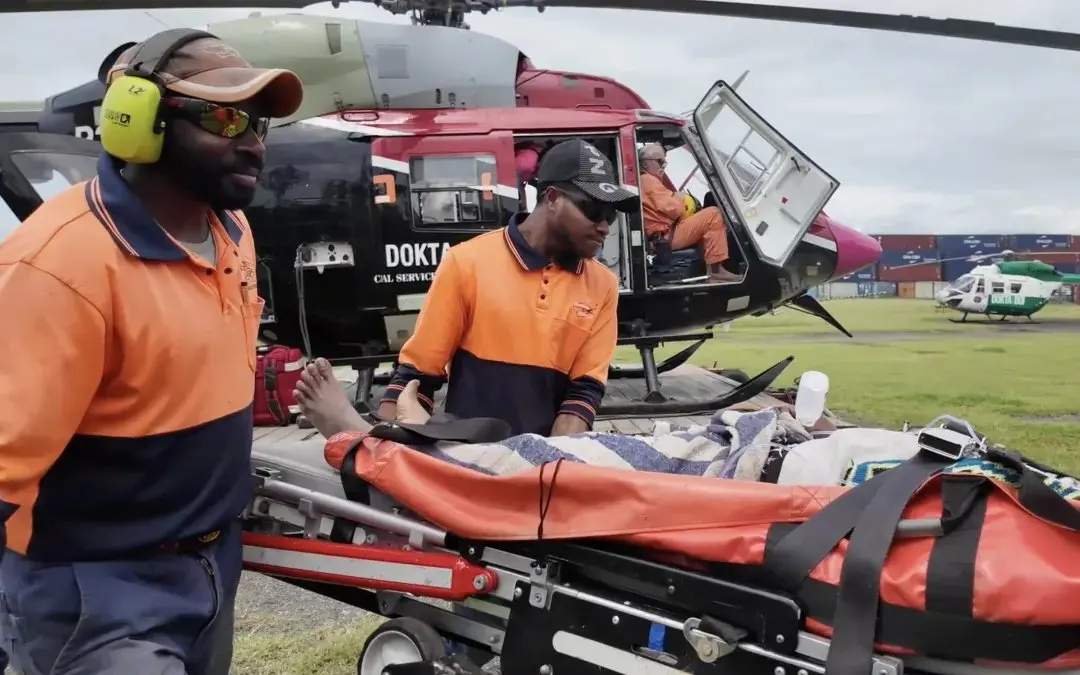
A medevac operation was eventually mounted. Captain Jurgen Ruh, chief executive and pilot at Manolos Aviation, said a helicopter flew the mother out on Monday morning, landing her in Lae shortly after 10am, where she was admitted to hospital for further treatment. By then, tragically, all three babies had died.
Ruh's own assessment is the hardest detail in the story: the outcome might have been different if the emergency call had reached the medevac team earlier. In much of rural PNG, that gap — between a crisis starting and help being reached — is measured not in minutes but in hours or days, shaped by distance, rough terrain, patchy communications and the limited number of rescue aircraft available.
The case has put a spotlight on the wider challenge of emergency maternal and newborn care across Papua New Guinea's remote communities. Health posts in isolated areas are often the first and only point of care, but they rarely have incubators, oxygen or trained neonatal staff, so premature babies depend on evacuation to cities like Lae or Port Moresby — help that has to be requested, coordinated and flown in.
For travellers, this isn't a story that will appear in any brochure, but it explains a reality worth understanding. PNG is one of the least medically equipped countries in the region outside its main cities, and even locals with life-threatening emergencies can wait for an aircraft. Anyone heading beyond Lae, the Highlands Highway or the coastal resorts should assume that serious medical help is a flight away, and plan accordingly — comprehensive insurance with medevac cover isn't optional here, it's the whole plan.
The story is also a reminder of the work of small operators like Manolos Aviation, which runs rescue flights into areas roads simply don't reach. For the communities they serve, those helicopters are often the only link to a hospital bed.