
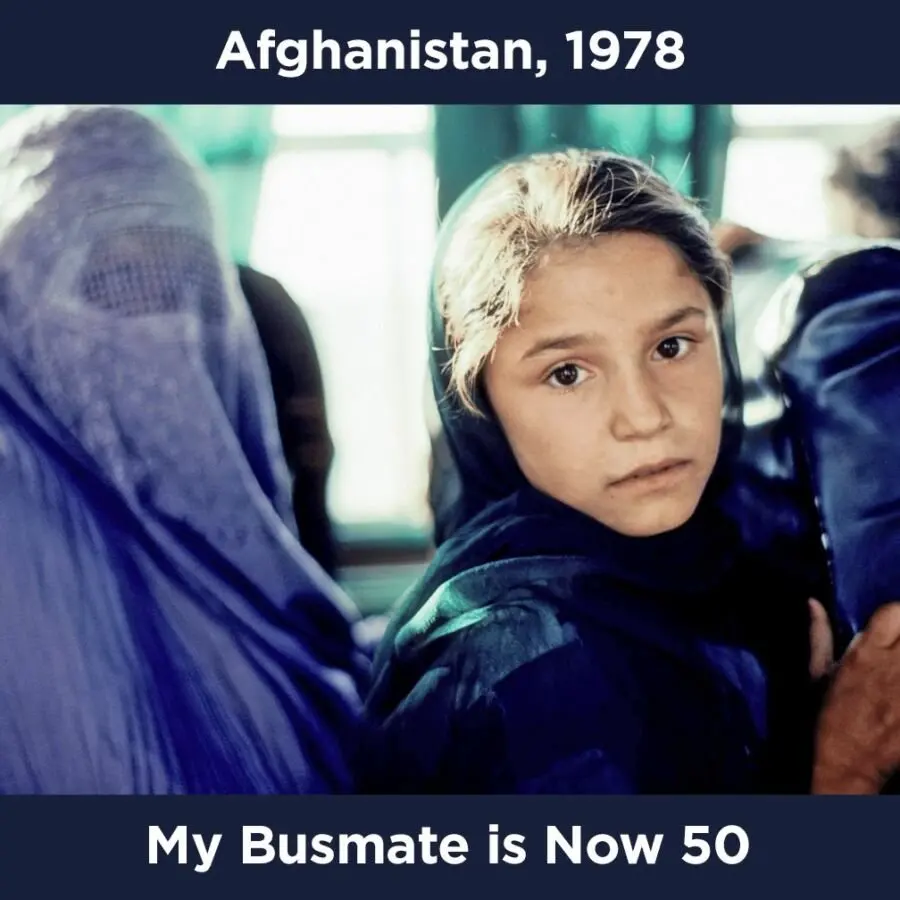
Long before he was America's best-known guidebook writer, a 23-year-old Rick Steves was riding the Hippie Trail from Istanbul to Kathmandu. In a newly published excerpt from his 1978 travel journal, he recounts the 500-mile haul from Herat to Kabul — a window into a country most of us will only ever read about in headlines.
The journey itself was unglamorous but efficient. Steves and his friend Gene caught the 5am Qaderi bus, which covered 800 kilometres in about 14 hours along a narrow but well-paved road built with US and Soviet money. The scenery rarely changed: camels, nomad tents, mud-brick towns, and jagged dirt mountains. The bus stopped three times for prayers and ran with a punctuality that would surprise many modern travellers.
Kabul, where the pair spent two nights at the basic Sina Hotel on touristy Chicken Street, was a sprawling, dusty capital with little tourist infrastructure — the Kabul Museum was closed, maps were nonexistent, and Steves got into a haggling match with a taxi driver over 20 afghanis. But the details of daily life are what make the journal compelling: steak-and-vegetable dinners for under a dollar, one-afghani bus rides to the end of the line, melons and boiled eggs in the hotel courtyard, and a censored Time magazine with all USSR-related articles cut out.
The political backdrop is unavoidable. The journal was written just months after the 1978 Saur Revolution — buses were searched for weapons on entering Kabul, soldiers with bayonets patrolled the streets, an 11pm curfew was in force, and the remains of a destroyed tank sat as a public monument to the fallen regime. Steves, now one of travel's most reflective voices, frames the entry with a note that Afghanistan remains a poor yet formidable land that foreign powers repeatedly underestimate.
Why publish this now? Afghanistan isn't on any realistic holiday shortlist, and it shouldn't be — the country has been off-limits to casual travel for years and is currently unsafe for visitors. But the journal matters for travellers all the same. It captures the original overland route that inspired generations of independent travel, documents a brief moment when Kabul was a functioning stop on a Europe-to-Asia trail, and offers a timely reminder that places have histories far richer than the news cycle suggests. It's also a candid account of how hard solo travel in a very foreign place can be: Steves writes openly about illness, exhaustion, and the wall he felt between himself and potential friends in a country where English was mostly spoken for commerce.
The excerpt is part four of a five-part series on the blog, with the final instalment covering the ride over the Khyber Pass into Pakistan — historically the other great rite of passage on this route.