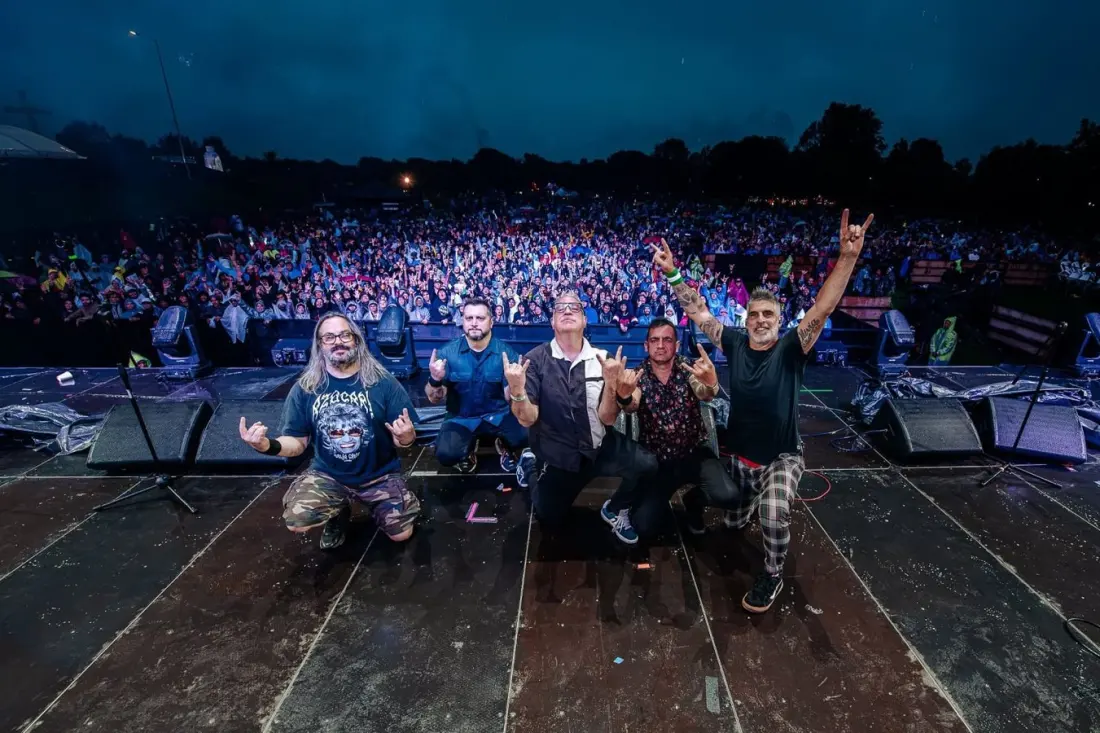
Bogotá's Rock al Parque, one of the biggest free rock festivals anywhere in the world, just marked its 30th birthday in emphatic fashion. Between Saturday 10 and Monday 12 October 2026, more than 561,000 people poured into Simón Bolívar Metropolitan Park for the anniversary edition — numbers so big that authorities had to shut the gates entirely on the final day.
The scale is hard to overstate. The opening day alone pulled in over 191,000 attendees, and Sunday topped 274,000, overwhelming entrances, nearby roads and the public transport network. On the Monday, a public holiday in Colombia, the park hit its maximum authorised capacity and police closed access, with the city urging would-be concertgoers to watch the livestream on Canal Capital instead.
Why such demand? The 2026 lineup was the largest in the festival's history: 83 acts from Europe, the Americas and Asia across four stages — a new addition this year. The bill spanned metal, hardcore, punk, ska, reggae, indie and alternative rock, with Mon Laferte, Apocalyptica, Ministry, Argentina's Rata Blanca, British band Editors, Chile's Los Bunkers, Colombian pop figure Esteman and Japan's Tokyo Ska Paradise Orchestra among the headliners. Homegrown acts got their share of the spotlight too — long-running Bogotá band Skampida, formed in 1998, added another gig to a career of more than a thousand shows.
Founded in 1995 and run by the city's District Institute of the Arts (Idartes), Rock al Parque has built its reputation on a simple premise: entry is free. That makes it a genuine fixture of Bogotá life rather than a tourist-only event, and the anniversary edition leaned into it, with exhibitions, talks and retrospective programming tracing three decades of the Colombian rock scene. Idartes called it one of the most significant editions in the festival's history and credited it with shaping a shared cultural identity across generations of Bogotanos.
But the milestone also exposed the strain. Organisers now face the tricky task of scaling logistics to match popularity: revising attendance projections, tightening access controls and coordinating transport with a demand curve that can dwarf estimates. For a free festival, capping numbers is uncomfortable but, as this edition showed, sometimes unavoidable.
For travellers, the takeaway is straightforward. Rock al Parque remains one of Latin America's great music experiences — huge, diverse, completely free and rooted in the local scene rather than built around VIP tiers. If you're planning a trip around a future edition, go early in the day, expect crowding near the main stages, and consider watching headline sets from a quieter corner of the park rather than fighting the front. It's also a superb window into Colombian alternative music, with national bands sharing stages with international names.
Just don't assume arriving late is an option — this year proved that a free festival can quite literally fill up.