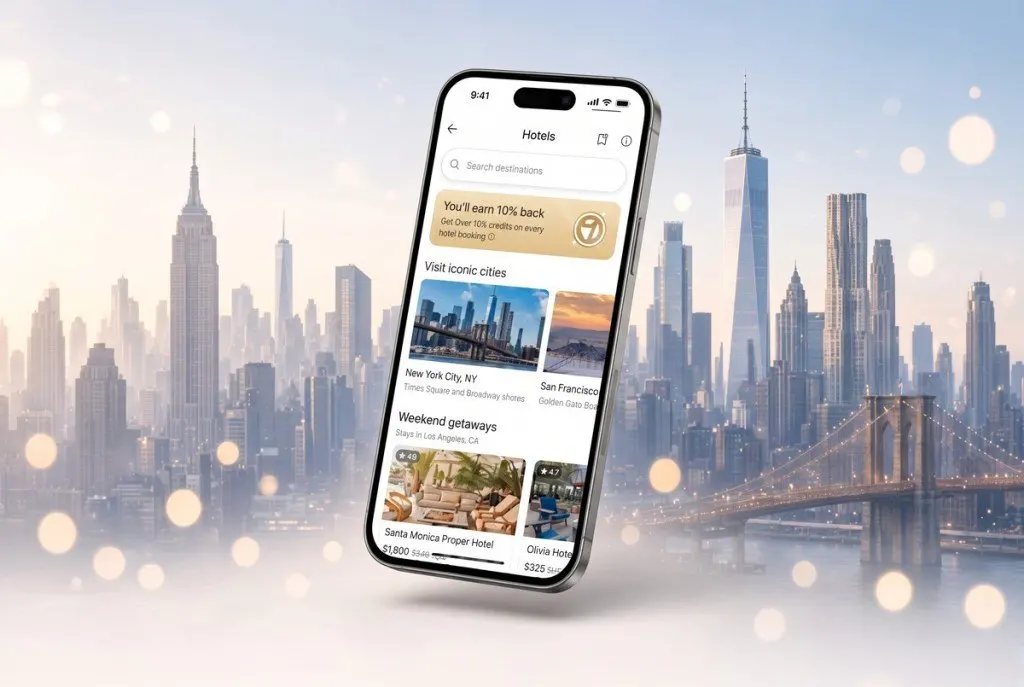
Ten percent cashback on a hotel room has quietly become the standard pitch across American travel bookings — and the companies making the offer often have little to do with hotels. The pattern got a fresh example last week when Robinhood, better known for stock trading, partnered with London-based travel-tech firm Duffel to power flight, hotel and car rental bookings inside its app for Platinum and Gold credit card holders. Platinum customers get 10% back on hotels and car rentals and 5% on flights; Gold holders get 3%.
Robinhood is not alone. Uber pays 10% back on hotels, but in ride credits. Airbnb has dangled up to 15% back on featured hotel listings. A $695-annual-fee credit card now leads with a hotel cashback promise. What links them is that none of these businesses make their money from selling rooms. The cashback is a customer acquisition tool — a way to make a card or an app feel indispensable, funded by interchange fees, subscriptions or the value of keeping you inside one ecosystem.
There is a historical echo here, too. Ten percent back on a hotel used to be what actual travel companies offered. Hotels.com built its brand on a free night after every ten booked, which worked out to roughly a tenth of your spend. That era ended in July 2023 when Expedia Group swapped the program in the U.S. for OneKey, and from July 28, 2026, members on OneKey's free Blue tier earn just 1% back on hotels. In other words: the traditional travel players have scaled their rewards down just as the fintech and platform companies scaled theirs up.
For travellers, the practical takeaway is to look at where the reward actually lands. Uber's 10% comes back as ride credits, which only helps if you already use Uber heavily. Robinhood's 10% sits behind a premium card with a hefty annual fee, so the maths only works if your hotel spend is significant and you value the card's other perks. Airbnb's offer applies to a curated subset of hotels rather than everything on the platform. Free loyalty programs like OneKey are easy to keep, but 1% is a rounding error on most bookings.
The broader shift matters because it changes who controls the booking. When a stock-trading app or a ride-hailing company becomes your hotel checkout, the travel brands themselves lose the direct relationship — and so, often, do the hotels. Booking through a third party can mean forfeiting hotel loyalty points, elite-night credits and the room upgrades that come with booking direct. A headline 10% back may be worth less than the status perks you give up.
The bottom line for holiday planners: these offers are genuinely useful if they match habits you already have, but compare the real value — cash form, annual fees, lost loyalty benefits — before letting a non-travel company book your next trip.