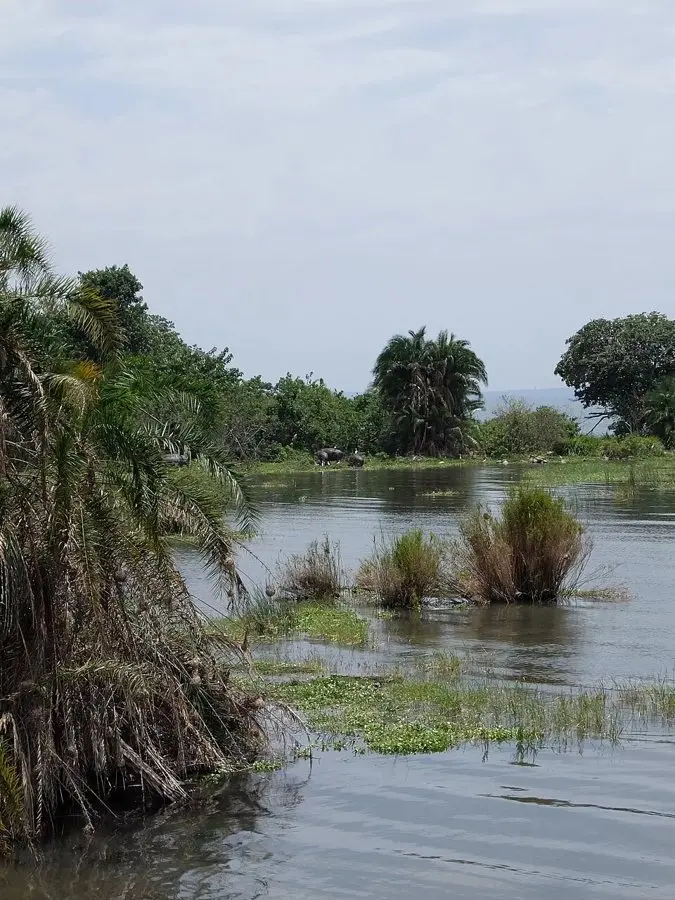
Most safari-goers think of Tanzania and picture the Serengeti's open plains. Rubondo Island offers something else entirely: a forested island in the south-west of Lake Victoria, where a national park protects the main island, several smaller ones and the surrounding water. It's the kind of place where you track chimpanzees on foot in the morning and scan papyrus swamps from a boat by afternoon.
The island's chimps have a strange backstory. Chimpanzees never lived here naturally. Between 1966 and 1969, the Frankfurt Zoological Society released wild-born animals that had been kept captive in Europe, and they somehow figured out the forest on their own — what to eat, where to nest. Rangers later started finding infants born on the island, and their descendants live wild there today.
Trekking to see them takes patience. The animals move through dense evergreen forest, and the park's habituation team works without feeding them or using recorded calls, so sightings are never guaranteed. You often hear them before you see them, which is why a good guide stops walking and listens — and why you should too.
The boat safari is the other half of a Rubondo trip, and arguably the one you shouldn't skip. From the water you might spot a sitatunga, a shy swamp-dwelling antelope half-hidden in the papyrus, plus hippos in the shallows, crocodiles on the shore, fish eagles, kingfishers and, with luck, spotted-necked otters. A guided forest walk rounds things out nicely — colobus monkeys, bushbuck, and no pressure to rush anywhere. That slower pace is exactly what makes Rubondo a good breather after a packed Serengeti circuit.
Practicalities: Asilia runs light-aircraft flights from Seronera airstrip to Rubondo, with the camp about 20 minutes from the airstrip. You can also arrive by road and boat from mainland points like Nkome or Kasenda, but arrange the crossing ahead of time with the park or a licensed operator. June to October gives the driest walking; July and August are considered best for chimp trekking; December to March suits birders chasing migrants. Rubondo Island Camp closes for the rains in April and May.
Note the rules if you're booking the trek through Rubondo Island Camp: trekkers must be at least 12 years old, a minimum two-night stay applies, and there's a separate park-issued chimpanzee permit to sort out in advance. That paperwork aside, Rubondo rewards travellers who want a safari where the vehicle stays parked — a rare mix of forest, water and a conservation story with an unusual origin.