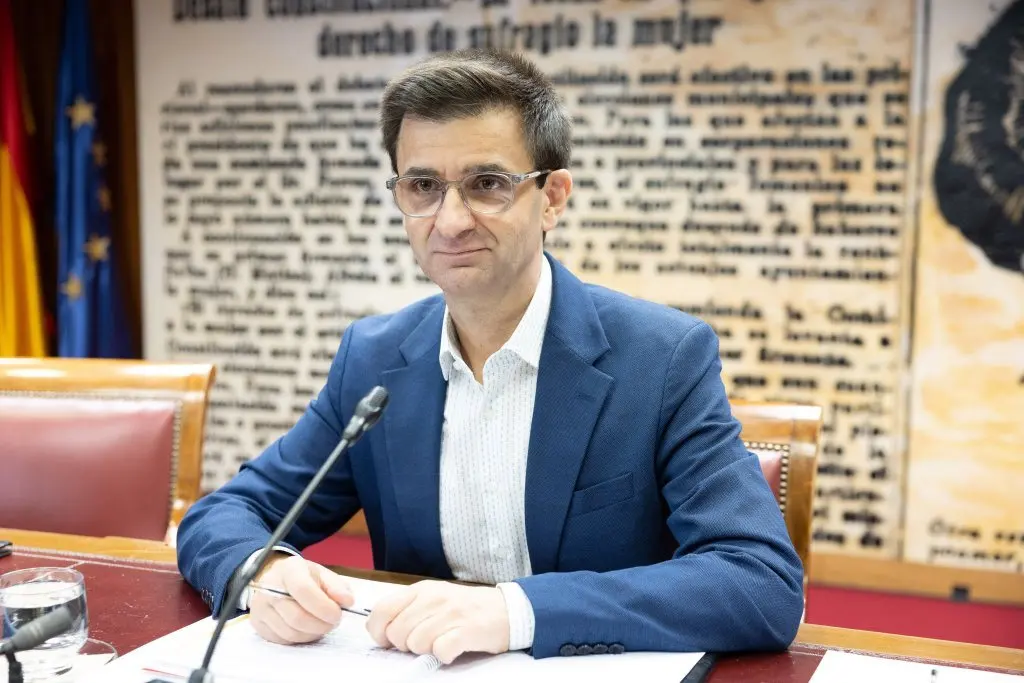
Spain's Eurovision absence may not be a one-year thing. José Pablo López, president of Spanish public broadcaster RTVE, has told a parliamentary committee that he will recommend the corporation keeps its suspension in place for the 2027 contest, which is due to be held in Burgas, Bulgaria, next May. The board still has to sign off, but the signals point to Spain staying home for a second year running.
The background: Spain pulled out of the 2026 contest in Vienna along with Ireland, the Netherlands, Iceland and Slovenia, in protest at Israel's continued participation while the war in Gaza continues. RTVE also refused to broadcast the 2026 semi-finals or final. Before that, Spain had appeared in every contest since its 1961 debut — an unbroken streak that made the withdrawal especially striking, given Spain is one of Eurovision's 'Big Five' financial backers alongside France, Germany, Italy and the UK, and automatically qualifies for the final.
López didn't claim the protest achieved nothing. He told senators that RTVE and other European public broadcasters had pushed the European Broadcasting Union into tighter governance rules, penalties for political instrumentalisation, and neutrality guarantees around sponsors and the event itself. The EBU also announced in August that countries involved in armed conflicts will no longer be allowed to host the contest, even if their act wins — a rule that followed two contests in which Israel came close to winning and hosting the next one. But López called all of this 'technical progress' with 'unfinished business on the ethical front', saying it remains deeply painful that Israel's broadcaster will still compete.
Spain wouldn't be alone in 2027. Ireland's RTÉ confirmed last week it is staying out again, citing the ongoing loss of life and humanitarian crisis in Gaza, and Dutch broadcaster AVROTROS has also confirmed a second-year withdrawal, saying participation is no longer compatible with its principles of trustworthiness, independence and humanity.
The political backdrop matters here. Prime Minister Pedro Sánchez has been one of Israel's harshest critics in Europe, repeatedly describing its conduct in Gaza as genocide — a characterisation the Israeli government rejects. Formally, though, the Eurovision decision sits with RTVE rather than the government, so the board's vote is the one to watch.
For travellers, the takeaway is practical as much as political: if a Eurovision trip to Burgas in May 2027 was on your list, don't count on a Spanish act, an Irish one or a Dutch one. Fans of those countries will need to decide whether the party is worth attending without them. The dispute also reflects a broader point about big cultural events and politics colliding — something likely to keep shaping who turns up, who broadcasts, and possibly even who hosts in years to come.