Locals joke that Madrid's year runs to 'nine months of winter and three months of hell', but a long-time resident writing for a UK paper argues the cold months are the capital's best. There's a catch, though: don't come expecting peace. The city has grown steadily busier over the past decade, and the streets around Puerta del Sol are now more crowded at Christmas than at the height of summer.
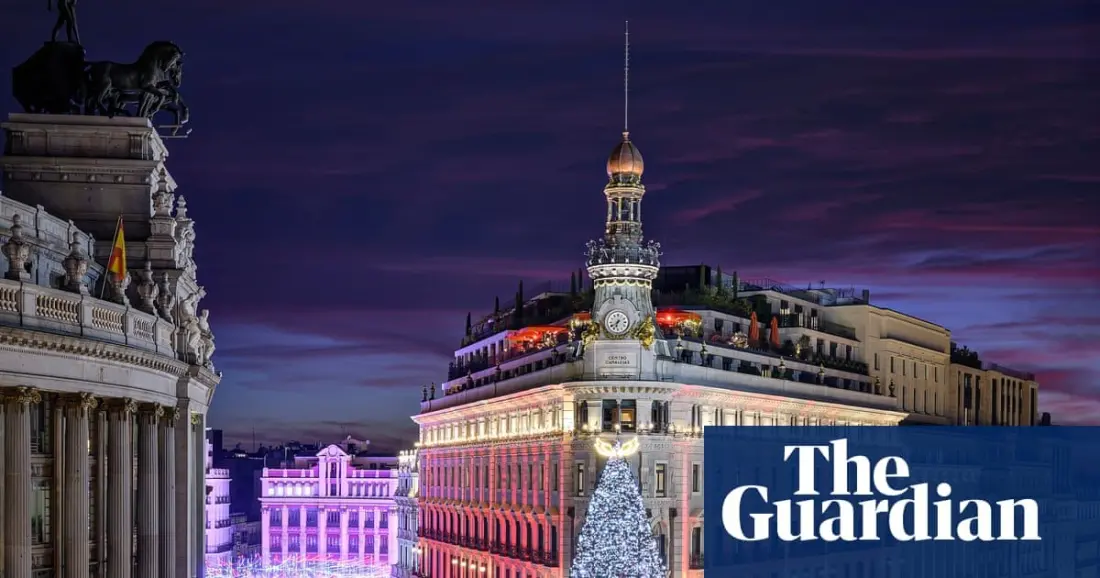
What you get for the crowds is a city that throws itself into the season. Every major square gains a giant tree, Plaza de España and Plaza Colón open outdoor ice rinks, and Plaza Mayor's cobbled centre fills with a festive market of painted wooden stalls. The local style is hard to miss — Madrileños shop in novelty headgear, and spotting entire families arguing while wearing reindeer antlers or oversized turkeys is apparently a seasonal sport in itself. The lights are worth the trip too: guest designers theme the displays on the Four Seasons hotel facade and the flagship store of leather house Loewe.
For the best view, head up instead of out. El Cielo de Montera, a rooftop terrace above Gran Vía, frames the glowing blue art deco clock of the Telefónica building so that winter Madrid looks, from the right angle, like 1930s Manhattan.
Cold-weather eating and drinking is where the city really earns its keep. Outdoor dining continues under heaters and lap blankets, but the classic move is to burrow into a vintage tavern. Mulled wine isn't traditionally Spanish, though the atmospheric bodega Vinícola Mentridana pours a good one, and at La Venencia — serving nothing but sherry straight from the cask since 1922 — there are five varieties to work through. For serious appetite, cocido madrileño, the region's chickpea, cabbage and pork stew served in three enormous courses called vuelcos, is the test: at century-old Malacatín, fourth-generation owner Jose Rodríguez says only three diners have ever finished the whole thing.
Culture fills the quieter hours. Goya's snow scene La Nevada hangs in the Prado, best seen at lunchtime in mid-November or mid-January when the city thins out. And when real snow falls, it lands in the Sierra de Guadarrama above El Escorial, the vast palace-monastery Philip II built around 1580. Forest trails climb to lookouts from which Madrid, 50km away, glints under blue skies like something out of a mirage.
If this sounds like your kind of city break, the practicalities are simple. The central boutique 7 Islas has doubles from €113, with an art-gallery lobby and a craft cocktail bar. Go in December for the markets and lights, or January for cheaper, calmer streets — either way, pack a warm coat and join the antler-wearing locals.