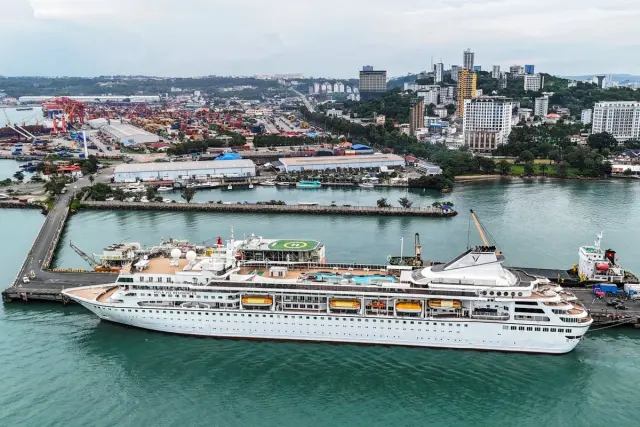
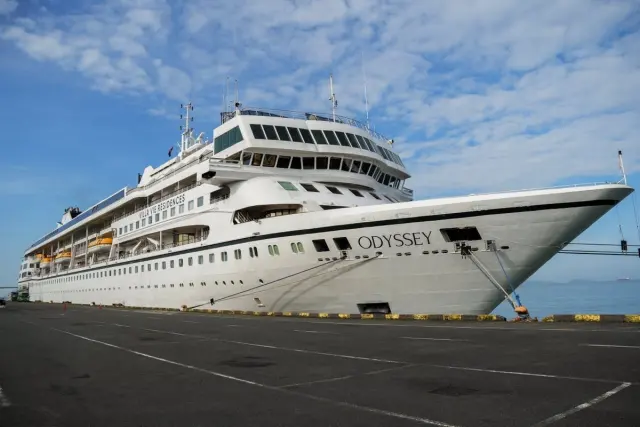
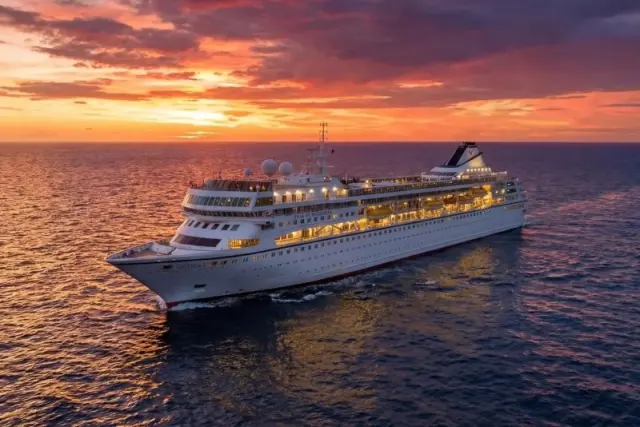
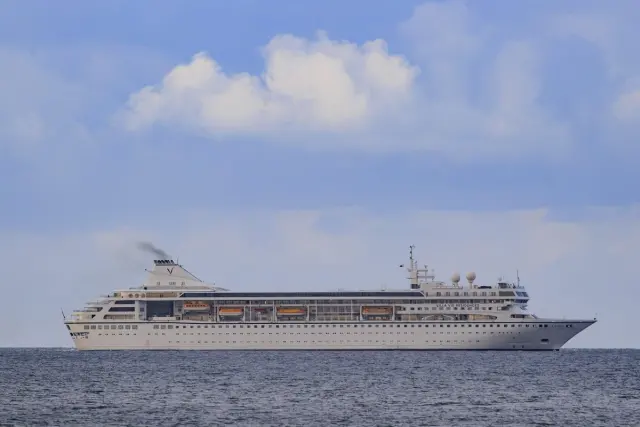
A cruise ship marketed as a permanent floating home has run aground financially — literally stuck in port. The MV Odyssey, a US-operated residential cruise ship on a multi-year voyage around the world, suspended its journey at Sihanoukville on Cambodia's Gulf of Thailand coast, leaving roughly 200 passengers to fend for themselves.
The Florida-based operator, Villa Vie Residences, sold suites as lifetime homes starting around $230,000, promising buyers they could live aboard while the ship ticked off all seven continents. That dream stalled when monthly fuel costs per cabin, historically around $1,800, spiked to an estimated $6,000–$8,000 in parts of Asia. The company blames the war in Iran, which has squeezed traffic through the Strait of Hormuz and driven up fuel prices across Southeast Asia. Even slowing the itinerary and spending more days in port couldn't cover the losses.
The human cost is real. The ship was carrying 203 passengers — mostly Americans — plus 156 crew. Passengers say they got just seven hours' notice to disembark, with no help arranging somewhere to stay. A retired Wyoming couple who boarded 17 months ago in Panama described repeated requests for extra cash for fuel and other costs, unpaid crew, unreliable internet and declining food quality. One California woman who paid $120,000 for a cabin under a plan promising up to 15 years aboard still hopes residents can buy the ship themselves and keep the venture alive.
There's a little context worth knowing: the Odyssey was built in 1993 and passed through several cruise lines before the pandemic idled it in 2020. Villa Vie Residences bought it in 2023, refitted it in Belfast, and launched the current world cruise from there in October 2024 — originally planned for three and a half years, with a second voyage pencilled in to run until 2030.
For travellers, this is a cautionary tale about the booming residential cruise trend. Life-at-sea schemes can genuinely deliver — some residents say their health and happiness improved aboard — but they're startup businesses with startup risk. Cabins are essentially long-lease property in a company that can fail, and 'lifetime at sea' contracts are only as solid as the operator's balance sheet. Anyone tempted by residential cruising should scrutinise who owns the ship, how fuel and operating costs are handled, and what happens if the company folds mid-voyage.
Cambodian officials had expected the ship to refuel and depart Sihanoukville within days, but the operator hasn't confirmed anything. Until a rescue deal or restructuring materialises, the Odyssey stays put — and its residents are looking for temporary homes on dry land.