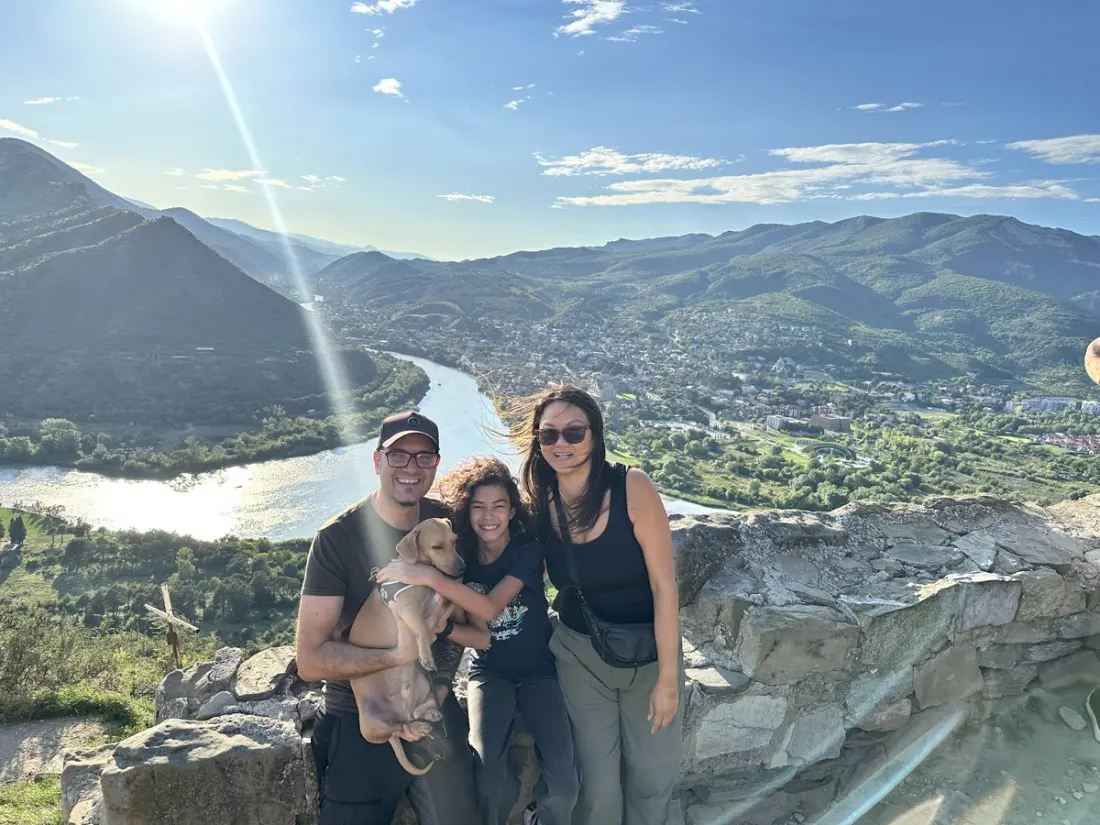
A family who has lived in Spain, the Netherlands, Mexico and South Africa has just relocated to Tbilisi — and after a month in the Georgian capital, their verdict is refreshingly mixed. Travel writer Nellie Huang, her software engineer husband and their 11-year-old daughter chose Georgia over Montenegro, Thailand and Japan, and their early experience is a useful read for anyone eyeing the Caucasus as a base.
The headline reasons are practical. Georgia lets citizens of roughly 98 countries stay a full year visa-free — no application, no fee — though it's a tourist allowance, not residency, and officials are cracking down on overstays with fines and entry bans. Then there's the famous 1% tax: it's real, but it's a Small Business Status for registered Individual Entrepreneurs, capped at 500,000 GEL (about US$185,000) of annual turnover, with monthly filings and excluded professions. It's not the free money social media suggests, and the family used a local consultancy to register.
Daily life costs less than Western Europe, but not dramatically. Central two-bedroom apartments in neighbourhoods like Vake or Vera run US$800–1,800 a month (Airbnb adds 20–30%, so a proper lease pays off fast). Coffee is $2–5.50, a casual Georgian meal $5.50–10.50 per person, and a Bolt across town $3–6. What has genuinely surprised them is the digital infrastructure: Apple Pay everywhere, apps for groceries and bills, and a bank account openable with just a passport in one visit.
For families, Tbilisi's international school scene is a real draw — British, American, German, French and Georgian-international options charge 10,500–50,000 GEL a year (roughly $3,800–20,000), well under Western European equivalents. Their daughter started at the British International School of Tbilisi and settled in within a week. Beyond the city, the Greater Caucasus are a few hours' drive, offering some of Europe's cheapest skiing in winter.
The honest downsides? Georgia's proximity to Russia and its unresolved breakaway regions weigh on the mind, protests have flared politically, and Tbilisi winters have a grey, gloomy reputation. Add an unpronounceable, unrelated language and a beautiful but utterly unreadable alphabet, and you have a place that rewards curiosity but demands a little patience.
For remote workers, slow travellers and relocating families, Tbilisi hits a rare sweet spot: year-long visa-free access, low bureaucracy, mountains on the doorstep, khachapuri and khinkali on every corner, and an international community that's already there when you arrive. Just budget for winter light and get proper tax advice before assuming that 1% applies to you. — Wild Junket