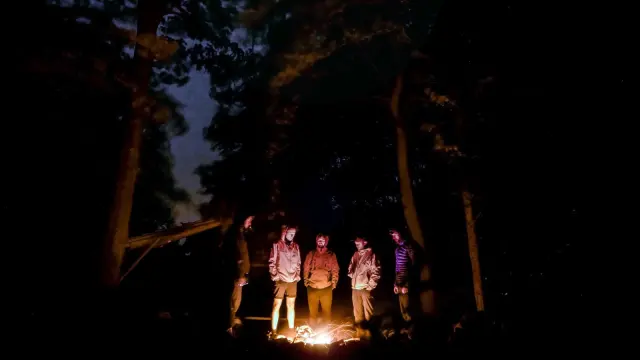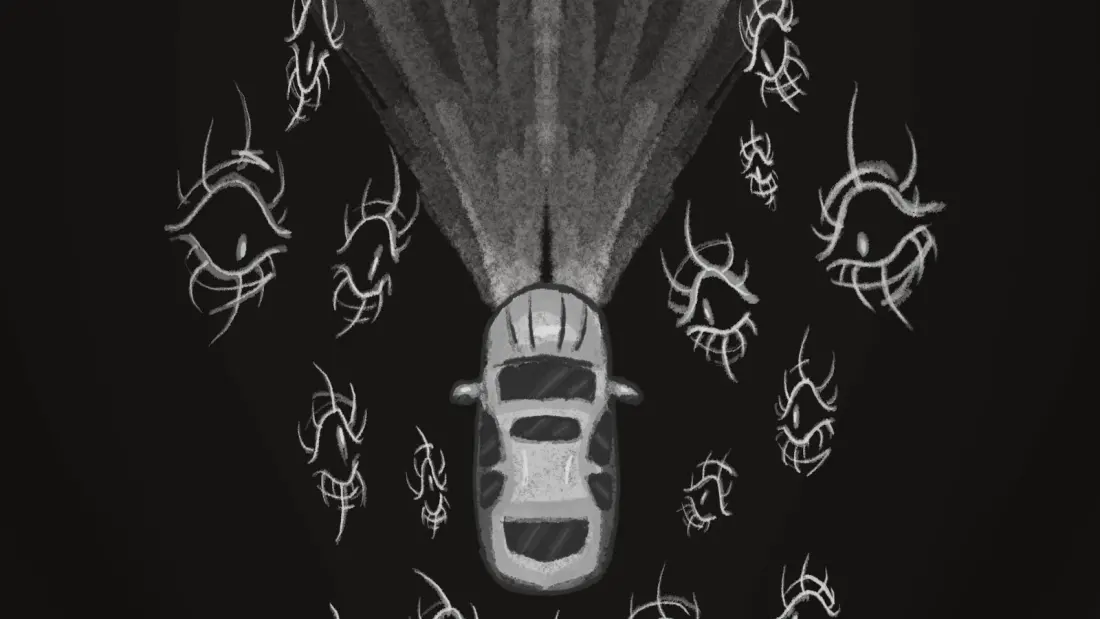
Driving alone at night through southern Utah, with her boyfriend asleep beside her, Outside social media strategist Nicole Facchina hit a stretch of road so dark the headlights seemed to end the world. On a fall 2024 trip from Salt Lake City to Zion National Park, she rounded a sharp corner and was hit by an overwhelming sense of being watched—goosebumps, a racing heart, skin gone cold everywhere but the back of her neck. The rearview mirror showed nothing but blackness.
The feeling didn't lift. Her boyfriend, Marshall, snapped awake moments later, spinning in his seat as if something behind the car had startled him. Forty-five minutes down the road, the pair reached a one-room cabin outside Zion's East Entrance, and Facchina practically sprinted inside, double-locking the door. She lay awake staring at the window until around 3 a.m.; by sunrise, the sensation had evaporated.
There's a scientific-ish name for this: scopaesthesia, sometimes called the psychic staring effect. Back in 1913, psychologist John Edgar Coover reported that 68 to 86 percent of surveyed students claimed they could tell when someone was staring at them. In 2000, biologist Rupert Sheldrake found similar results and admitted science couldn't yet explain why. Google Scholar now indexes 149 studies on the phenomenon.
The leading explanation isn't supernatural. Humans are built with a hyper-vigilant detection system: our eyes catch subtle movements before the conscious brain registers them, our ears pick up tiny sounds, and our skin senses shifts in temperature and pressure. Whether that fully accounts for the staring feeling is still debated—but the practical upshot for anyone camping or hiking after dark is simple. Your body is constantly processing information your mind hasn't caught up with yet.
The story has a genuinely unsettling coda. A year later, over dinner with friends, Facchina finally told the tale expecting laughs. Instead, Marshall went pale. He'd felt it too—he woke because something seemed wrong, felt watched at the cabin, and swears he saw two glowing eyes looking through the window that night. He just hadn't wanted to believe it, so he'd said nothing.
Was it fatigue-fuelled paranoia or something actually out there in the desert? Neither of them can say. But the takeaway for backcountry travellers is worth keeping: if the hairs on your neck stand up in the dark, don't laugh it off. Your instincts evolved to flag trouble early, and on a solo night drive or at a remote cabin, that early warning system is doing exactly what it's supposed to. And if you're heading to Zion yourself, do it in daylight—the Narrows hike through the river-carved canyon is best enjoyed without a case of the midnight heebie-jeebies.