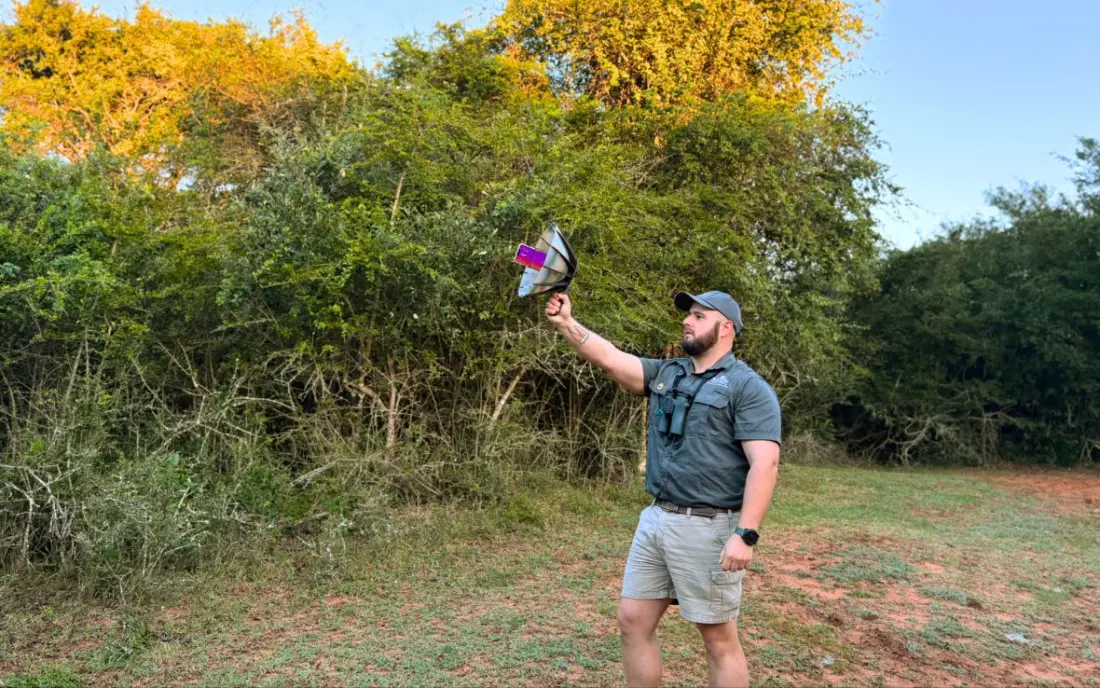
Sound is often the first sign of Africa's birdlife. On South Africa's Sweni River in Greater Kruger, you can pick up a lilac-breasted roller by its harsh rasp long before you spot its pastel plumage, and the fish eagle's famous cry — often called the 'voice of Africa' — carries across the water. For birders, these calls are essential clues when dense bush hides the singers from view.
But there's a problem: Africa's birds are badly under-represented in the sound libraries behind modern bird-identification apps. Even though more than half of the continent's avian species are found nowhere else, fewer than 30 percent of African birds have the 150 recordings needed to train Merlin Bird ID, the popular Cornell Lab app that works like Shazam for birdsong. The upshot is that the technology that helps birders in Europe or North America simply doesn't perform as well in Africa.
Enter the Big Year of African Sounds, a continent-wide effort led by the Cornell Lab of Ornithology together with BirdLife South Africa. The goal is ambitious: rally the birding community to record the vocalisations of more than 1,800 species across 50 countries, filling the gaps in databases that power automated identification tools.
Why should a traveller care? If you're heading on safari or planning a birding trip anywhere from Kenya to Cape Verde, better sound coverage means the app on your phone will actually recognise what you're hearing. And you don't need to be an ornithologist to join in — anyone with a smartphone can contribute recordings while on holiday. That fish eagle wailing over a river at dawn becomes not just a holiday highlight, but a small piece of citizen science that helps scientists track species across a continent.
It's also a reminder of how much of African birding happens by ear. Guides routinely identify dozens of species by call alone, and learning even a handful of sounds before a trip — the fish eagle, the roller, the starlings chattering in the trees — adds a whole layer to a game drive or a forest walk. The Big Year project, once complete, should make that learning curve easier for everyone, turning patchy data into a resource that works across all 50 countries it aims to cover.