Flying is statistically the safest way to travel, and most frequent flyers eventually make peace with the bumps, drops and firm landings. A veteran traveller writing for Sydney Morning Herald's Traveller argues the real anxiety of air travel kicks in at a different moment entirely: when you find out who's sitting next to you.
The dread starts before wheels are even up. Boarding zones are announced, and a chunk of passengers surge forward anyway, slowing the whole process for everyone. Then there's the classic heartbreak of settling into a row with an empty neighbouring seat – just enough time to feel lucky before the captain announces the flight is waiting on one final passenger.
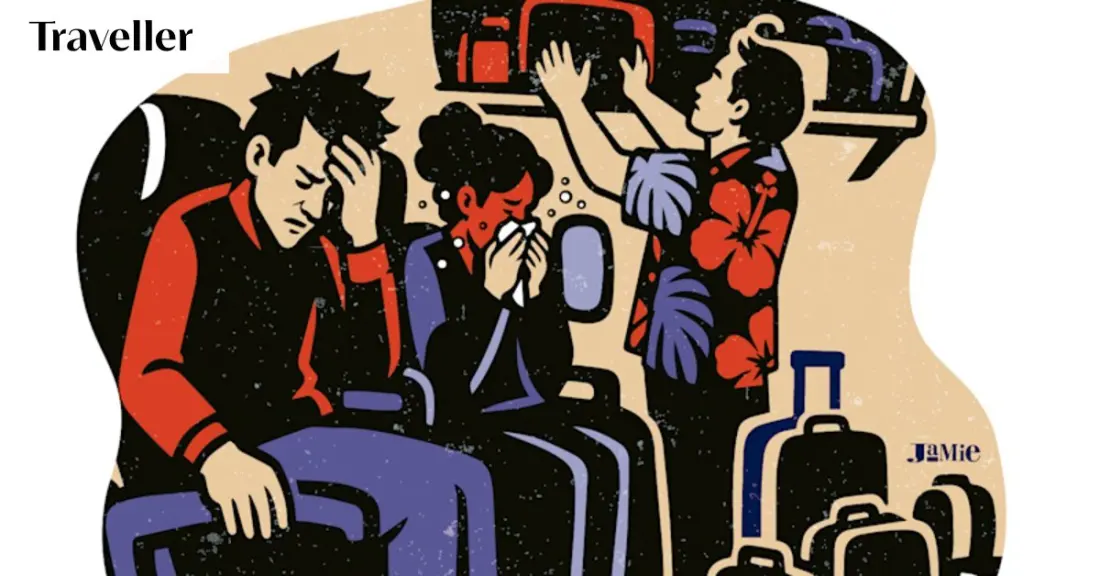
That final passenger, in this writer's experience, tends to arrive laden with duty-free shopping that gets crammed into the overhead bin, crushing everyone else's bags along the way. The best-case scenario from there is silence and a movie. The worst-case scenarios are more memorable. One flight from Tokyo to Singapore featured a seatmate who screamed down the phone at his wife – without switching to flight mode – then downed a smuggled can of beer in 30 seconds and passed out slumped against his neighbour, snoring for hours. Another involved a visibly feverish, sweating woman with a violent cough, trapped in a full cabin of recycled air, handing her illness to a fellow passenger two weeks before their holiday.
The writer admits they once found air travel romantic and looked forward to chatting with whoever landed in the next seat. Now the bar is much lower: someone who keeps their legs to themselves, doesn't wage war over the armrest, and lets the person behind recline without crushing their tray table.
The bigger point underneath the comedy is one most of us will recognise. These aren't really small grievances – they're symptoms of a broader erosion of shared-space manners. Planes are communal environments, and a tolerable long-haul flight depends on lots of people making tiny sacrifices: conceding the armrests to the middle seat, not treating the lavatory like a hazard zone, boarding in your assigned group. Flying, the argument goes, is a privilege rather than a right, and the experience degrades for everyone when people stop treating each other accordingly.
Why does this matter to travellers? Because while you can't choose your seatmate, you can control the kind of seatmate you are – and knowing the unwritten rules of cabin etiquette makes any flight, especially a long-haul one, less miserable for you and everyone in your row. Aisle passengers get the extra legroom, middle seaters get both armrests, window seaters get the wall to lean on. Honour the system. Board on time, keep your shoes on, use headphones, and if you're sick, mask up. The plane will get you there either way; it's the humans that make or break the trip.