
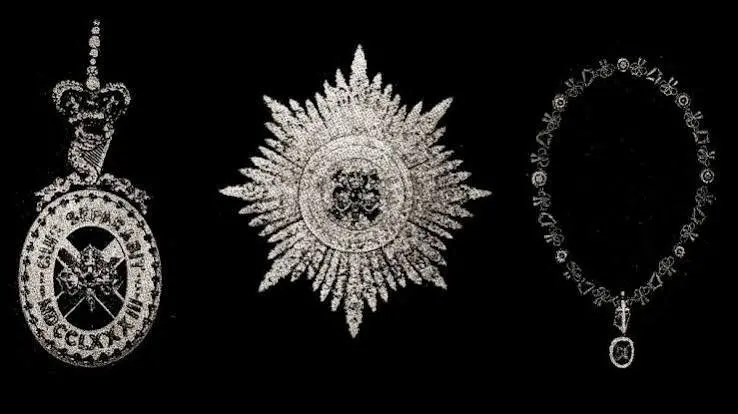
While Ernest Shackleton was edging toward the South Pole in 1907, back in Dublin his younger brother Frank was at the centre of one of Ireland's great unsolved mysteries: the theft of the Irish Crown Jewels from Dublin Castle.
The jewels — two gem-encrusted badges of the Order of St Patrick, set with 394 precious stones — were kept in a safe in Bedford Tower. Caretaker Sir Arthur Vicars, Ulster King of Arms, had botched the security: the safe didn't fit the strongroom, so he kept it in the library, where he hosted regular after-hours parties. On 6 July 1907, the safe was found unlocked and empty. No forced entry — the thief had a key.
Suspicion quickly landed on a familiar face at those parties: Francis 'Frank' Shackleton, Ernest's brother. Frank was living with Vicars at the time, held a do-nothing herald's post, was deep in debt, and had reportedly joked about how easy the jewels would be to steal. Vicars himself wrote to Frank suggesting he knew where the regalia was.
So why no charges? Because the inquiry could not touch what everyone knew: those parties involved prominent officials and same-sex activity, still a crime in the British Empire until 1967. If Frank went on trial, he could implicate the Lord Lieutenant's son and even Edward VII's brother-in-law. Instead, the scapegoat was Vicars, who lost his job. Even Arthur Conan Doyle got involved, advising a seance that pointed detectives to a churchyard — where they dug up nothing. The case later inspired the Sherlock Holmes story The Bruce-Partington Plans.
A 1927 letter from a Parisian jeweler offering the jewels back for £2,000-£3,000 went unanswered; an empty jewel case arrived by post soon after. An accomplice theory centres on Captain Richard Gorges, who allegedly bragged about the theft in prison years later. Vicars, shot by the IRA in 1921, left a will accusing officials of shielding 'the real culprit & thief Francis R. Shackleton (brother of the Explorer who didn't reach the South Pole)'. Ernest, notably, kept bailing his brother out — once borrowing £1,000 for Frank's debts while fundraising for an expedition. Frank later ran an antiques shop in Sussex and died in 1941.
For travellers, this story is a reason to look harder at Dublin Castle. Most visitors come for the State Apartments and the medieval undercroft, but the Bedford Tower in the Upper Castle Yard is where one of the 20th century's most scandalous heists unfolded — a tale of aristocrats, blackmail, polar exploration and vanished gems that Dublin's guides still love to tell. The stones themselves were almost certainly broken up and sold individually, so don't expect to see them. But standing in the courtyard where the safe sat wide open while an empire scrambled for a cover story? That's history you can walk through.