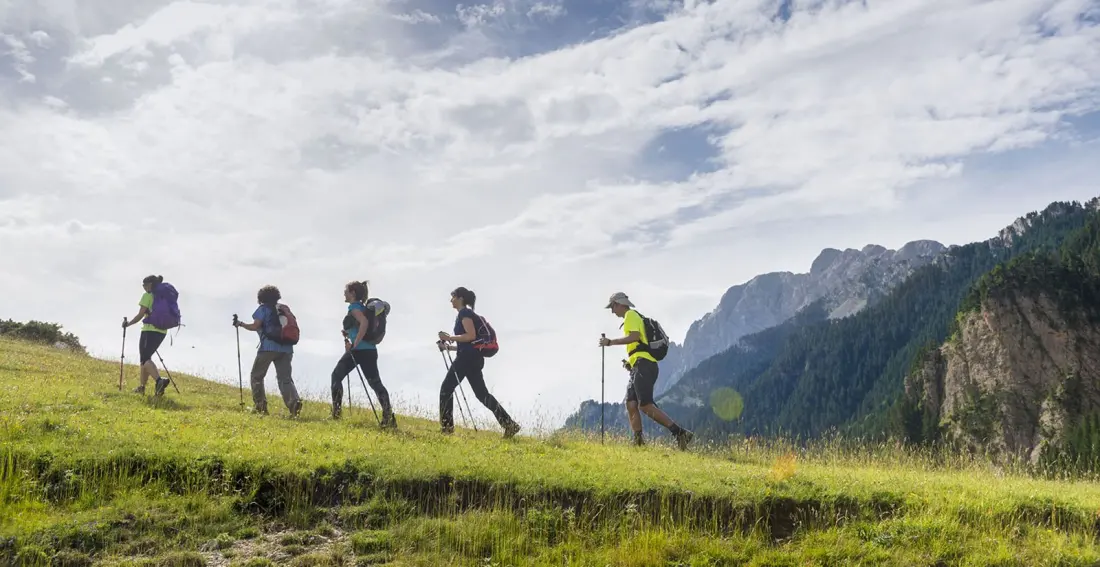
Catalonia's Pyrenees reward slow travellers, and three long-distance routes make the region accessible to almost any level of walker — from a hut-hopping circuit in the national park to a high-altitude challenge and a 200km history trail that crosses into France.
The best known is the Carros de Foc, a 65km loop around Aigüestortes i Estany de Sant Maurici, Catalonia's only national park. The park packs in nearly 200 glacial lakes, waterfalls and the twin limestone Els Encantats peaks looming over the Estany de Sant Maurici. The route dates to 1987, when the keepers of its nine mountain huts raced each other around it in 24 hours. Today nobody suggests that: most walkers take four to seven days, sleeping in the refugis themselves. The huts are half the appeal — set in dramatic spots, serving hearty dinners, and a natural way to meet fellow hikers.
If you want bigger mountains, La Porta del Cel — 'gateway to heaven' — is a 60km-plus circular route starting from the village of Tavascan near the French border. It threads through both the Catalan and French Pyrenees and climbs several 3,000m summits, including Pica d'Estats, Catalonia's highest peak, plus the Verdaguer, Montcalm and Roca Cigalera, which hands you a 360-degree view of the whole trail. Overnight stops include four refuges, among them Vallferrera, opened in 1935 and the oldest in the Catalan hiking federation's network. This one is genuinely demanding: remote, high and rugged, so it suits experienced walkers who have trained properly and packed the right gear.
The third option swaps altitude for story. The Camí dels Bons Homes, or GR-107, runs roughly 200km from the Sanctuary of Queralt above Berga to Foix in the French Ariège, tracing the path the Cathars are believed to have taken as they fled persecution in the 13th and 14th centuries. Highlights include the walled medieval town of Bagà, home to a Cathar museum inside the Gothic 13th-century Pinós Palace, and Bellver de Cerdanya, a hilltop town whose name means 'beautiful view' — with Gothic churches, arcaded squares and serious food, from trinxat (potato, cabbage and bacon) to botifarra sausage.
Why it matters: these routes cover the full range of Pyrenean walking. Carros de Foc is the classic hut-to-hut introduction, La Porta del Cel is the summit-bagging test piece, and the GR-107 blends gentle terrain with medieval towns and cross-border bragging rights. All three are low-impact, slow-travel holidays where the scenery, food and mountain-hut camaraderie do the entertaining.