Laura Ayoub never set out to build a sporting community in Lebanon. She studied hotel management, spent close to a decade running Beirut restaurants like Goutons Voir and Nonna, and only tried pole dancing when a bachelorette party in France wandered into a studio by accident. Reluctantly joining in, she discovered a demanding blend of gymnastics and dance that hooked her completely.
Today she runs Pole Fit Lebanon with a team of six teachers and is the force behind the Lebanon Pole Championship, the country's first pole dancing competition. Rather than opening her own studio, she partnered with existing spaces across the country — a decision she now considers smart, since it let the school operate flexibly through Lebanon's economic and security crises.
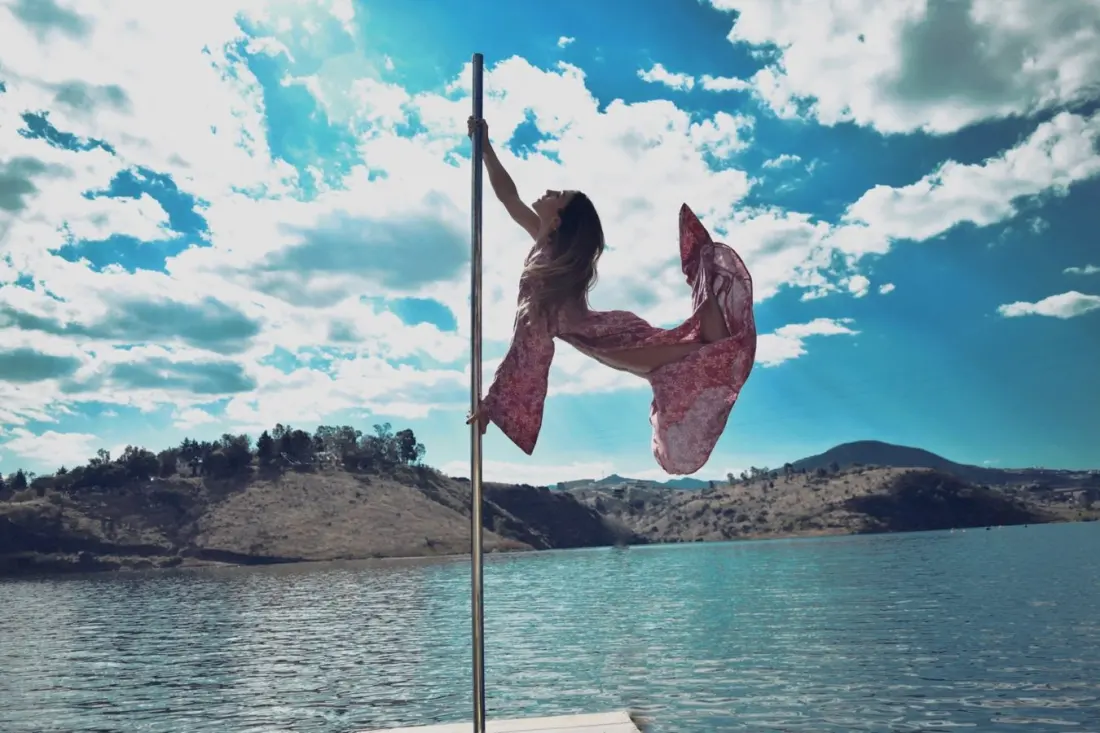
The stigma around the sport is real, and Ayoub doesn't pretend otherwise. The pole's history is tangled with strip clubs and cabarets, and she accepts that association never fully disappears. Her distinction is simple: pole dancing is done for yourself, without an audience unless you're performing or competing. And contrary to popular belief, you need zero fitness to start. No strength, no flexibility, no particular body type — you build shoulders, core and grip from scratch, and it's done barefoot because skin friction, not fabric, is what holds you to the pole.
The Championship launched in 2022 with beginner to advanced categories, international judges and roughly 500 spectators per edition. It paused in 2023 because of the war, then returned for two more editions at Beirut's The Grand Factory. The scene is bigger than Lebanon, too — Ayoub won her own competition, Pole Theater in Egypt, and notes the sport is established across the region under names like "vertical dance," often in women-only studios in Qatar, Jordan, Bahrain and Saudi Arabia.
For 2026 the competition takes a break while Ayoub focuses on motherhood. Instead, a student showcase is planned for December — a lower-key performance without judging, costumes or choreography pressure — with the Championship returning after that.
Why does this matter to visitors? Because it's a window into a side of Lebanon most travellers never see: a young, creative community building something new in difficult conditions. Travellers passing through Beirut can look up Pole Fit Lebanon's classes at partner studios around the city, and timing a trip to a student showcase or future championship edition means experiencing local culture well off the usual tourist track.