
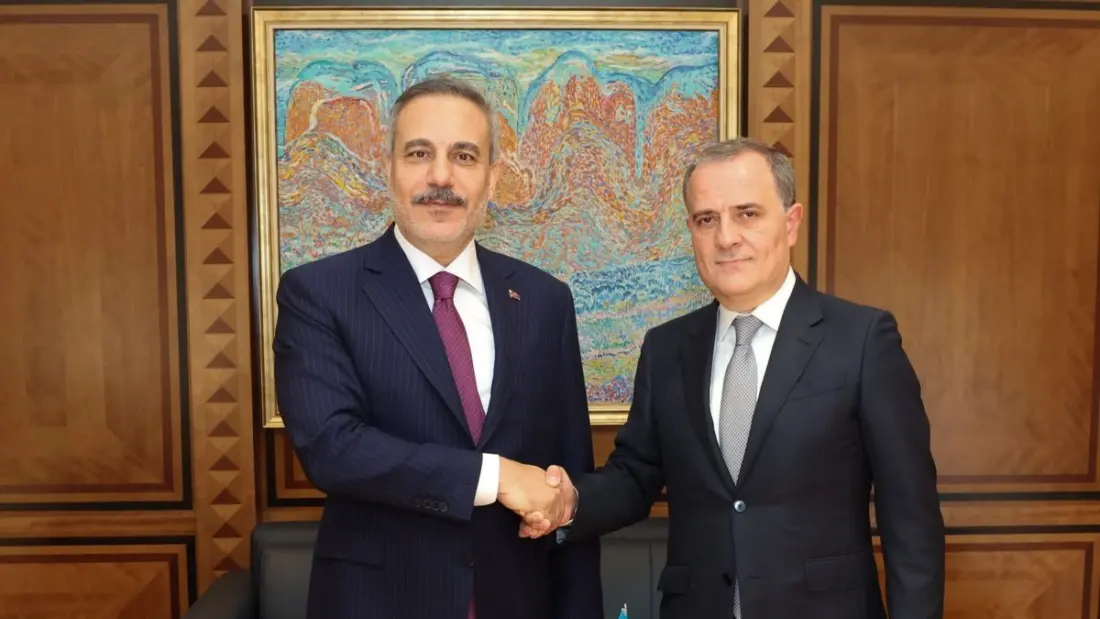
Speaking in Baku alongside Azerbaijan's foreign minister Jeyhun Bayramov, Türkiye's top diplomat Hakan Fidan delivered an unusually blunt assessment of the Russia-Ukraine war's reach into the Black Sea. Attacks on civilian vessels in recent months, he said, have undermined the security of navigation, life, property and the marine environment — and Turkish and Azerbaijani sailors have been among the dead. For a country that has spent four years trying to keep the Black Sea out of the conflict, the spillover is, in his words, unacceptable.
Türkiye's approach so far has leaned on two tools: strict enforcement of the Montreux Convention, which governs warship passage through the Bosphorus, and the Black Sea Grain Initiative, which once kept cargo moving from Ukrainian ports. Fidan said those efforts held until recently, but the war has shifted from attrition to destruction, with commercial infrastructure increasingly targeted. He confirmed Ankara is pressing both sides for a moratorium on strikes against energy infrastructure and says the parties have exchanged responses to Turkish proposals — a sign, he argued, that after four and a half years, both are edging closer to a deal. Talks hosted in Istanbul reportedly came close to a signed agreement without ever getting there.
Why should a traveller care? The Black Sea is the waterway every Istanbul-bound cruise ship, ferry route and coastal holiday threads through, and Fidan's warning that the conflict could intensify geographically matters for anyone eyeing the Turkish coast or considering the region's reopening. He also flagged the wider knock-on effects: energy prices, food security and environmental risk if the fighting spreads — the same dynamics that push up fuel surcharges and trip costs across Europe.
There was forward-looking news too. Bayramov detailed green energy projects meant to carry Azerbaijani power to Europe via the Black Sea, including new cables through Azerbaijan, Georgia, Türkiye and Bulgaria, plus a Nakhchivan-Türkiye link. More intriguingly for overland travellers, the Zangezur Corridor — the missing 42-kilometre link through Armenia on the Middle Corridor route — is progressing: road works are about 95% done, rail around 75%, with completion expected in the first half of 2027. If it opens, it would stitch together a direct Europe-Central Asia land route via Türkiye and Azerbaijan, reopening a Soviet-era rail line unused for over 30 years. Baku also confirmed it will back Türkiye's COP31 hosting and that the Organization of Turkic States summit lands in Türkiye next month.
The bottom line: peace efforts are active but unfinished, and the Black Sea's status remains the hinge. Watch this space if the region features in your travel plans.