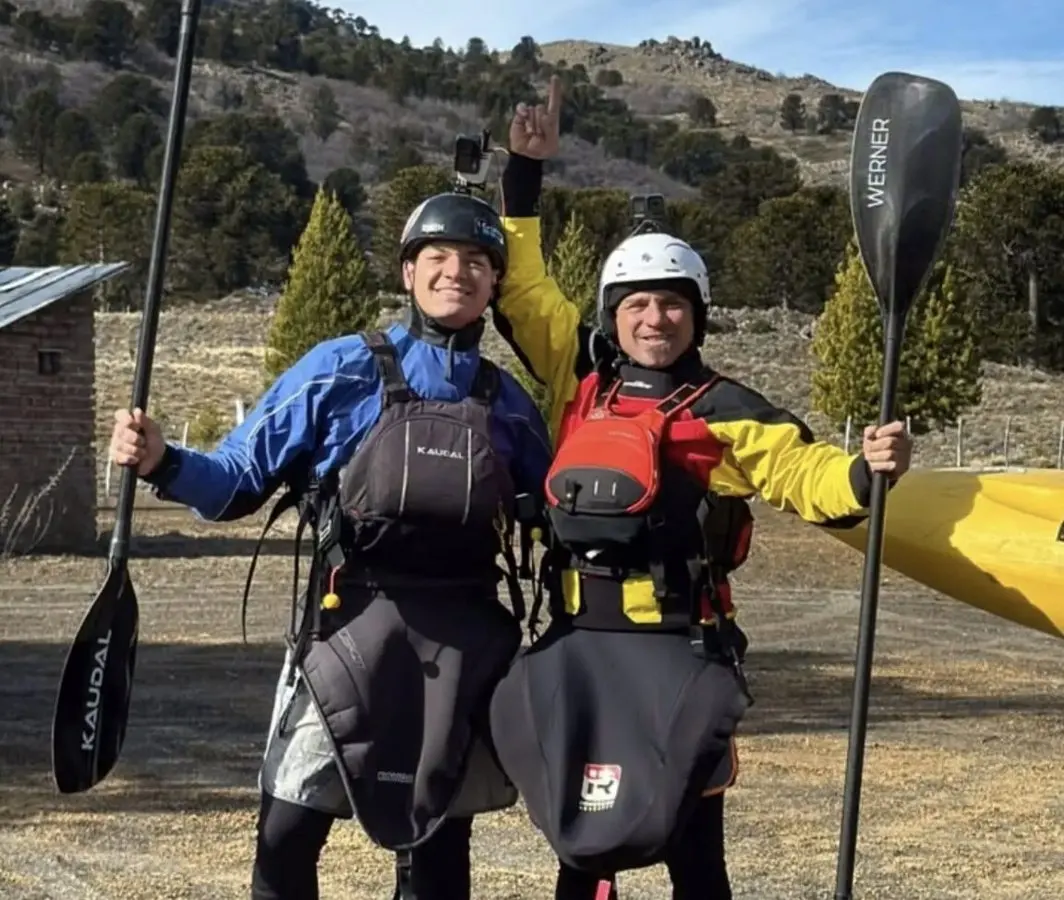
A new long-distance paddling attempt kicks off in Patagonia this week. On September 25, Argentine kayakers Alexis Valladares and Sebastian Clemente will launch from the Quillahue River at Moquehue, in northern Argentine Patagonia — a start point barely three kilometres from the Chilean border in the Andes. From there they'll paddle, portage and grind their way roughly 1,300km east across Argentina until they reach the Atlantic coast.
The pair expects the trip to take about a month, and they're going deliberately light: everything they need fits into bags stowed inside the kayaks. Clemente says the route has been years in the planning, with the two spending a long time pulling together maps, weather and wind data, distances, food logistics and risk assessments before committing to a launch date.
What makes this attempt interesting is the claim that nobody has paddled this exact line before. Clemente says they've found no records of anyone completing it, and the routes of previous "Andes to the Atlantic" expeditions don't match theirs. In 2016, Leonardo Proverbio and Roberto Trinchero crossed the southern Patagonian Ice Field on a route just under 800km. Back in 2011, French paddler Aurelien Rateau started further north, near Fitz Roy, trekking and paddling down the Río Santa Cruz to the sea. Both were impressive trips, but neither followed the corridor Valladares and Clemente have drawn up.
For travellers, it's a fresh reminder of just how much wild, water-connected terrain northern Patagonia holds — from high Andean lakes near Moquehue and Villa Pehuenia through river systems that eventually drain east toward the ocean. You don't need to paddle a month to sample it: the Moquehue area itself is a quiet alternative to busier lake towns, with canoeing, fishing and hiking around its alpine lakes, and the famous Seven Lakes route between Villa La Angostura and San Martín de los Andes isn't far to the north. Even sections of the pair's route pass through country that suits multi-day river trips for experienced paddlers, plus plenty of road-trip territory for everyone else.
The story is worth following whether or not the "first" holds up. If the two complete the crossing on schedule, they'll have linked the crest of the Andes to the Argentine coast under their own paddle power — and given future adventurers a new line on the map.