
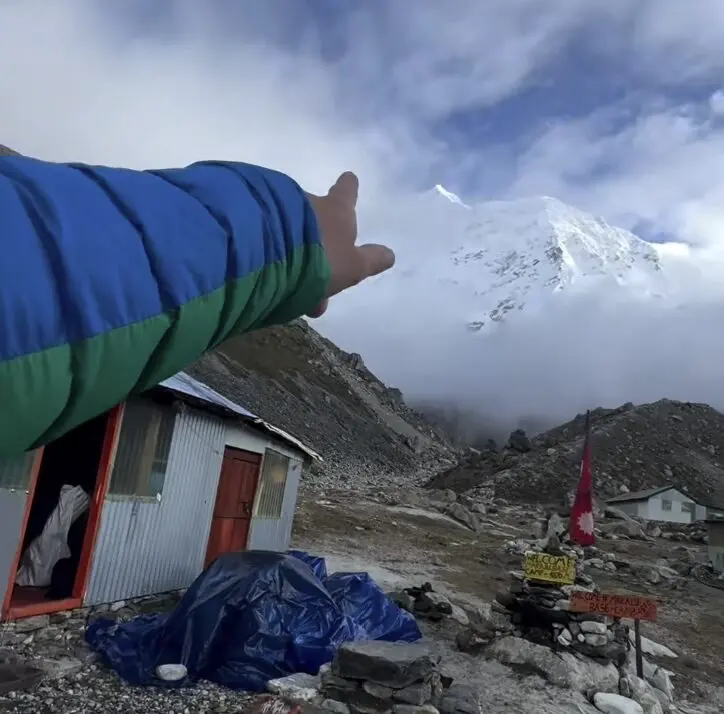
Makalu, the world's fifth-highest mountain at 8,463m, rarely sees true alpine-style ascents. This autumn, Russian climbers Denis Aleksenko and Artem Tsentsevitsky are hoping to change that — returning for a second attempt on the peak, this time without fixed ropes, camps in a row, or support of any kind.
The pair know the mountain well. Last year they climbed it in traditional expedition style, fixing a few ropes on the most exposed sections but otherwise operating alone, as is common on Makalu in the quieter autumn season. They broke trail through deep, unstable snow and retreated more than once before a final push got them to around 7,700m — still several hundred metres short of the summit — before weather and conditions forced them down.
This time the strategy is completely different. True to alpine-style protocol, they plan to go for the summit in a single continuous push, carrying everything they need. To acclimatise, they'll first climb nearby Manaslu, 8,163m, where they're leading a small team. They flew to Samagaon, the gateway village for Manaslu, earlier this week and have already reached Base Camp.
One big variable remains: other climbers. Alpine style only works in its purest form when no one else is on the route breaking trail and fixing lines — the exact infrastructure that makes big Himalayan faces accessible to commercial-style expeditions. Several local outfitters had announced Makalu expeditions for this autumn, but so far the Russians hold the only permit for the peak. If that holds, they'll have the mountain entirely to themselves, which suits their plan perfectly.
For travellers, the story is a reminder of how wild Makalu still is. While Everest and even Manaslu see crowded seasons, the Makalu-Barun region in eastern Nepal gets only a handful of climbing teams and far fewer trekkers. The approach on foot from Tumlingtar through the Arun Valley and into the Barun is one of Nepal's most remote and rewarding treks, with close-up views of Makalu, Everest, Lhotse and Baruntse. If you want Himalayan scale without the queues, this corner of Nepal is where to look.
The autumn climbing window in the Nepalese Himalaya typically runs from late September into November, when post-monsoon skies are clearest. Whether Aleksenko and Tsentsevitsky can convert their new tactics into a summit — and a rare pure alpine-style ascent of an 8,000er — should become clear in the coming weeks.