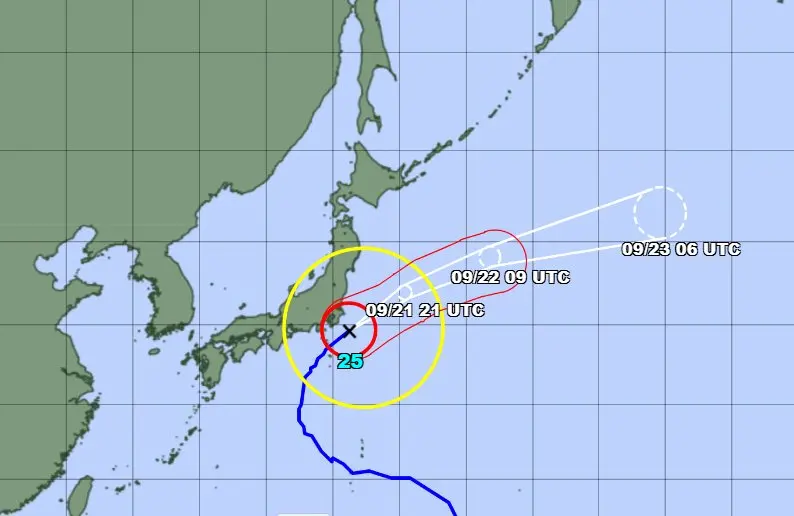
Typhoon Dujuan has hammered Japan's Pacific coast, with nearly 1.7 million people across Ibaraki, Chiba, Tokyo, Kanagawa and Shizuoka prefectures told to leave their homes. For anyone travelling to or within Japan this week, the message is simple: check before you go, and expect disruption even after the storm passes.
The storm's numbers are serious. Dujuan is carrying sustained winds of 130kmph with gusts up to 194kmph, and forecasters expect up to 250mm of rain in the Kanto region around Tokyo and as much as 350mm further south in Tokai. The worst alerts — level five, the top of Japan's warning scale — were issued in Sodegaura in Chiba, where 40,000 residents were told to move to upper floors and stay clear of slopes, and in the town of Oshima on the Izu Islands, home to just over 3,000 people.
The human toll is already being felt. A landslide in Kanagawa crushed a house with a woman in her 60s inside; firefighters were searching for her in heavy rain. Another slide in Sodegaura injured a woman in her 40s, and flooded roads have snarled traffic across the prefecture. Japan's meteorological agency warned of an imminent threat to life, noting the typhoon intensified faster than expected after slowing over unusually warm waters near the Izu Islands.
Transport has taken a big hit. Nearly 500 flights were cancelled at Tokyo's Haneda and Narita airports, and some Tokaido bullet train services were suspended. Even political schedules bent to the weather: Prime Minister Sanae Takaichi delayed her flight to New York, where she was due to meet Donald Trump and address the UN General Assembly. The Asian Games, which opened over the weekend in Nagoya and Aichi prefecture, saw an equestrian event postponed, while around 4,000 athletes staying aboard the cruise ship Costa Serena may need to remain on board if the ship is moved away from the storm.
Dujuan is the 25th typhoon of an unusually active season, which forecasters link to a strong El Nino. It follows hard on the heels of record rainfall in Chiba last month that killed eight people and flooded 22 municipalities.
If you're visiting Japan now, treat typhoon season as a genuine planning factor. Follow the Japan Meteorological Agency's alerts, know that a level-five warning means get out or get to high ground indoors, and build flexibility into flights and rail bookings. Coastal spots like Kamakura, a popular day trip from Tokyo, can flood quickly — its mayor urged people not to drive. The good news is Japan's transport recovers fast once a storm clears, so a flexible itinerary usually absorbs a day or two of disruption without derailing a trip.