
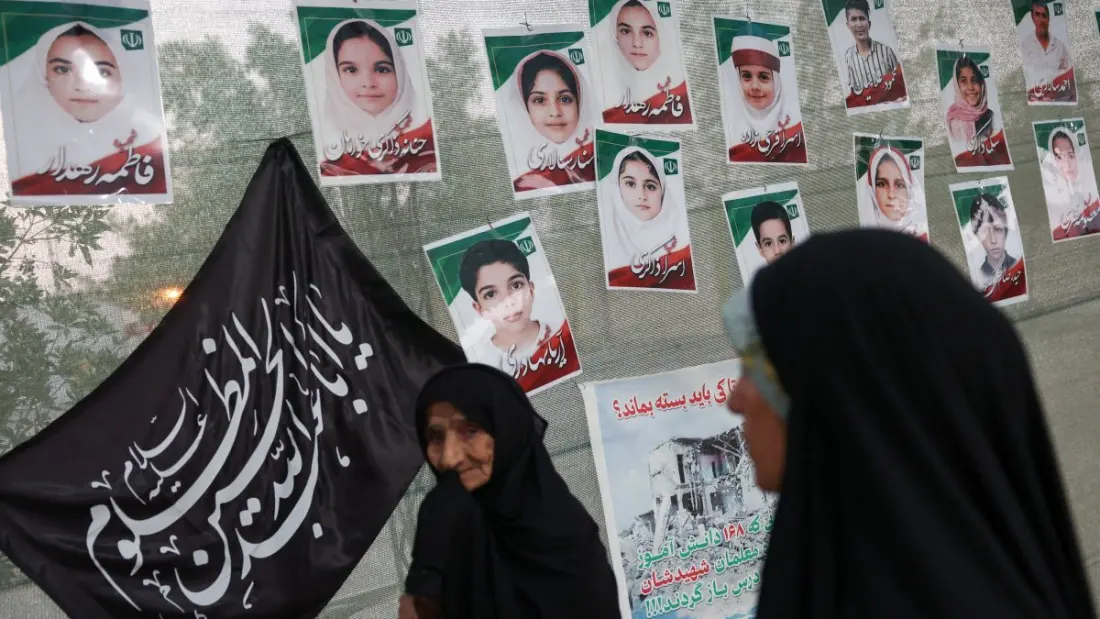
UN investigators say there are "reasonable grounds" to believe the United States committed war crimes against civilians in Iran, in a report set to go before the Human Rights Council on Monday. The findings cover the February 28 US and Israeli attacks and paint a grim picture on two fronts: foreign strikes killing civilians, and Tehran's own violent crackdown on domestic protesters.
The specific allegations are stark. Investigators cite Tomahawk missile strikes on the Shajareh Tayyebeh Primary School in Minab, a clearly identified school, which killed more than 150 people — around 120 of them children. A separate strike near Lamerd reportedly scattered tungsten pellets over a sports complex and residential area, killing 22 civilians. The mission also flagged indiscriminate attacks causing civilian deaths and damage to civilian objects as the core of the war crimes case.
Inside Iran, the report describes a serious escalation in the government's suppression of the protest movement that began in late 2025 over the rising cost of living. State security forces killed protesters in all 31 provinces — reportedly including at least 221 children — attacked healthcare facilities and arrested tens of thousands. Between March and August 2026, at least 29 men were executed after expedited trials linked to the protests, and more than 70 others, among them five women and three boys, are said to be at imminent risk of execution.
The investigators are calling on all three parties — Iran, Israel and the US — to immediately cease hostilities, and urging the council's 47 member states to push for a permanent peace, ensure independent investigations and hold those responsible to account. Notably, none of the three countries involved sits on the council. The mission also asked states to offer asylum to civilians fleeing the country.
For travellers, the takeaway is simple: Iran remains an active conflict zone under a government accused of grave abuses against its own people, and multiple governments already advise against all travel there. Even beyond the fighting, arbitrary detention of foreign nationals and the treatment of dual citizens have long been serious risks. Anyone with travel booked to Iran or transit routes through the region should monitor their foreign ministry's latest advisories and contact airlines or operators about flexible rebooking.