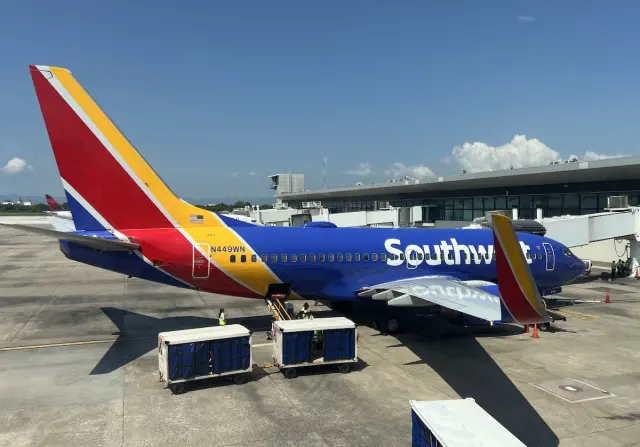
Boeing's 787 Dreamliner turns 15 in commercial service, and the pecking order among its biggest operators has a new leader. A late-2026 fleet snapshot puts United Airlines on top with 96 active Dreamliners, nudging past All Nippon Airways at 92 — notable because ANA was the aircraft's launch customer, ordering 50 back in 2004 and taking the first delivery in 2011.
United's fleet spans all three main variants: 63 of the mid-sized 787-9, 21 of the larger 787-10 and 12 of the smaller 787-8. ANA also runs the full family, with the 787-9 forming the bulk of its operation. Both carriers use the variant mix to match aircraft size to route demand, which is exactly what made the Dreamliner popular in the first place — a twin-engine widebody with three sizes sharing one cockpit and common training.
The rest of the top seven reads: American Airlines (67), Qatar Airways (61), Etihad Airways (47), British Airways (43) and Japan Airlines (42). British Airways is the only European carrier to fly all three variants, alongside its 777s and A350s. Etihad's Abu Dhabi-based fleet leans heavily on the 787-9 (37 aircraft) plus ten 787-10s. Qatar operates 32 787-8s and 29 787-9s — and in May 2025 announced a deal for up to 210 widebodies including 130 Dreamliners, which Boeing called the largest 787 order in its history. Those future deliveries aren't counted in active-fleet figures, so Qatar's rank could climb sharply over the next decade.
One caveat worth knowing: these numbers are snapshots from fleet registers, not lifetime totals or order books, and different sources report slightly different counts — ANA's figure, for example, varies depending on the register used. Rankings can also shift as deliveries continue.
Why should a traveller care? The Dreamliner dominates long-haul flying, so odds are decent your next transatlantic, transpacific or Gulf flight is on one. It's a genuinely pleasant aircraft: composite construction allows lower cabin altitude, bigger windows with electronic dimming, quieter cabins and better humidity — all of which noticeably reduce the drag of a 10-hour flight. Knowing which carriers fly the type (and which variants) can help when picking seats and cabins, since layouts differ considerably between airlines and between the 787-8, -9 and -10.