Vietnam wants its tourism boom powered by more than beaches and street food — the country is now building a national digital ecosystem designed to put data and artificial intelligence at the centre of how visitors are welcomed, managed and counted.
The push was spelled out by Dr Nguyễn Anh Tuấn, director of the Institute for Tourism Economics under the Vietnam Tourism Association, ahead of World Tourism Day on September 27. His argument is that tourism has shifted from an industry built on experiences and emotion to one driven by data, algorithms and adaptability. Countries that fail to organise their digital systems, he suggests, will simply lose out to destinations that do.
He identifies three global trends shaping the sector. First, governments are moving beyond getting individual businesses online and towards integrated national platforms that connect authorities, operators and travellers — with data itself becoming a core resource. Second, AI is moving into the heart of operations: forecasting demand, analysing visitor behaviour, personalising marketing and running round-the-clock multilingual customer service. Third is the so-called 'dual transition' — smart tourism developing hand in hand with green growth, using technology to cap visitor numbers at fragile sites, ease overcrowding, optimise energy use and manage traffic.
The UN has added a cautionary note. In his World Tourism Day message, Secretary-General António Guterres warned that without proper oversight, AI could funnel travellers towards a handful of destinations and booking platforms, leaving equally worthy places behind. Technology, he stressed, should serve workers and local communities, not just platforms.
Vietnam's response is Politburo Resolution No. 26-NQ/TW, issued in August 2026, which aims to create a comprehensive smart tourism ecosystem, a national tourism database and a digital tourism platform by 2030. The Vietnam National Authority of Tourism is building that data ecosystem on a '1+1+34+N' model: two central ministries, all 34 provinces and cities, plus businesses and agencies. Central government provides shared platforms; localities collect and use their own data; companies plug in and build services on standardised information — an approach meant to avoid the fragmented, disconnected systems that have plagued past digitisation efforts.
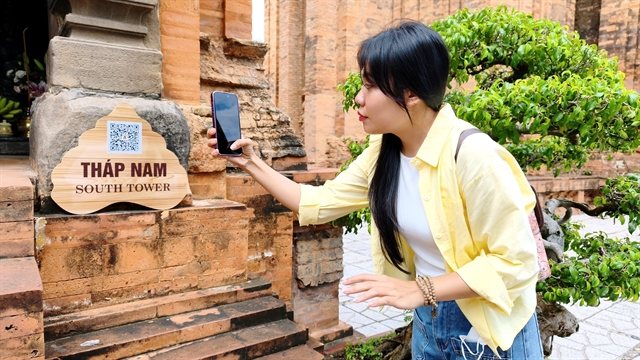
Progress so far is real but uneven. Online travel agencies, e-ticketing, digital maps and smart operation centres have appeared in many localities, and at heritage sites AI is already at work — a virtual receptionist using facial recognition greets visitors at Thăng Long Imperial Citadel, while QR codes tell the story of the Po Nagar Towers in Khánh Hòa. But Tuấn notes that most AI use is still limited to promotion, data remains siloed, and small and micro enterprises — the bulk of the sector — lack the money, staff and connectivity to keep up.
For travellers, the payoff should arrive quietly: smoother e-tickets, fewer overstuffed hotspots, better multilingual support and destinations promoted on merit rather than algorithmic momentum. For the industry, the message is blunter — competitive advantage now depends on how well a destination handles its data.