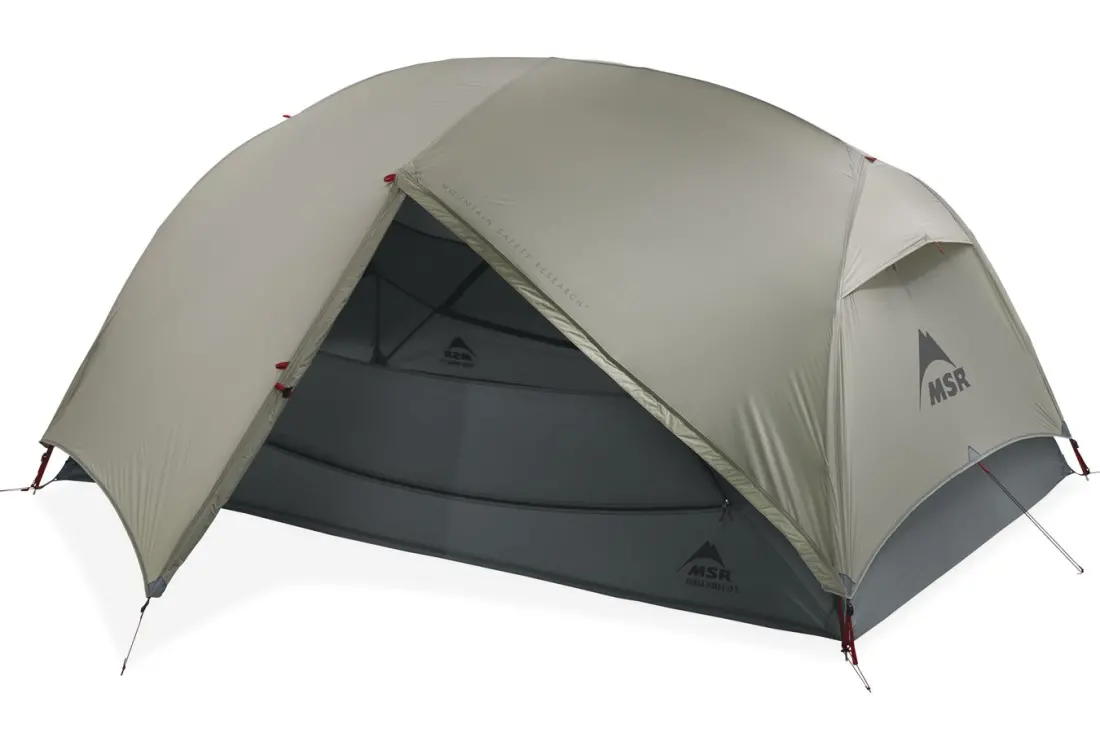
Wilderness Magazine NZ has rounded up the best three-season tents for 2025, and alongside the line-up sits a genuinely useful buyer's primer. For anyone planning a tramping or hiking trip that stays below the snowline, it's a good moment to work out what actually matters when you're spending $500 to $1,500 on a portable home.
The basics first. Three-season tents are built for spring, summer and autumn conditions — no snow loads, so you can prioritise weight and ventilation. Most are double-walled: a mesh or nylon inner plus a waterproof, seam-sealed fly. Floor waterproof ratings vary wildly, from 1200mm up to 25,000mm, and lighter floors benefit from a separate groundsheet. Freestanding designs hold their shape without pegs — handy for rocky ground — while multi-pitch tents let you pitch fly or inner alone.
What should you actually weigh up? The magazine's checklist covers two doors versus one (two doors and vestibules mean no climbing over your tentmate), pole count and thickness for wind strength, internal height and floor area for tall campers, and the difference between packed weight (everything) and trail weight (tent, fly and poles only). Aluminium pegs are standard but you'll often need extras for guy lines.
The 2025 line-up spans ultralight solo shelters to roomy basecamp rigs. At the featherweight end, the Kiwi Ultralight Moa 1 DCF ($1395) uses Dyneema composite fabric that doesn't sag when wet and pitches with hiking poles — it weighs just 625g minimum. The Big Agnes Tiger Wall UL2 Hyperbead ($1399.99) hits 992g minimum for a two-door two-person tent. MSR's FreeLite 1 ($949.99) is a 740g option for solo trampers.
For two-person comfort, the MSR Hubba Hubba LT 2 ($1249) — a long-standing bestseller — now comes with upgraded vents and pre-dyed fabrics that cut its carbon footprint, while the Sea to Summit Telos TR2 Plus ($1199.99) pushes into shoulder seasons with a full fabric inner and a 30cm tub floor. Nemo's Dagger OSMO 2 ($1099.95) uses recycled bluesign-approved fabric and splits into two stuff sacks so you can share the carry.
Budget-conscious campers aren't forgotten: The North Face's Stormbreak 2 ($500) offers twin vestibules and full seam taping, and the Orson Jett 1 ($499.99) is a wind-stable tunnel tent that pitches fly-and-inner together. Mont's Hypermid 2 pyramid shelter ($589.95 plus $359.95 for the mesh inner) is the tarp-style wildcard, while the Hilleberg Akto ($1352) is the bombproof solo choice with a 5000mm fly and 15,000mm floor.
Why does this matter to travellers? Whether you're tackling New Zealand's Great Walks, alpine routes in the Dolomites or a Lapland trek, your tent is the single heaviest, most personal item in your pack. Matching its weight, ventilation and weather rating to your actual route — rather than buying the shiniest spec sheet — is what separates a good night's sleep from a soggy one.
Wilderness Magazine NZ