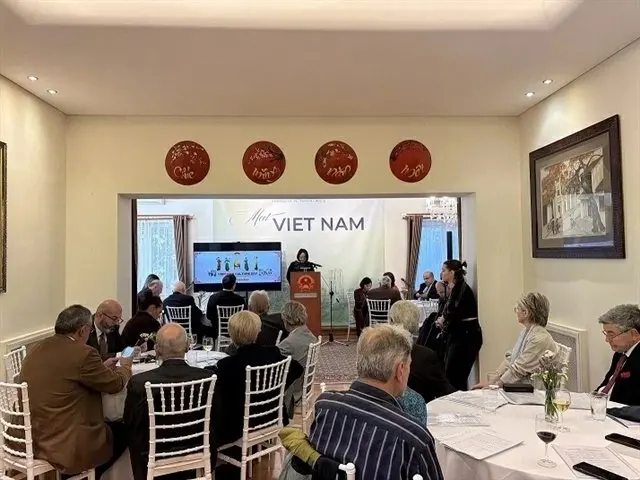
Half a century of cooperation between Vietnam and UNESCO was the occasion for a workshop in Hanoi on November 26, where researchers, policymakers, artisans and heritage practitioners gathered to take stock of what UNESCO recognition has meant for the country — and where it falls short.
The event, convened by the Vietnam Academy of Social Sciences and the Vietnam National Commission for UNESCO, heard a consistent theme: getting on a UNESCO list is a milestone, not a finish line. Assoc. Prof. Dr Ta Minh Tuan, a vice president at the academy, argued that international recognition has to turn into long-term, site-specific action that serves each community. He pointed to Vietnam's work improving policies around inventory, documentation and conservation, and recent Politburo resolutions on cultural and tourism development that put heritage at the centre of national planning.
Jonathan Wallace Baker, UNESCO's representative in Vietnam, added a useful reality check for travellers too: heritage lives in daily practice and in the hands of the artisans who transmit it, not just in certificates and plaques. He pushed for post-listing impact assessments that measure more than visitor numbers and tourism revenue — looking instead at whether the practices themselves survive and whether local communities genuinely benefit.
That tension came up repeatedly in the debates. Delegates weighed conservation against development, and promotion against keeping community cultural spaces intact. Their proposals were practical: better coordination between regulators, scientists, local authorities and communities; real community participation in decisions about how heritage is managed; safeguards for practitioners' rights and income; and tourism that is explicitly linked to protecting cultural identity rather than eroding it.
For anyone planning a trip to Vietnam, this matters more than it might sound. The country has a remarkable roster of UNESCO-listed heritage — from Ha Long Bay and Hoi An to Hue's imperial monuments and a long inventory of intangible traditions like music, festivals and craft practices, many of them sustained in specific villages. Travellers increasingly encounter these places, and how tourism is handled at each one decides whether the experience is authentic or a stage set. A state committed to community-led, sustainability-focused heritage tourism is good news for visitors who want to meet living traditions rather than consume them.
The takeaway: when you visit Vietnam's recognised heritage sites, the people running performances, workshops and local guiding services are exactly the practitioners these discussions aim to protect. Spending your time and money with community-based experiences — a craft workshop, a village festival, a local guide — supports the model the workshop endorsed.
The event closed on a forward-looking note: keeping Vietnam's heritage alive across generations will require the same blend of research, community involvement and responsible tourism its delegates called for. — Source: Vietnam News Life