A tourist train with a dedicated cultural carriage is rolling out of Hà Nội this autumn, linking the capital to Thái Nguyên province just in time for the International Tea Festival 2026 (October 30 to November 7).
Six services are scheduled: October 30, 31, November 1 and November 5-7, each carrying roughly 250 passengers. Round-trip fares are refreshingly cheap — VNĐ200,000 (about US$7.70) solo, or VNĐ160,000 ($6.20) per head for groups. The six-carriage train leaves Hà Nội Station at 6.25am, pauses at Long Biên Station for photo stops, then rolls on to Lưu Xá Station in Thái Nguyên. Total journey time is around two hours, with city views slowly trading places for open countryside.
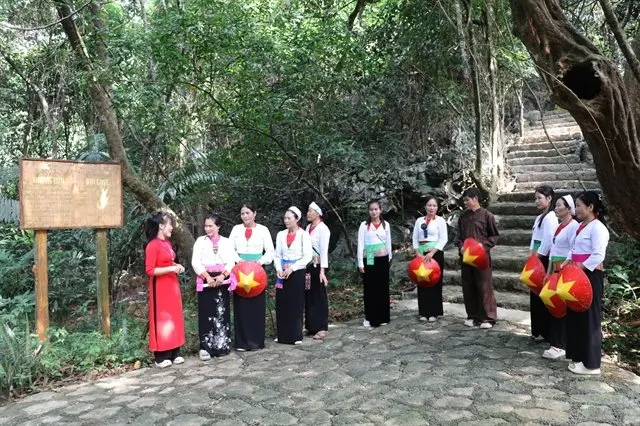
The real draw is onboard. One carriage is given over to performances and cultural exchanges: then singing and the đàn tính string instrument of the Tày, Nùng and Thái peoples, plus Mông flute music. It's also a rolling tasting room — expect local teas rated three or four stars under Vietnam's OCOP scheme and snacks from provincial cooperatives, including green tea peanut candy.
The ride is designed as the first leg of longer tours. From Lưu Xá, minibuses fan out across the province to tea-growing villages, heritage sites and community-tourism spots. Five programmes have been developed around the route. The "Tân Cương Essence and Thái Hải Village Colours" day tour covers tea production and tasting in Tân Cương plus the Thái Hải stilt-house conservation area. Others pair Cầu Đá and La Bằng tea country with Núi Cốc Lake, or Đuổm Temple — tied to the historical figure Dương Tự Minh — with tea culture. Longer options include a two-day "Shan Tuyết Clouds and Ba Bể Lake Waters" trip taking in the Shan Tuyết Bằng Phúc tea area, Ba Bể Lake and Hua Mạ Cave.
Pricing is reasonable for what's bundled: one-day tours run about VNĐ790,000 ($30) per person, covering the return train ticket, a main meal, entry fees, transfers, guide and insurance. Two-day, one-night packages cost $69-77 per person.
Why it matters: Thái Nguyên is Vietnam's tea heartland, with around 22,200 hectares of plantations and 204 OCOP-rated tea products — six of them five-star at national level. Most visitors skip it en route elsewhere, and this train is the easiest way yet to turn it into a proper stop. If the service performs well, organisers hope to run it three to five times a week after the festival, so this could become a permanent option rather than a festival one-off.
Who's it for? Budget travellers after something beyond the Hà Nội–Sapa corridor, tea nerds, and anyone keen on ethnic minority music and village tourism without a long, complicated itinerary.