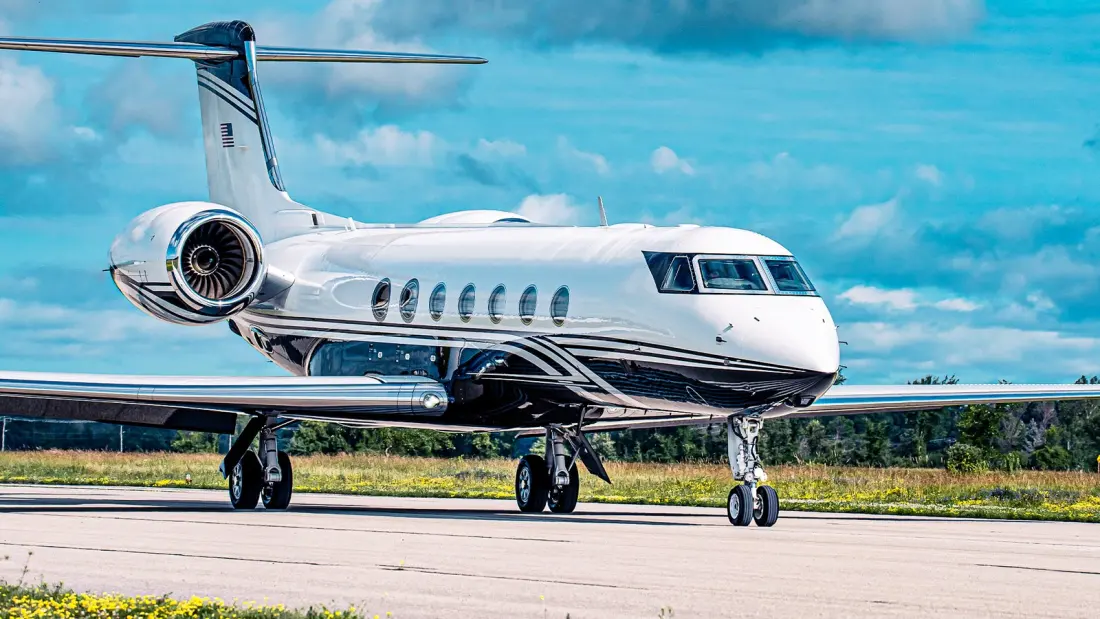
A quick hop on a turboprop can be yours for a few thousand dollars. A coast-to-coast run on a heavy jet can top $100,000. Those are the two poles of the US private aviation market in 2026, and the interesting part is how you book matters almost as much as what you fly.
Start with the aircraft, since that sets the baseline hourly rate. Using BLADE's market data as a benchmark: turboprops run $1,800 to $2,500 per flight hour, light jets $2,600 to $3,500, midsize jets $3,500 to $5,500, super midsize $5,000 to $8,000, and heavy jets $8,000 to $14,000. But operators flying under Part 135 rules bill from wheels up to wheels down, and the final invoice typically lands 20% to 40% above that base rate once you add positioning legs, fuel surcharges, landing fees, crew costs and taxes.
Then there's the booking model. On-demand charter needs no upfront money, but exposes you to volatile fuel prices and — the killer on one-way trips — repositioning fees to fly the empty aircraft home. Jet cards require a $100,000 to $300,000 deposit to lock in a fixed hourly rate and waive one-way repositioning fees within a provider's primary service area, though they impose daily minimums of 1.0 to 1.5 billed hours, so a 30-minute hop still costs you 90 minutes. Fractional ownership demands hundreds of thousands in ongoing fees but drops your hourly rate substantially.
A New York to Los Angeles case study makes the trade-offs concrete. A turboprop needs one or two fuel stops and 8.5 to 10 hours in the air, which destroys its cost advantage — on-demand runs $30,000 to $40,000 with heavy empty-leg fees, and most jet cards won't let you book one for the route at all. A midsize or super midsize jet does it nonstop in 5.5 to 6 hours: $38,000 to $55,000 on demand, or $44,000 to $60,000 on a jet card with zero ferry fees. Fractional ownership wins on this route if you already hold a jet share.
The rule of thumb: on-demand suits people flying under 25 hours a year, mostly round trips. Jet cards make sense at 25 to 50 hours with frequent one-way travel. Fractional ownership pays off beyond 50 hours annually.
Fuel has been the wild card. Prices spiked from around $85-90 a barrel before the Middle East conflict erupted in late February to $150-200 within weeks, easing to about $117 in June before climbing back to roughly $159 by mid-August. That pushed summer quotes 15% to 20% above baseline — yet demand barely flinched. North American business aviation notched its best first half in four years, led by midsize charter operations up 7.7%, before activity flattened to 0.3% growth as heavy users shifted into fixed-rate programs. With airlines cutting first-class capacity and raising premium fares, the industry argues private flying has become an efficiency tool rather than a mere indulgence. For anyone considering it, the real lesson of 2026 is to get the full quote, surcharges included, in writing.