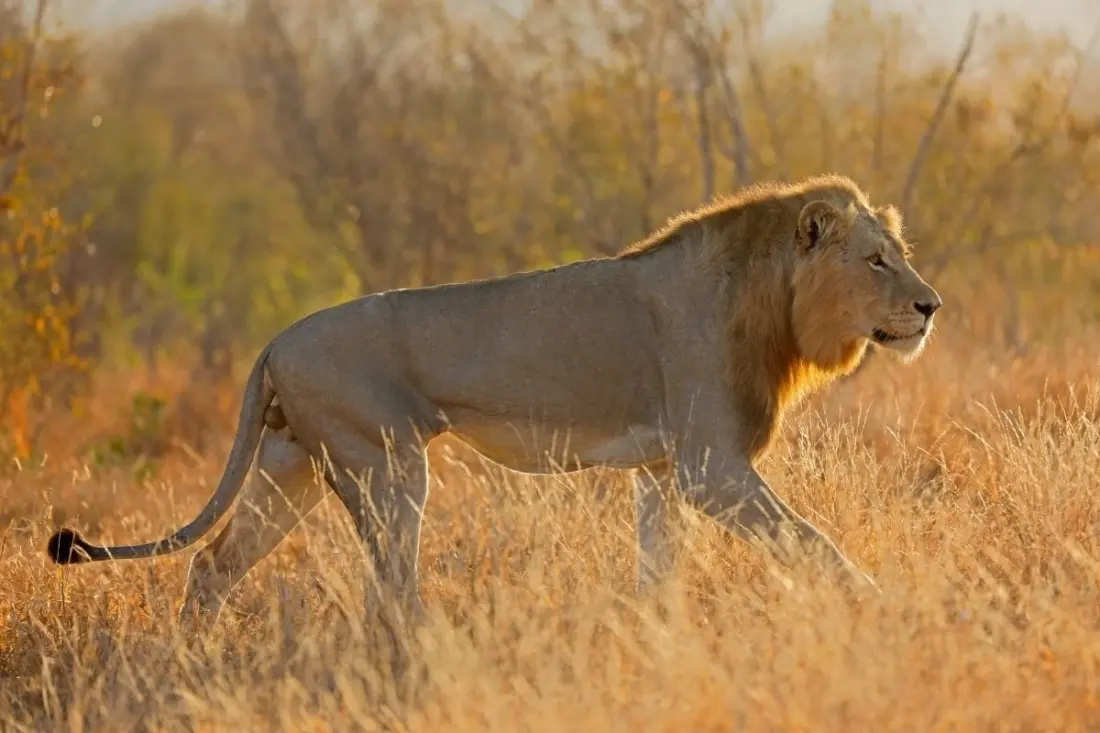
Lions roam the whole of Kruger National Park, but some corners have a far better hit rate than others. If a lion sighting is the whole point of your safari, it pays to plan your route and your base camp around the park's big-cat hotspots.
Satara tops most lists, and for good reason. SANParks ranks it among the best game-viewing regions in the entire park, with lion, leopard and cheetah regularly recorded. The vegetation here is relatively open, so scanning for animals is easier than in the thicker bush elsewhere. The stretch between Orpen and Satara is another favourite, with open plains that attract plenty of grazing animals — and grazers attract hunters.
Lower Sabie is the second strong contender. The Sabie River draws large numbers of prey species, and the mix of riverine bush and open ground makes the southern section of the park a reliable all-round predator area. Nearby Crocodile Bridge sits in what SANParks calls the Southern Circle, an area renowned for its concentration of lion prides, backed by abundant general game. Further afield, the Olifants area logs regular lion sightings alongside other big game, while northern Kruger around Punda Maria offers a quieter, less crowded experience if you'd rather trade crowd-free roads for a slightly lower chance of a sighting.
Timing matters as much as location. Lions are most active in the cooler hours — early morning and late afternoon — which also happens to be when the park is at its most pleasant for driving. If you're self-driving, get out at gate-opening and bank as many kilometres as you can before the heat sets in. And don't cruise past a stationary pride: lions sleep for much of the day and often wake to hunt later. A resting sighting can turn into action if you're patient.
One honest caveat: there are no guarantees anywhere in Kruger. The animals are free-ranging, and a road that delivered three prides yesterday can be empty tomorrow. That unpredictability is part of what makes a self-drive safari addictive. The smarter play is to spend several nights based in one of the proven big-cat areas — Satara, Lower Sabie or Crocodile Bridge — rather than trying to cover the whole park in a day or two.
For anyone planning a first safari, this is practical gold: pick one or two bases, drive slow, drive early, and let the park come to you. It matters for repeat visitors too, since northern Kruger's quieter roads suit travellers who've already ticked off their lion and want space rather than sightings.