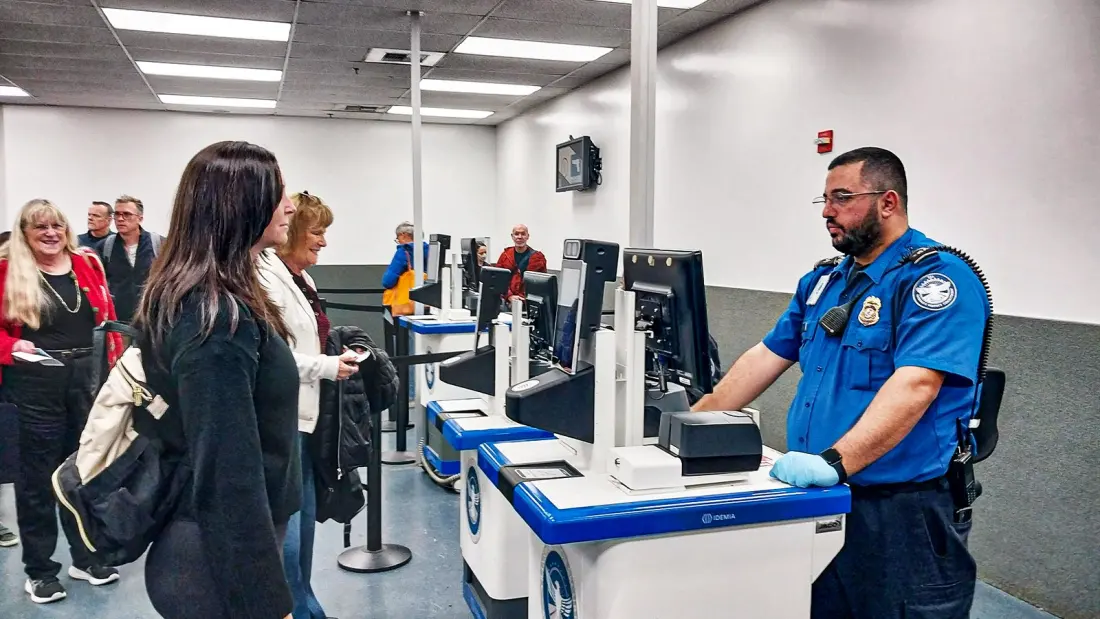
Security queues are the part of a US airport trip nobody can control — but a new analysis of summer data shows how much the odds vary depending on where you're flying from.
Travel Bulletin crunched MyTSA app wait estimates across 50 US airports from mid-June to mid-August and found an average wait of 9.9 minutes. The catch: busier doesn't automatically mean slower. Each extra 1,000 passengers of hourly capacity adds roughly 2.3 minutes, yet some of the country's biggest hubs breeze through while quieter airports stumble.
The standout failure is JFK, America's second-busiest airport, averaging a painful 23.1-minute wait. It was hammered by this spring's partial government shutdown — which ended after 76 days in late April — and lingering problems are tied to construction. The Terminal One redevelopment, meant to bring 13 new gates, has slipped to 2027, funnelling international passengers into too few checkpoints. Shifting roadways and new rideshare rules are also causing unpredictable arrival times, dumping waves of passengers at security at once. Chicago O'Hare isn't far behind at 20.2 minutes, and Newark — despite being only the seventh-busiest — averages nearly 18.
At the other end sits San Francisco International, with a remarkable 4.5-minute average. SFO is one of just 20 airports in the TSA's Screening Partnership Program, where screening is handled by private contractors (Covenant Aviation Security, in SFO's case) rather than federal employees. That insulated it from shutdown-related absences, and private staffing lets the airport open extra lanes during peaks and pay competitive Bay Area wages. Orlando and Boston Logan, ninth and tenth busiest, also kept waits under ten minutes.
LAX handles more passengers per hour than anywhere in the US — over 4,300 — yet averages just 11.8 minutes, a solid result. It does spike, though: expect 25-plus minutes between 6:30–9:00 AM, 11:00 AM–2:00 PM and 8:00–11:00 PM, with the evening rush heaviest at the Tom Bradley International Terminal. If you're flying from Terminals 7 or 8, the LAX Fast Lane pilot lets you reserve a screening slot in advance.
Quieter airports aren't automatically safe either. Anchorage averaged 16.3 minutes despite processing barely 500 passengers an hour, thanks to X-ray equipment outages shortly after the shutdown ended. Portland, San Diego, Tampa and Dallas Love Field all posted double-digit waits.
The bigger question is structural. The Trump administration's FY 2027 budget proposes cutting 9,400 TSA staff and expanding privatised screening, and the TSA's new Horizon 25 strategy promises to accelerate public-private partnerships. Critics, including Senator Andy Kim, argue contractors chasing profits would cut labour costs and weaken security standards.
For travellers, the practical takeaway is simple: check the MyTSA app before you leave, build in extra time at JFK, Newark and O'Hare, and use reservation programmes where they exist. And know that if you're connecting through SFO, you're in for one of the smoothest security experiences in the country.