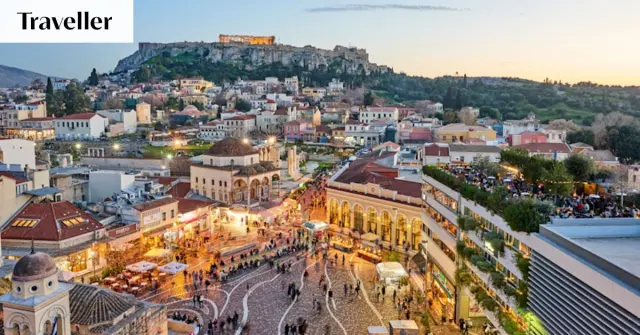
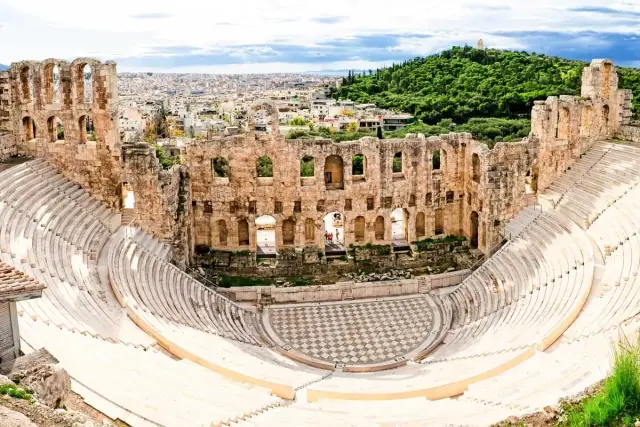
Athens has a shoulder-season problem: everyone books it for July, when the Acropolis is packed and the heat is brutal. Agapi Sbokou, co-owner and CEO of Greek hotel brand Phāea, thinks that's a mistake. For her, the city peaks in April and again in October and November — and she's spent her life in Athens to know.
Her case for autumn is straightforward. The summer heat lingers but softens, rain is scarce, and you can comfortably walk all day. The light changes too — softer and more yellow than the famous hard Greek summer glare. It's also when the city gets its residents back: Athenians return from the islands, restaurants fill with locals, and normal life resumes. Museums, galleries and restaurants become easy to book without planning months ahead.
Sbokou's Athens is a city of neighbourhoods rather than checklist sights. She lives in and around Kolonaki at the foot of Lycabettus Hill, and recommends getting lost in its higher residential streets — from certain corners you catch a framed view straight down to the Acropolis between buildings. She also champions a slower style of travel: linger two hours over coffee, talk to the person at the next table, give a museum three hours instead of one. Beyond the big names, she points to the Benizelos Mansion, the oldest house in Athens, and the Benaki Museum with its Nema Collection.
Food is where her recommendations get specific. She favours old-school tavernas over the shiny new generation: Manári Taverna in the city centre, beside a Byzantine church, serving Cretan-influenced classics; Pharaoh, where everything is slow-cooked over a wood-fired grill with a good bar and soundtrack; and Dourambeis, a traditional fish restaurant she's visited with her father since childhood. As for what to order? Gemista — tomatoes stuffed with rice, mince and herbs — plus autumn pies like spanakopita, and skioufichta, a hand-made thick pasta served in broth with cheese, which she calls the perfect cool-weather dish alongside a glass of red wine.
For travellers tired of peak-season crowds and prices, the pitch writes itself: October and November in Athens means warm walking weather, tables you can actually get, locals who've come home, and a city that feels lived-in rather than performed for tourists. Sbokou's wider point is about pace — treat Athens like a place to settle into, not sprint through, and it rewards you like a village of four million people.
This piece draws on an interview originally published by Condé Nast Traveller.