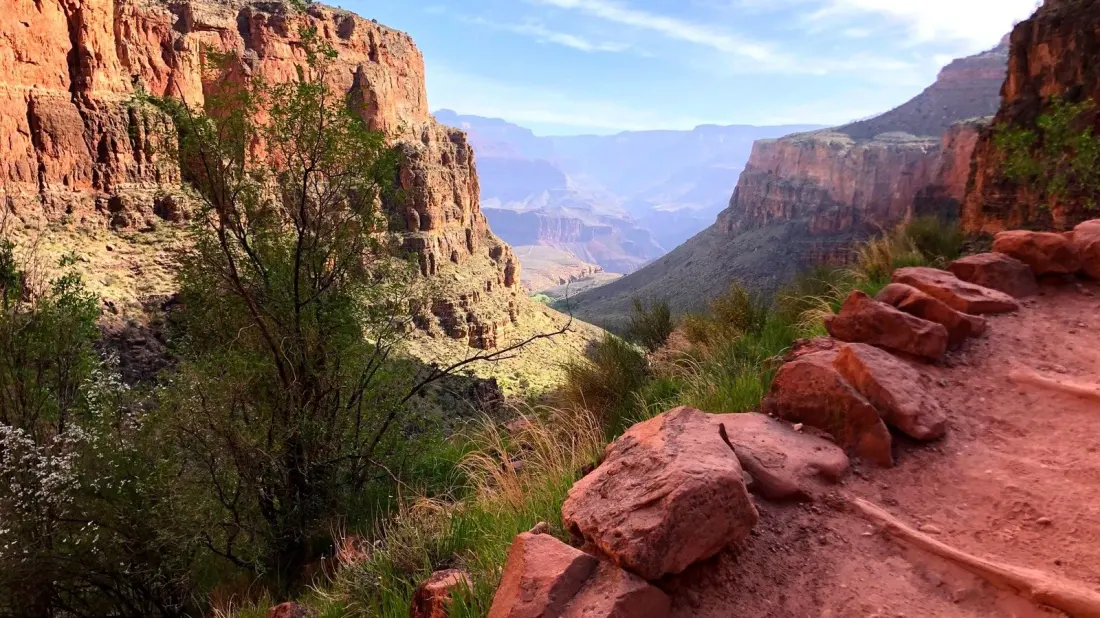
The rangers at Grand Canyon National Park have a warning that most visitors brush off: the descent is what wrecks you, not the climb. Hikers assume the brutal part of a rim-to-river trip is the uphill return, but the real damage happens on the way down, when gravity puts your quadriceps under constant tension as they lengthen with every step. That kind of eccentric loading is one of the most reliable triggers of delayed-onset muscle soreness, meaning your legs can be shot before you ever start the ascent back up. The canyon's own trailhead signs put it bluntly: down is optional, up is mandatory.
The main corridor trails are serious undertakings. Climbing from the Colorado River to the South Rim via Bright Angel or the steeper South Kaibab means gaining roughly a vertical mile — imagine stacking four Empire State Buildings. A classic overnight route drops down South Kaibab to Phantom Ranch and returns via Bright Angel. The catch is South Kaibab's surface: long stretches are pitched at a 22% grade, built as rough stair steps carved into rock and framed with logs. Unlike the 7 to 7.75-inch risers in building codes, these steps can hit 12 to 18 inches high, producing jarring downward footfalls that hammer knees and thighs. Regulars on the trail report soreness lasting two full days afterward.
If a full descent to the river sounds punishing, there's a smarter option. Hike down South Kaibab to its junction with the cross-canyon Tonto Trail, follow that to Havasupai Gardens Campground (reservations required), then climb out in the late afternoon. This 13.8-mile loop involves just 3,400 feet of elevation change — cutting 1,200 vertical feet and 3.5 miles compared with the rim-to-river version. Hikers who've done it praise the Tonto stretch for revealing the canyon's different micro-environments and offering sweeping views of the sheer walls, so you're not just sacrificing the river for an easier day.
Preparation matters as much as route choice. Wilderness Medicine Magazine suggests adding downhill hiking to your training routine four to six weeks before your trip, to keep ordinary soreness from tipping into genuine muscle damage. Watch for sharp pain on the outside of the knee or thigh too — that's often an inflamed iliotibial band rather than the joint itself, and it's especially common among desk workers whose hips and glutes are undertrained.Veteran hikers also pack ibuprofen (thru-hiker slang: "Vitamin I") to blunt muscle inflammation, with the added bonus that studies suggest it helps guard against altitude sickness on the North Rim.
Timing is the final piece. Summer temperatures at the canyon floor can reach 120°F, while winter snow can make North Rim trails treacherous — spring and autumn are the sensible windows. And if you're driving west toward Las Vegas afterwards, a short 5-mile detour hike to Arizona Hot Springs on the Colorado River can loosen up stiff legs and soothe them in hot mineral water before the long drive.
The bottom line: respect the down as much as the up, train your legs for descents, and consider the Tonto option if you'd rather enjoy the canyon than limp out of it.