
O Grove is a small fishing town on a peninsula in Galicia, north-west Spain, where the Atlantic pushes inland through a chain of fjord-like inlets called rías. It's here, on one of Europe's richest stretches of coast, that Alberto Domingos — known to everyone as Berto — runs D'Berto, a restaurant he opened with his mother, Lola, in August 1989 on his 20th birthday.
Berto's pitch is disarmingly simple. Buy the best seafood, in season and at its peak, then get out of the way. "If the product isn't great, we simply don't serve it," he says. No sauces to hide behind, no fancy reinterpretation — the point is to show the fish and shellfish exactly as they are.
He can afford to be picky because of where he lives. The rías — more than a dozen of them — cut deep into a coastline of forests, beaches and small farms, creating one of Spain's most striking seascapes and one of its most productive marine ecosystems. Cold Atlantic water mixing with the sheltered inlets produces shellfish of extraordinary quality, and Galicia's coastal towns have built entire cultures around harvesting it.
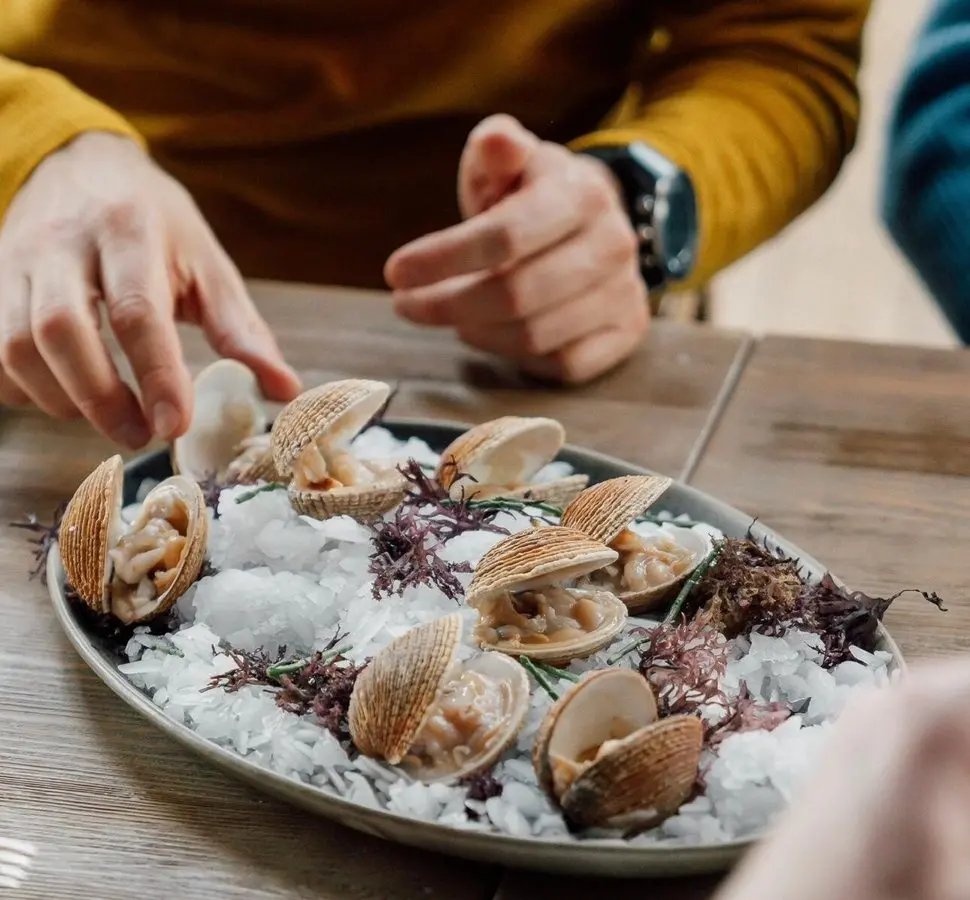
The result is a menu at D'Berto that reads like a survey of the region's waters: cockles, spider crab, prawns in every size, and rarities most diners will meet nowhere else — among them the tallarina, a tiny clam with a pale triangular shell and a delicate flavour somewhere between a Manila clam and a cockle.
What makes Berto's claim interesting is that it comes from someone who has eaten widely. "I travel all over the world and have tasted some extraordinary fish and shellfish," he says. "But the more I travel, the more convinced I become that Galicia is the world's greatest seafood region."
For a traveller, this is a strong argument for putting Galicia's coast on the map alongside better-known Spanish food destinations. This is not tapas-bar Spain — it's wet-weather, green, Atlantic Spain, where the eating is built around the day's catch and the tide rather than a concept. O Grove itself is a working fishing village, which means the seafood on your plate often came off a boat that morning, and prices for top-grade shellfish reflect that quality without reaching big-city restaurant levels.
The wider Rías Baixas — the inlets south of Santiago de Compostela — reward a slow trip: fishing ports like O Grove and nearby A Illa de Arousa, the mussels rafts of the Arousa estuary, white Albariño wine grown a few kilometres inland, and beach towns that empty out beautifully outside July and August. If you time it right, you can eat at D'Berto and spend the rest of the week working your way down the coast, cockle by cockle.
Anyone who plans holidays around food — and specifically around seafood at its source rather than filtered through a city kitchen — will find few places in Europe that compete.
Original story by Roads & Kingdoms.