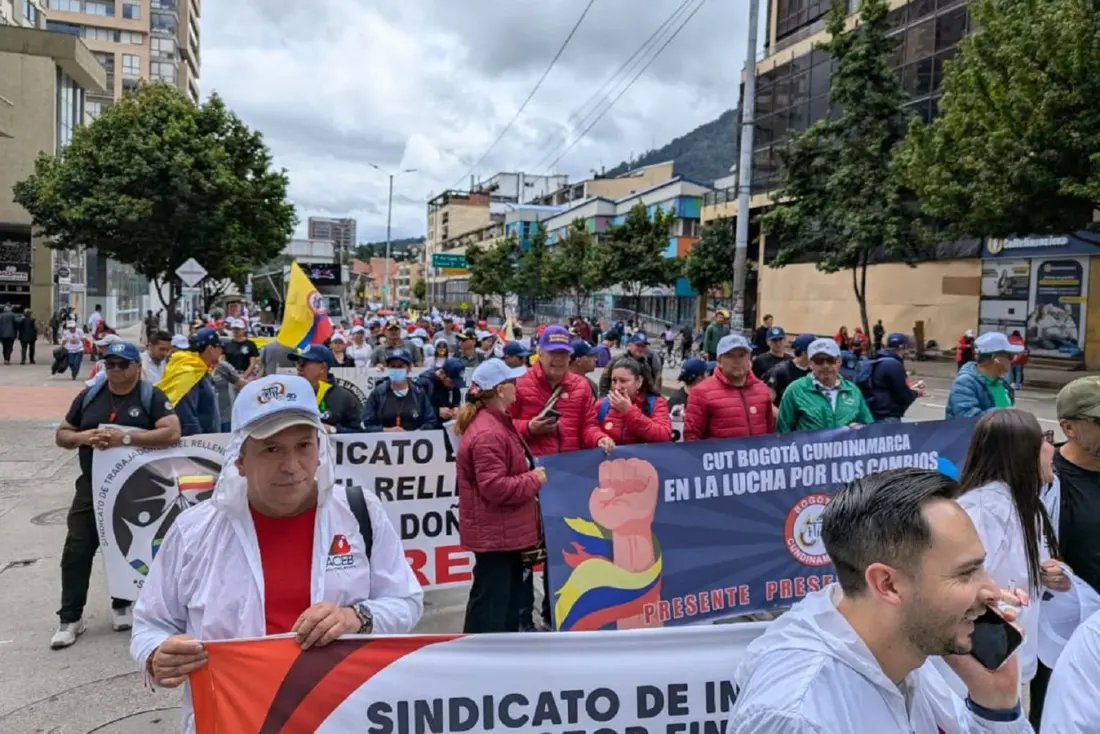
Colombia saw its first major street mobilisation against President Abelardo De la Espriella's government on Wednesday, October 14, with marches led by the CUT trade union, teachers' federation Fecode and the Historic Pact coalition of former President Gustavo Petro. If you're travelling in Colombia — especially Bogotá — here's what's behind the unrest and how it might affect your trip.
The protests mark the opposition's first big show of force since De la Espriella took office roughly two months ago, after an election he won by less than 1% of the vote. Petro announced he would join the Bogotá march, framing the government as hostile to workers and aligning itself with foreign business interests, while Senator Iván Cepeda urged a massive, peaceful turnout.
The timing was no accident. The demonstrations coincided exactly with the entry into force of Decree 1525 of 2026, signed the day before, which rewrites how police respond to demonstrations. The new rules let authorities act against violent individuals without waiting for dialogue with the wider crowd, set out use-of-force criteria and mediation procedures, and create humanitarian corridors for ambulances and essential supplies. The government says peaceful protest is guaranteed but roadblocks and violence won't be tolerated. Critics, including Cepeda, say the decree was issued without consultation and expands police powers at the expense of demonstrators' rights — an echo, they argue, of the heavy-handed responses of 2019-2021.
The demands on the street were deliberately broad: teachers raised issues around working conditions, healthcare and rebuilding schools damaged by the August 10 earthquake; Indigenous groups defended territorial autonomy; and organisers also pushed back against the government's proposed counterterrorism legislation.
Why does this matter to travellers? Protests in Colombia routinely involve roadblocks that can close highways and disrupt airport transfers, and larger marches in Bogotá can snarl city-centre transport for hours. The government activated a Unified Command Post under presidential supervision, and authorities have signalled a firmer stance on blockades than under the previous administration — so disruptions could be resolved faster, or escalate faster, depending on how the decree is applied. It's also a preview: with regional elections due in 2027 and a polarised electorate, further mobilisations are likely in the months ahead.
If you're in Colombia during a protest day, keep it simple: check local news and your embassy's alerts, avoid marching routes and government buildings, plan extra time for overland travel, and steer clear of any crowd where police deploy — even peaceful gatherings can shift quickly. Most visitors will notice little beyond a closed street or two, but knowing the political backdrop makes the disruptions far less surprising. Credit: Colombia One