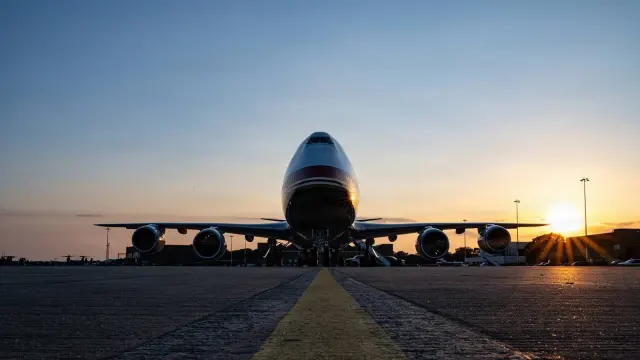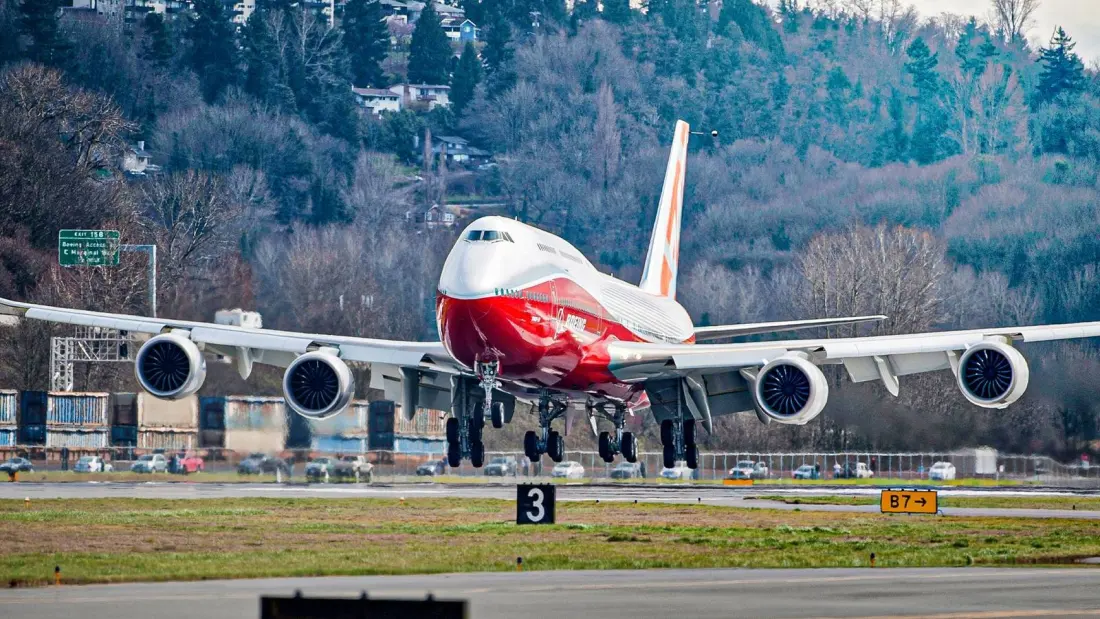
The Queen of the Skies never wore winglets on her final variant — and there's real aerodynamics behind it. The Boeing 747-8, the largest and fastest commercial variant of the iconic jumbo, trades the vertical wingtip devices of the older 747-400 for long, backward-swept raked wingtips, and the difference says a lot about how modern airliners are designed.
Winglets exist to fight induced drag — the energy lost when air curls around the wingtip in swirling vortices. A vertical fin at the tip disrupts that flow and improves the lift-to-drag ratio, which is why the 747-400 adopted them. But winglets are a compromise: they add weight, stress the wing structure like a lever, and create extra parasite drag at high cruise speeds.
The smarter fix is simply a longer, higher-aspect-ratio wing, which weakens vortices at their source — the principle gliders have used forever. Airport gates and taxiways usually cap wingspan, though. Boeing solved that with the 747-8 by redesigning the wing entirely and accepting Code F airport classification, the same category as the Airbus A380. That freed engineers to stretch the wingspan to 224 feet 7 inches (68.4 m), versus 211 feet 5 inches (64.4 m) on the 747-400, and finish the wing with raked tips instead of winglets.
The result: fuel efficiency gains of up to 16% over the 747-400, smoother airflow at high subsonic cruise speeds (where long-haul jets spend most of their time), and less structural penalty than a vertical winglet would impose. Boeing's data puts the aircraft at 467 passengers in a typical three-class layout, and it operates from major Code F hubs like Frankfurt, Hong Kong and Dubai. The Boeing 777X takes a related route, using folding wingtips to get a long wing that still fits standard gates.
For travellers, this is more than engineering trivia. It explains why long-haul flights on modern widebodies are cheaper to operate and can fly longer nonstop routes — efficiency gains baked into the wing itself, rather than bolted on afterwards. It's also a neat lens for aviation enthusiasts deciding which aircraft to book: a 747-8 flight on Lufthansa or a freight-adjacent route is a chance to fly the last and most refined expression of the jumbo concept, built around a genuinely different wing. Boeing's shift from the 747-400's add-on winglets to the 747-8's integrated design captures four decades of progress in how aircraft efficiency is achieved.