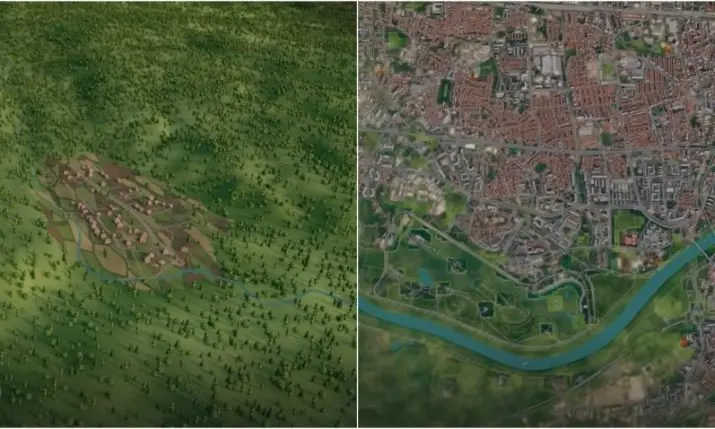
A 13-minute 3D animation titled 1,000 Years of Zagreb in 13 Minutes, Built from Real Historical Data reconstructs Croatia's capital year by year from 1050 to 2026, using historical records rather than artistic guesswork. For anyone planning a trip to Zagreb, it's a surprisingly practical watch — the city's layout suddenly makes sense once you see how it grew.
The story starts with two rival hilltop settlements: Kaptol, the bishop's religious stronghold, and Gradec, home to traders and craftsmen. In 1242, after the Mongol invasion, King Béla IV granted Gradec the Golden Bull, making it a free royal town and prompting the building of defensive walls — the medieval core you can still walk through today.
Centuries of Ottoman pressure, fires and plague shaped the city as a frontier settlement, before the 18th century turned it into a Baroque and administrative centre. The decisive moment came in 1850, when Kaptol, Gradec and surrounding villages merged into a single city under the name Zagreb.
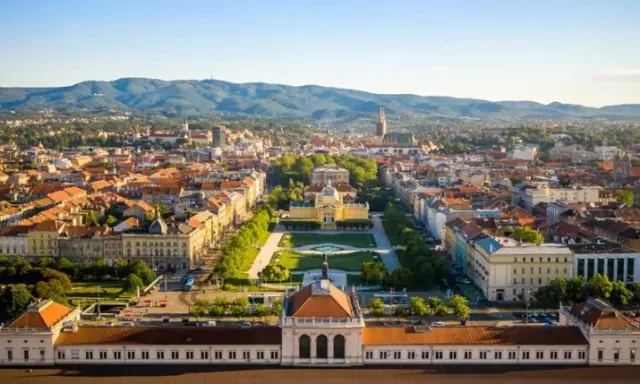
The reconstruction then dwells on the earthquake of 9 November 1880, which wrecked much of the city and triggered the rebuilding that produced modern Zagreb — including the Lower Town and its Green Horseshoe, the chain of parks and squares that remains the city's most distinctive urban feature.
The video then moves through the World Wars, post-1945 expansion south across the Sava River into Novi Zagreb, and the 1987 Summer Universiade, which left behind new sports facilities and the recreational development of Jarun Lake. It closes with the 1990s War of Independence, the 2020 earthquake that again damaged historic buildings, and the city as it stands heading into 2026.
Why watch before you go? Because Zagreb is a city of layers, and this makes the layers visible. When you stroll from the medieval Gornji Grad down into the 19th-century Lower Town, or cross into the socialist-era blocks of Novi Zagreb, you're walking through exactly the eras the animation covers. It turns a casual weekend break into something more like a walk through a timeline — and it helps explain why so many facades in the old town are scarred or scaffolded after the 2020 quake.