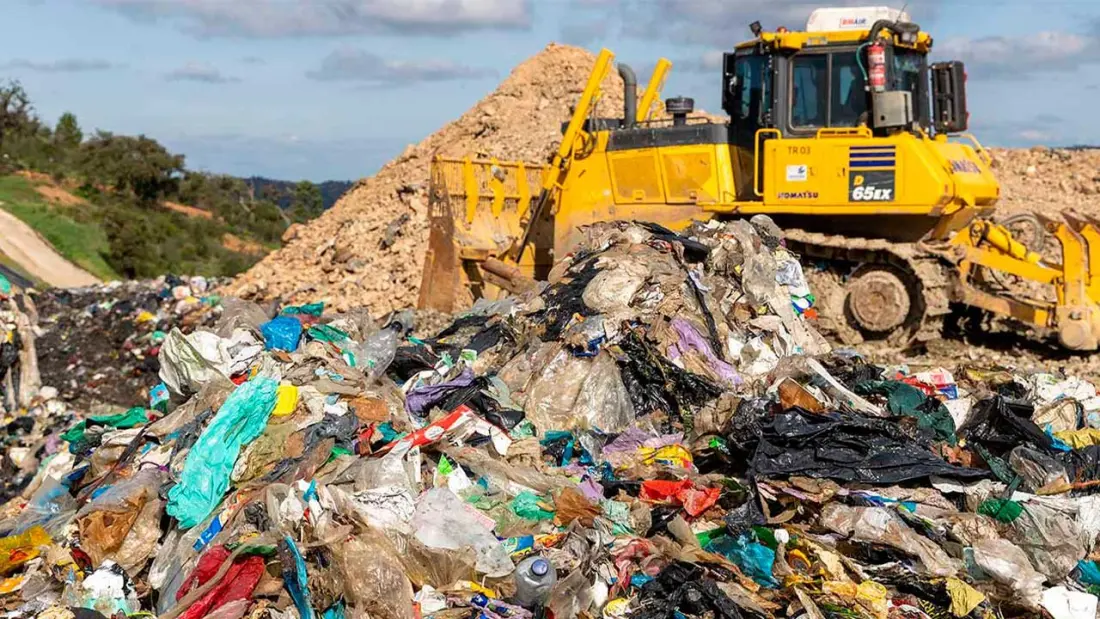
The Algarve — Portugal's biggest holiday region — has a waste problem, and an environmental group thinks the fix is sitting in plain sight. ZERO, a Portuguese environmental organisation, has taken its case to the environment minister, arguing that the region should treat its rubbish mechanically and biologically rather than burying it or burning it.
The group's spokesperson Rui Berkemeier told Lusa that ZERO met the minister last Friday to push a two-part plan. First, separate household waste from commercial waste — hotel rubbish in particular. Businesses producing more than 1,100 litres a day of municipal-type waste are legally required to run their own waste management systems, and Berkemeier says that rule is not being properly enforced in the Algarve, which is one reason the region's landfill sites are filling up faster than they should.
Second, for whatever can't be sorted at source, ZERO wants Algar — the company that runs the region's waste system — to improve and expand its two existing mechanical and biological treatment plants instead of building new facilities or turning to incineration. The logic is practical: new landfill sites anywhere in the Algarve would run into ferocious political opposition, and incineration, in ZERO's view, simply creates CO2 from materials that could be recycled or reused. Biological treatment, meanwhile, handles the organic matter — food waste mostly — that causes the worst problems in landfill: smells, methane and contaminated wastewater.
The timing matters. The environmental impact statement for Cell D of the Sotavento Landfill in Loulé, issued conditionally favourably by the regional development commission CCDR, projects capacity of roughly 875,000 tonnes, an annual disposal rate of 150,000 tonnes, and a lifespan of just five to eight years. The same document flagged concerns raised by ZERO and fellow NGO Almargem during public consultation, and went further — stating that dumping waste containing untreated organic matter is an illegal act under Portugal's landfill framework. For Berkemeier, that reading strengthens the case: landfills should only ever accept properly treated organic waste.
ZERO is also unimpressed with PAPERSU, Algar's Urban Waste Action Plan, which it says leaves around 70,000 tonnes of waste untreated each year. The organisation is now waiting to hear back from the minister, who reportedly told the group that "all options remain open".
Why should holidaymakers care? Because the Algarve's waste system is under strain in no small part due to tourism — hotels, restaurants and seasonal population surges generate a huge share of the region's rubbish. How Portugal resolves this will shape everything from beach and resort cleanliness to the region's environmental credentials over the next decade. Travellers who care about where their holiday footprint lands should watch this space: the choices being made now in Faro and Loulé will determine whether the Algarve treats its waste or keeps burying it.