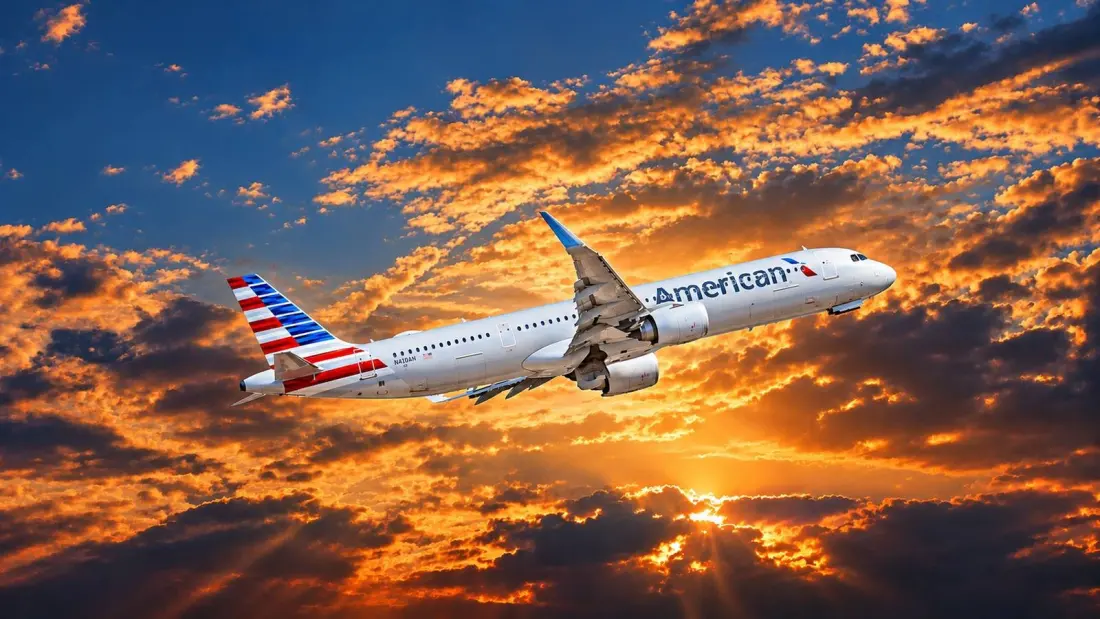
American Airlines just took four new Airbus A321-family jets in a single week — three standard A321neos plus an A321XLR, with the XLR (registered N311NY) flying in from the Hamburg factory to its Dallas/Fort Worth base. And more are coming: despite seven Airbus aircraft already scheduled for the rest of 2026, the airline now expects four further deliveries before the year is out. No Boeing mainline jets are due until 2029, so Airbus is doing all the heavy lifting right now.
The milestone buried in the news is that American now operates 100 next-generation A321s, alongside 218 older A321-200s. Eleven of those are the long-range XLR variant, and that small number is quietly reshaping where the airline flies.
American became the first US operator of the A321XLR when it took its first one in October 2025, and the type has become its thin-route transatlantic workhorse — filling the gap left when the Boeing 757s retired in 2020. Each XLR carries 155 passengers: 20 Flagship Suite business seats, 12 premium economy and 123 economy, a layout tilted toward premium revenue rather than raw capacity.
The route map tells the story. The XLR cut its teeth on premium transcontinental hops (JFK–Los Angeles, JFK–San Francisco, Boston–Los Angeles) before heading overseas. It has flown JFK–Edinburgh, and the 2027 plan adds JFK–Amsterdam and JFK–Nice from New York, plus Philadelphia–Porto. The headline grabber is Philadelphia–Vienna from May 6, 2027 — about 4,321 miles, which will make it the world's longest narrowbody flight, running daily through January 2028.
The standard A321neo, meanwhile, stays home and keeps the domestic machine running. American has 89 in the fleet with 127 more firmly ordered, in a denser 196-seat layout with 20 First Class and 47 Main Cabin Extra seats — 41 more travellers per plane than the XLR. It also reaches a bit abroad: Philadelphia–Reykjavík launches in May 2027 on the neo.
Why does this matter to travellers? Because American's transatlantic expansion is increasingly happening on small, premium-configured narrowbodies, opening routes that only made sense with cheaper long-range jets — Vienna, Porto, Nice and Amsterdam among them. If you're flying these routes in 2027, expect a boutique experience in the front cabin and a tighter one in economy than on a widebody. And with the 737 MAX 10 delayed to 2029 or beyond, Airbus narrowbodies will define American's growth for years, both at home and across the Atlantic.