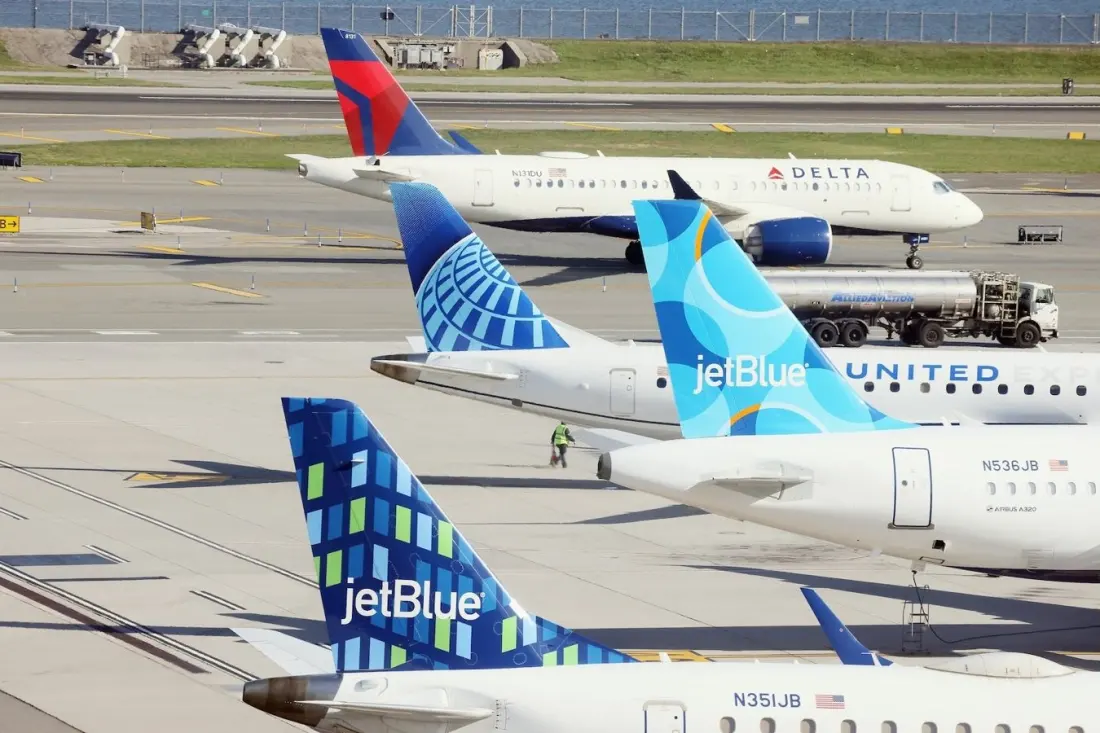
Could the price you see for a flight depend on who you are, not just when you book? That's the question behind a new inquiry from the US Federal Trade Commission, which has asked nine major companies — including Delta, United and JetBlue — to hand over details on whether they practise 'personalised pricing': setting different prices for different customers based on data the company holds about them. The same probe covers Uber, Lyft, Walmart, Target, DoorDash and Instacart.
The airlines insist nothing sneaky is happening. Airlines for America, the industry's trade group, said flatly that its carriers do not engage in personalised pricing and rely on market conditions and demand, as they always have. But suspicion has been building. Delta drew criticism from US lawmakers after revealing it uses a third-party AI tool to help set fares (the airline says it never uses customers' private data to do so). JetBlue faced a lawsuit after a since-deleted social media post from its customer service suggested a traveller might find a cheaper fare by clearing cookies or searching in incognito mode — the airline says the agent was simply wrong. Meanwhile, investigations have flagged carriers charging solo travellers more than pairs booking together.
Economists studying airline pricing urge some calm. The fare swings most of us see are usually classic dynamic pricing — prices that shift moment to moment as seats sell and demand changes — not surveillance of your browsing habits. As University of Mississippi economist Garrett Scott put it, people assume their searching behaviour is driving the price up, but he isn't convinced that's what's going on.
There are also plenty of openly declared differences in price. Delta and United give automatic award-ticket discounts to their credit card holders, and many airlines now surface targeted paid-upgrade offers after you book. An FTC official told The Points Guy the agency is less worried about personalised pricing itself than about companies doing it without telling consumers — and there are hints that could land fine with regulators if disclosed.
Still, some experts think the line is blurring. Mark Tremblay, a pricing researcher at the University of Nevada, Las Vegas, points out that a carrier could raise holiday fares during a week when its data shows wealthier travellers usually book — technically 'dynamic pricing', but arguably personalisation in disguise.
Why should you care? For now, the practical takeaway is that no evidence shows airlines are quoting you a personal price based on your identity. The fares that frustrate travellers — rising between searches, cheaper for pairs than solo flyers — come from demand-based systems and fare rules, not necessarily your data. That said, loyalty members and credit card holders genuinely do see different (sometimes lower) prices, and regulators on both sides of the Atlantic are watching how much data companies feed into pricing. If you're booking soon, compare across devices or a private window for peace of mind, but don't expect miracles: the price you're seeing is more likely about the seat map than your search history.