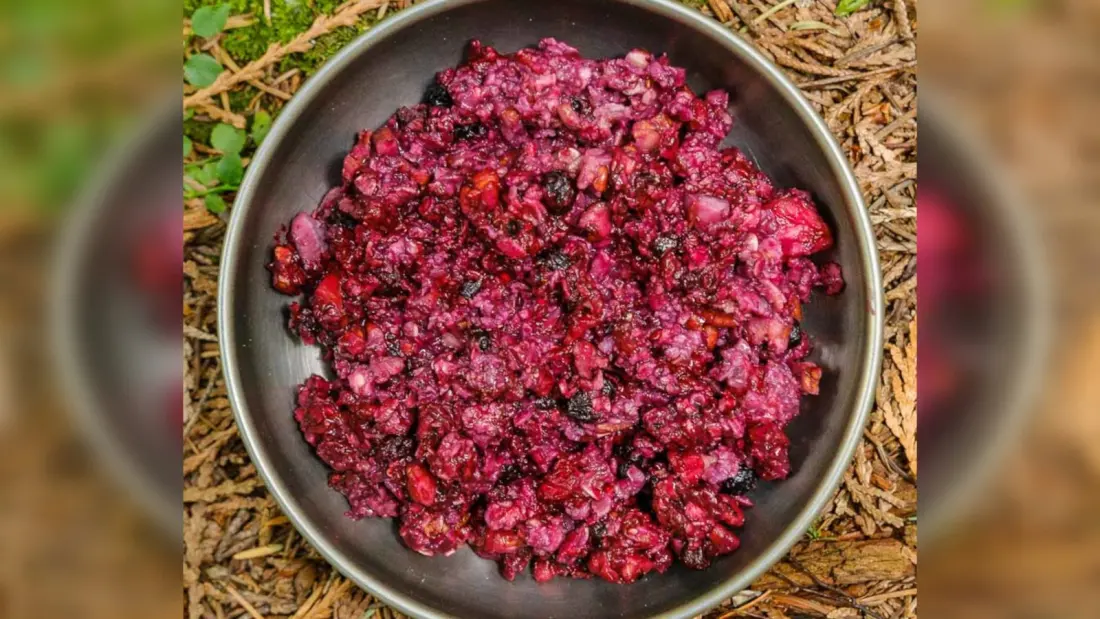
Cold-soaked oats again? A dietitian-created berry crumble from Backpacker is making the case that trail breakfasts can be quick, light and actually something to look forward to. The whole thing weighs just 3.2 oz (89 g) per serving, takes three minutes to prepare at home and about one minute in camp, and slots neatly into a seven-day meal plan built to fit inside a standard bear canister.
The recipe is deliberately calorie-dense, because skipping breakfast before a big day of hiking is a false economy — you need fuel for the miles ahead, but not at the cost of a slow, fussy morning routine. Everything except the coconut oil gets packed dry at home: half a cup of mixed freeze-dried berries, half a cup of full-fat granola, two tablespoons of chopped pecans, a teaspoon each of chia seeds and cane sugar. The coconut oil travels separately in a leakproof container — double-bag it, the recipe warns, unless you fancy greasy surprises in your pack.
In camp, the method is barely a method. Pour in 2 oz (60 mL) of hot water with the tablespoon of coconut oil, stir, and wait one to two minutes while the berries rehydrate. That's it: a warm, crumbly breakfast that tastes closer to dessert than fuel.
It works as an after-dinner treat too, which makes it a rare two-job recipe for a pack that counts every gram. Freeze-dried berries are the trick here — a fraction of the weight of fresh fruit, but they plump back up quickly and keep their flavour and nutrients. Full-fat granola and pecans bring the calories hikers need, while chia seeds add fibre and omega-3s without adding bulk.
Why does this matter for travellers? Because the difference between a fun multi-day hike and a miserable one often comes down to food. Heavy, bland or tedious camp meals are one of the most common reasons people bail on longer routes, and small upgrades like this — home-prepped, bag-based, no cooking beyond boiling water — make week-long trips feel manageable for anyone with a basic stove and a bear canister. If you're planning a trek where canisters are required, such as much of the US Pacific Crest Trail or routes through bear country in the Rockies or the Sierra Nevada, recipes like this one are the practical backbone of your food plan: light enough to carry seven days' worth, tasty enough that you won't dread meal number nineteen.
It's also a genuinely accessible entry point for kitchen-averse hikers. No dehydrator, no special equipment, no measuring in camp. Assemble the dry bag at home, stash the oil, add hot water at your campsite and eat.