Three Kazakh traditions look set to join UNESCO's Representative List of the Intangible Cultural Heritage of Humanity, after the organisation's Evaluation Body recommended all three nominations for inscription. The final call will come at the Intergovernmental Committee session in Xiamen, China, running Nov. 30 to Dec. 5. Of the 59 nominations filed this year, 56 got the nod — and Kazakhstan's trio was among them.
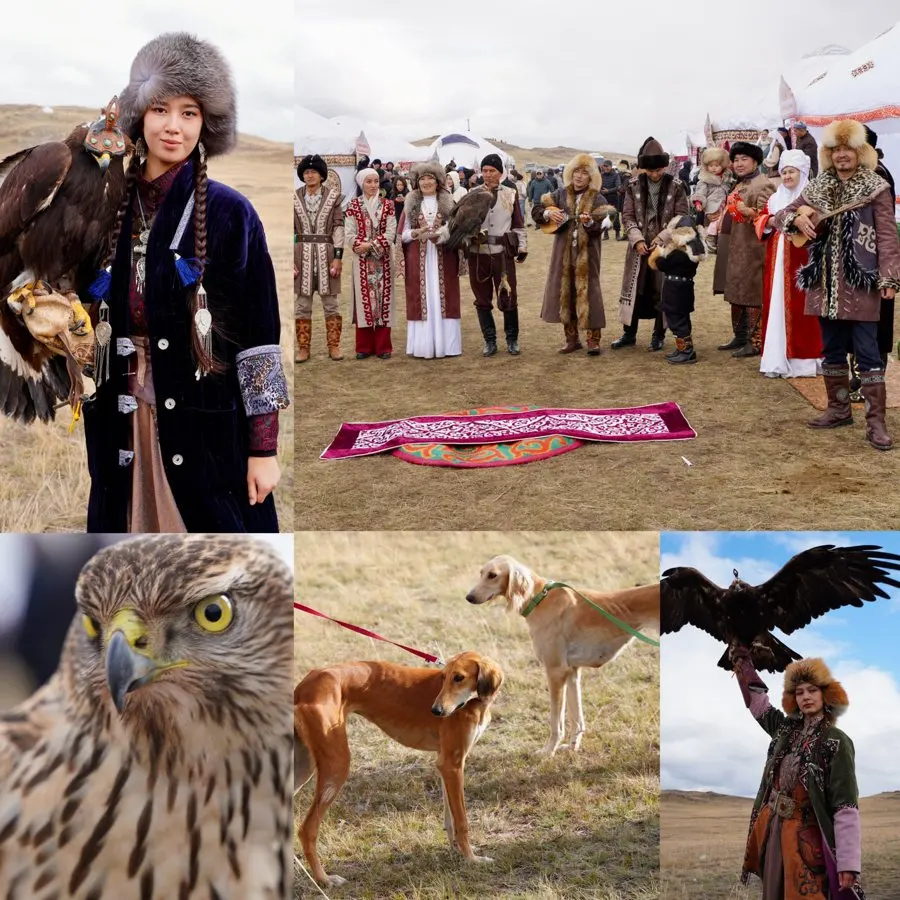
The headline act for travellers is Salburyny, an annual equestrian festival rooted in the country's nomadic past. Held over roughly a week between late autumn and early winter, it gathers falconers, musicians and storytellers alongside Tazy hunting dogs and golden eagles. Visitors and younger participants learn horseback riding, falconry and dog handling, and the whole event is framed around respect for animals and passing knowledge down the generations. It has been on Kazakhstan's own national heritage list since 2013, with groups like the Kansonar Association involved in the UNESCO bid.
The other two inscriptions are crafts. Kazakhstan filed the embroidery nomination jointly with Tajikistan and Uzbekistan — a shared tradition of stitching colourful, symbolic patterns onto silk, wool, cotton and sometimes leather. Motifs draw on flowers, animals and celestial symbols, and the meanings shift from one community to the next. Practised mostly by women working alone or in groups, it adorns clothing, wall hangings and household textiles, and provides real income for artisans.
Feltmaking went in as an even bigger joint bid, with Kazakhstan joining Azerbaijan, Iran, Kyrgyzstan, Mongolia, Tajikistan, Türkiye and Uzbekistan — cooperation UNESCO singled out for praise. Anyone who has stood inside a Central Asian yurt has seen the end product: thick wool transformed into carpets, mats, coverings and clothing through a laborious cycle of cleaning, dyeing, rolling, tightening and stretching. UNESCO highlighted how the collective nature of the work binds communities and generations together.
Why does this matter for travellers? Inscription usually means better-funded festivals, craft workshops and cultural programmes, plus easier access to the artisans themselves. If you want to see Salburyny in person, plan for late autumn, when temperatures drop and the eagle hunts are at their best. Craft-focused trips can centre on markets and cooperatives in cities like Almaty and Astana, or on villages where felt and embroidery are still made by hand. The joint nominations are a useful signal too: similar traditions span the steppe from Mongolia to Türkiye, so a Central Asia itinerary can follow the thread across several borders.