Less than an hour from Zagreb, the small town of Varaždinske Toplice has been in the bathing business for a very long time. Its thermal sulphurous water bubbles up at a scorching 58°C, and the Romans valued it enough to name their settlement there Aquae Iasae and build temples, pools and an entire bath complex around the spring. The site has just been granted temporary status as a cultural asset by Croatia's Ministry of Culture, with permanent protection expected within six years — a fitting nod to one of the most important ancient spa centres in the country.
Humans were drawn to the warm water long before Rome arrived. Finds from a tufa cave on Toplička gora point to Palaeolithic visitors, with continuous settlement through the Neolithic and Bronze Age. By the 3rd century BC the Pannonian Iasi tribe lived here — the Romans took the town's name from them. From the 1st to the 4th century AD, Aquae Iasae was a health, ritual and economic hub of Upper Pannonia.
Excavations that began in 1953 have uncovered around 6,000 square metres of Roman remains: baths, a colonnaded forum, temples to Jupiter, Juno and Minerva, and a monumental pool built right over the spring. There was even a practical engineering fix for the water's extreme heat — an original Roman pool, roughly 8 by 13.5 metres and constructed from massive stone blocks, where the 58-degree water was cooled before being channelled to the baths. Wall sections up to three metres high, floors, frescoes and water supply and drainage systems survive, thanks partly to the tufa deposited by the spring itself, which preserved the structures under layers of earth.
The most evocative find is a religious one. The Romans considered the spring sacred, associating it with nymphs and healing, and worshippers threw coins into the water as offerings for around three centuries. About 17,000 of them have been recovered, alongside altars, reliefs, inscriptions and sculptures. The complex was damaged during Gothic invasions in the early 4th century, but it mattered enough that Emperor Constantine the Great ordered it rebuilt.
The spring never stopped flowing — it still supplies the Special Hospital for Medical Rehabilitation in town today, treating rheumatic conditions and skin complaints much as it did under Roman rule. Travellers can now pair a soak with a wander through the Archaeological Park Aquae Iasae, set in a spa park landscaped back in 1820, and round it off at the Local History Museum in the Old Town, where Roman finds from the dig are on display.
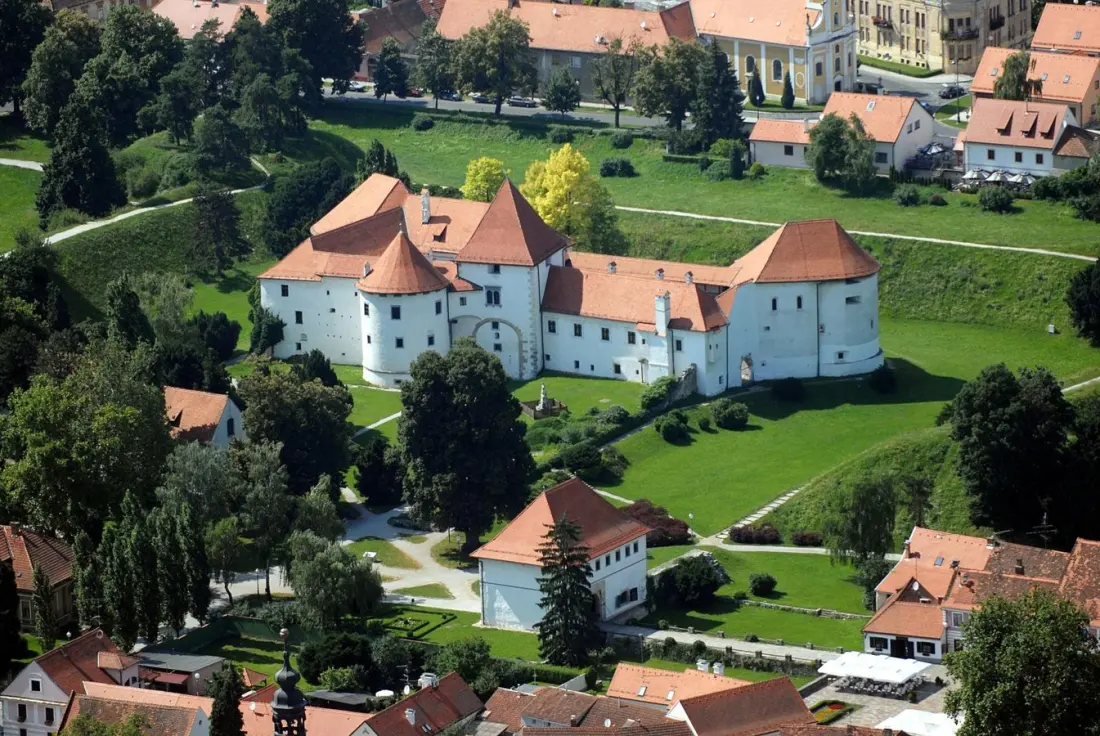
For anyone plotting a low-key day trip or a wellness stop in northern Croatia, this is a rare combination: you can bathe in the same water the Romans cooled in stone pools, then stand beside those very pools twenty minutes later. It also makes an easy add-on to a Zagreb city break, or a stop on a loop towards Varaždin, one of Croatia's prettiest baroque towns, just a short drive away.