A few minutes from Slivanjska Bay on Croatia's island of Krk, near the village of Rudine, lies Biserujka — a cave that packs smugglers' tales, pirate gold and Ice Age bones into just 110 metres of underground passage.
The name, according to local legend, comes from a stash of pirate treasure once hidden inside. When the loot was found, it was supposedly moved somewhere secret — a spot only a figure known as 'Ive Gospodin', whose house stands at the entrance to Rudine, could reveal. Smuggling also features in the cave's written record: the first documented mention dates to 1834, when a smuggler from Senj was reportedly arrested after hiding out in it. By around 1850, the entrance had been fitted with a door — the first time a Croatian cave was protected that way. Some early visitor graffiti survives too, with the oldest dating to 1859.
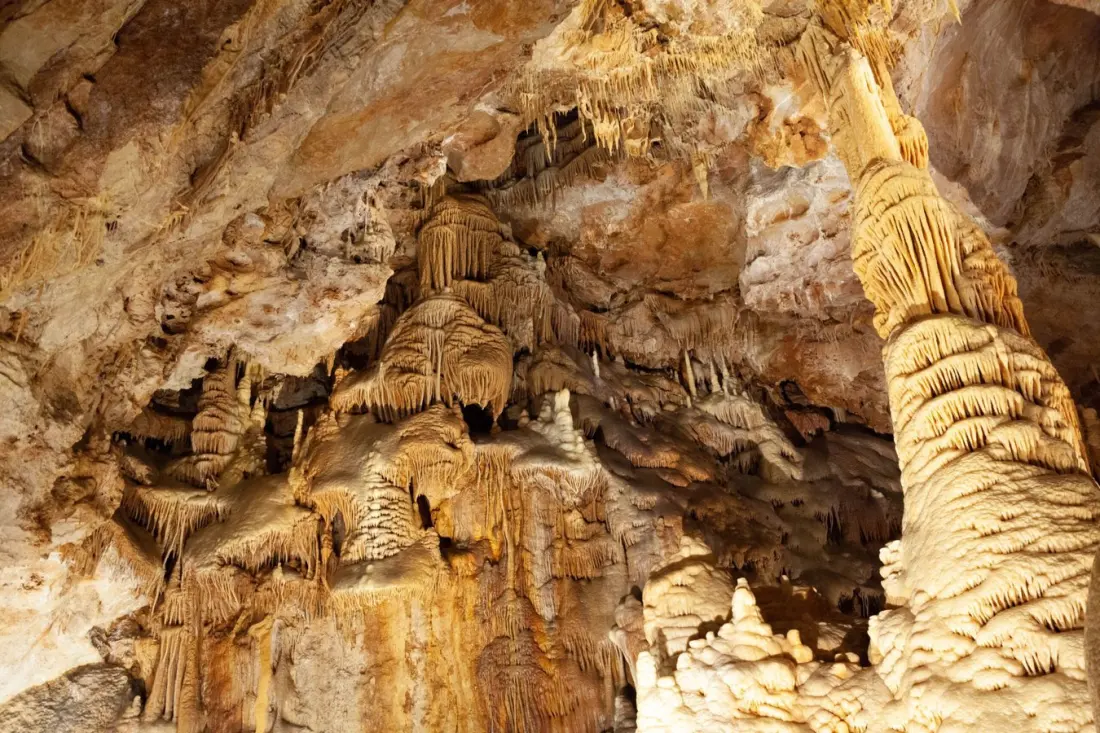
Tourism here started early as well. In 1913 a stone cottage and stairs were built, and today's route is an easy walk requiring no caving gear. You descend from the cottage to a small hall called the Balcony, squeeze through the Window — the narrowest point — then continue into the Great Hall, the Hall with Bridges and the Cypress Hall, where columns of flowstone look like a petrified cypress forest. Near the end, the cave runs so close to the surface that soil and plant roots poke through.
The decorations are surprisingly colourful for such a shallow cave: brown, grey and reddish tones courtesy of iron and manganese oxides. Rainwater seeps through only six to eight metres of rock above, dissolving calcium as it goes — which explains the glacial pace of growth. A single millimetre of deposit takes 10 to 30 years to form.
Biserujka is also a live scientific site. Twenty-eight species have been recorded inside, six of them found nowhere but the Kvarner area. Bones of a cave bear roughly 16,000 years old have turned up too, from the end of the Ice Age, when lower sea levels connected Krk to the mainland.
Conditions underground stay around 15°C with 95% humidity, so bring a layer even in summer. Tickets cost €7 for adults and €5 for children aged three to 12, with under-threes free; in winter you'll need to arrange a visit in advance.
A bonus for walkers: an educational trail links the cave to Slivanjska Bay in about 30 minutes, crossing classic karst country — dry-stone walls and rocky pasture exposed to the fierce bora wind — before reaching a small harbour and sandy beach. Cave, legend and a swim in one easy loop.
Biserujka suits families and casual explorers: short, safe, cool and cheap, with enough natural and human history to fill a morning. Pair it with Krk's other draws — the old hilltop town, the beaches of the eastern coast — or make it a stop on a Kvarner islands road trip alongside the Blue Cave on Biševo and Velebit's show caves. Source: Total Croatia.