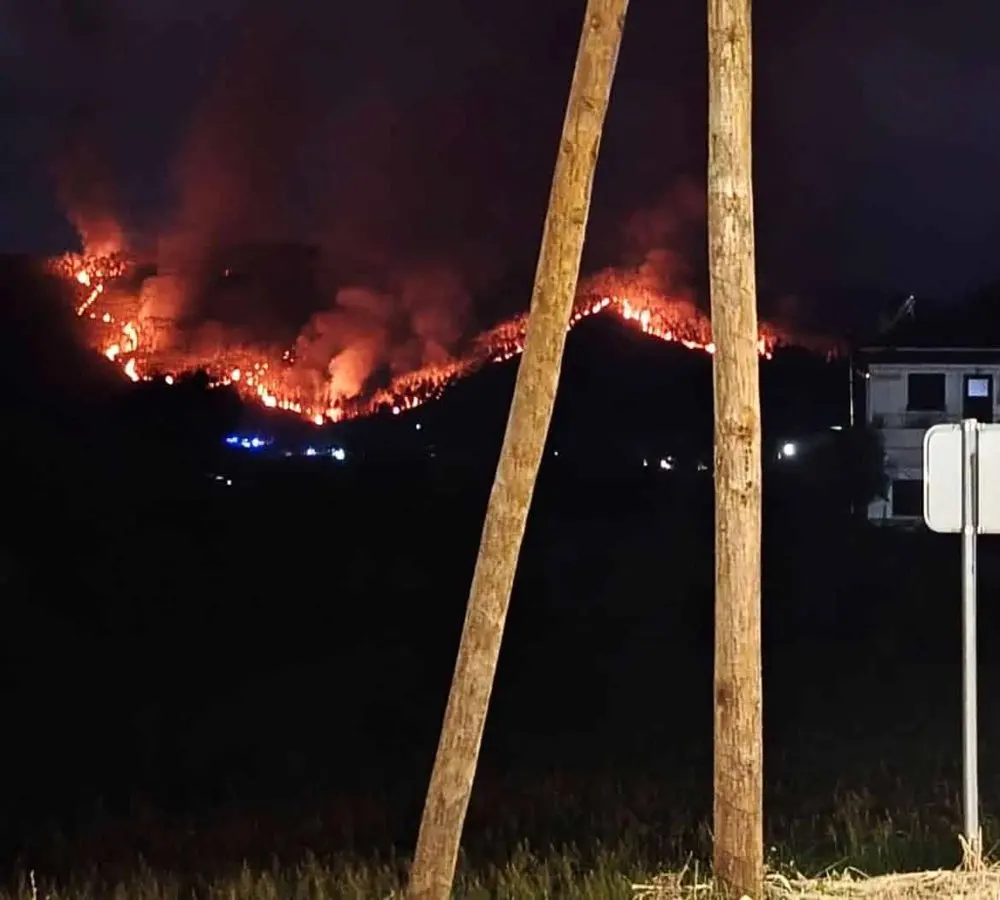
A fast-moving wildfire in the Arganil area of central Portugal was finally brought under control at 00.36 overnight, according to civil protection officials. At its peak, the blaze drew a huge response: more than 800 personnel on the ground, backed by 260 vehicles and 15 aircraft. Three firefighters suffered minor injuries.
The fire had been described in the late afternoon as "very violent" and "progressing freely", and things escalated when three separate blazes merged into one. Two started close together at Sabouga in the Vila Nova de Poiares municipality, reported around 1.40pm on Saturday, while a third broke out minutes earlier at Murganheira in Arganil itself. Once the fires converged, the combined front spread quickly through the forested hills of the Coimbra district.
Several villages were directly in the fire's path, most notably Chapinheira and Vila Nova de Ceira in the municipality of Góis. Both were declared out of danger by around 11.30pm. Six residents from three localities were evacuated as a precaution; officials from the Góis council confirmed they have since been able to return home, and the situation on the ground is described as calmer.
For anyone travelling in central Portugal, the episode is a reminder of how quickly summer conditions can turn here. The Arganil–Góis–Poiares triangle sits in the heavily forested Beira region, a popular area for rural tourism, hiking and river beaches along the Ceira and Mondego valleys, and its landscape of pine and eucalyptus burns fast in hot, dry weather. Rural accommodation, trailheads and mountain roads can be affected at short notice, so it's worth checking alerts from Portugal's civil protection authority (ANEPC) and following local municipal updates if you're staying in the area during fire season. Roads may close temporarily and smoke can drift well beyond the fire perimeter.
The good news: no homes were reported lost, injuries were minor, and evacuees were back home within hours — a sign of how practiced Portuguese emergency services have become at containing summer wildfires. Fire risk in the region typically runs from June through September, so travellers visiting in that window should keep an eye on conditions and respect any restrictions on lighting fires or using forest trails on high-risk days.