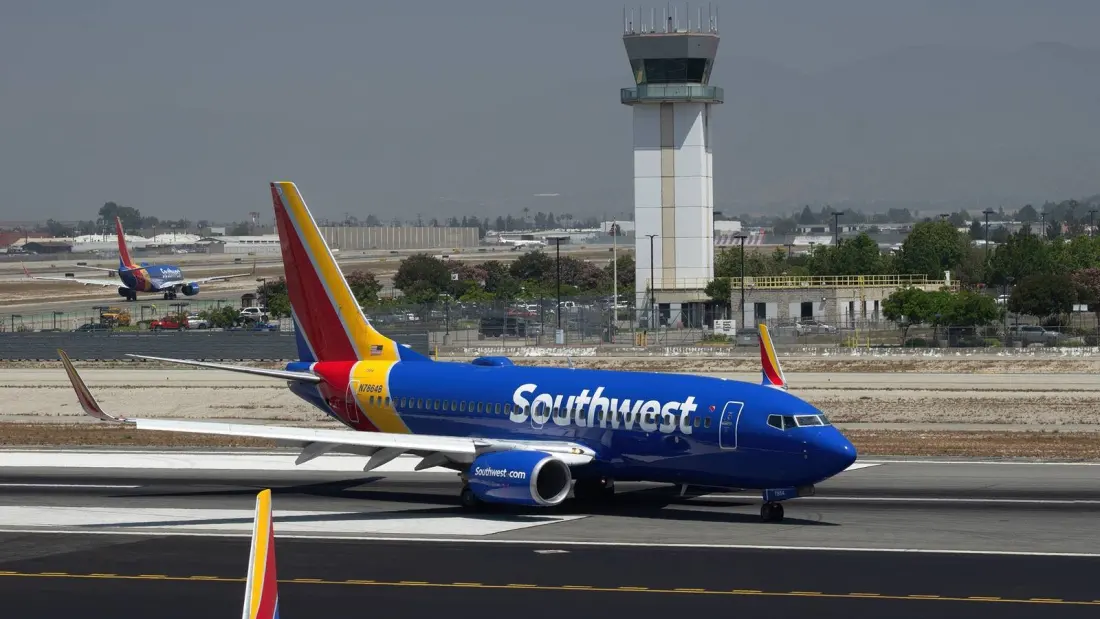
Hollywood Burbank Airport (BUR) briefly became an unusual place to fly through on Wednesday evening: its control tower went 'ATC Zero', leaving pilots to broadcast their own positions and coordinate takeoffs and landings over a shared radio frequency.
Recordings captured a Southwest crew reporting they were on short final for Runway 8, while an Alaska Airlines crew announced it was taxiing toward the holding pad — all on the Common Traffic Advisory Frequency (CTAF), a procedure normally used at small airfields with no tower at all. The blackout happened at least twice that evening, each lasting roughly 30 minutes. Regional radar coverage from Southern California TRACON still guided aircraft toward the airport before handing them off to self-coordinate for landing.
The likely cause is a staffing problem, though neither the FAA nor the airport has confirmed it. Reports suggest a lone controller's mandatory rest breaks may have left the tower empty in repeating 30-minute windows. Worryingly, it is not a one-off: on 6 October 2025, during the 43-day federal government shutdown when controllers worked unpaid, Burbank's tower sat unmanned for nearly six hours, with average delays exceeding two hours.
There is real context behind the concern. Burbank's airspace is already flagged as a high-risk 'hotspot' thanks to dense helicopter traffic and its proximity to Van Nuys Airport. And this is no quiet strip — it is a busy Class C airport served by Southwest, Alaska, American, Delta and United, handling more than 100 flights a day. Passengers interviewed by CBS LA voiced unease about crews having to 'jockey' among themselves over landing sequence.
ATC Zero is one of three FAA designations — alongside ATC Alert and ATC Limited — for facilities running at reduced or no capacity. When it happens, a neighbouring facility absorbs part of the workload and pilots fall back on CTAF radio calls and visual scanning to stay clear of each other. Common at rural airstrips, it is rare and notable at a commercial airport of Burbank's size.
For travellers, the practical takeaway is modest but real: if you are flying through Burbank, expect occasional delay risk while staffing pressures persist, and don't be alarmed if a flight is held — it may be the system working cautiously through a gap in tower coverage. The broader story points to ongoing strain in the US air traffic control workforce, which has surfaced repeatedly since the shutdown.