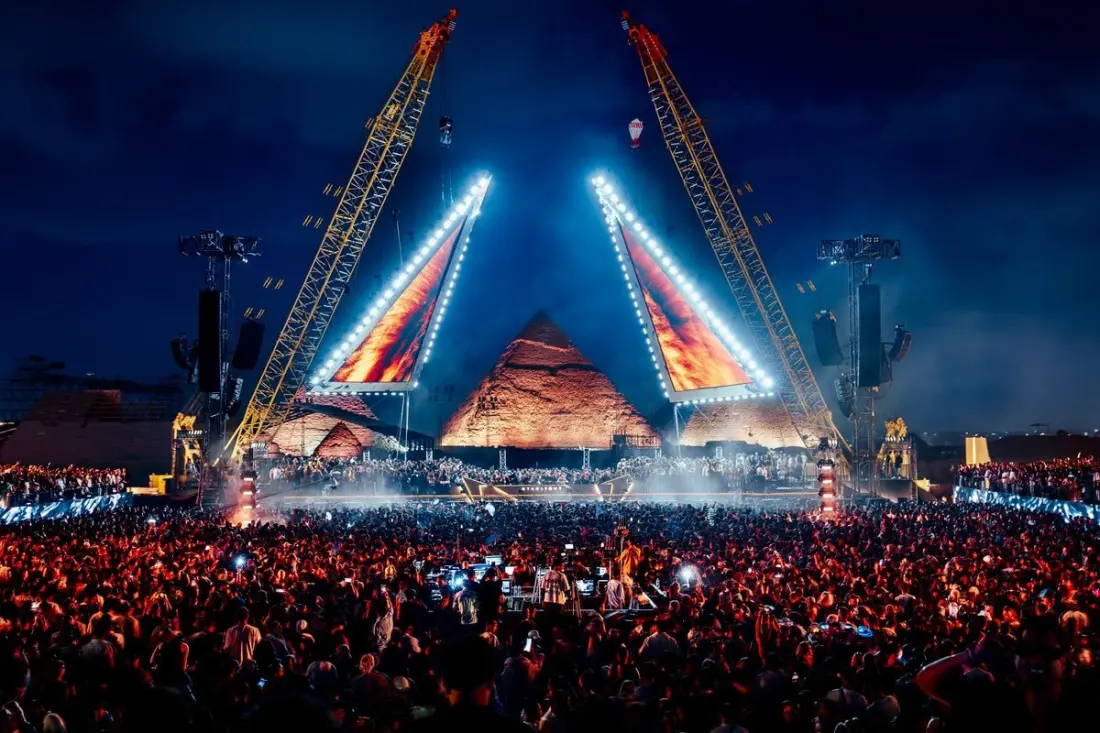
The Pyramids of Giza have spent nearly 5,000 years as a monument to the past. In late 2025 they served a new purpose: backdrop for Starlight Festival, a two-day electronic music event staged on a desert site overlooking the ancient tombs.
The festival was a collaboration between Serbia's EXIT festival and Egyptian promoter P+US, and it packed a serious line-up. Pete Tong, Charlotte de Witte, Michael Bibi and Adriatique all played sets under the desert sky, with light shows and giant triangular screens turning the silhouetted pyramids into a backdrop that no other festival on Earth can claim. According to EXIT founder Dušan Kovačević, it was the first full-scale, multi-day festival ever staged at the site — a feat requiring sign-off from Egypt's Ministry of Tourism and Antiquities and months of logistics.
There's an unlikely backstory, too. EXIT began 25 years ago as part of Serbia's student movement against Slobodan Milošević, and Kovačević says the festival effectively left Serbia after backing a new wave of anti-government protesters. The Egypt debut capped EXIT's international expansion tour and marked a new chapter beyond its Balkan roots.
The crowd told its own story. Egyptian and international revellers arrived in force — linen shirts, Y2K low-rise jeans, and a striking number of ancient Egyptian tattoos: Eyes of Horus on collarbones, scarabs on wrists. It summed up a side of Cairo that rarely makes the brochures: a young, confident generation comfortable mixing global club culture with the history on their doorstep.
Organisers see this as more than a one-off. Rabih Mokbel, founder of Egyptian events company Venture Lifestyle, wants Egypt to build its own identity on the international live-entertainment circuit rather than imitate Ibiza or Dubai — turning the country's instant global recognisability into a sustainable industry of venues, expertise and a proper events calendar. The open question, as the writer notes, is balancing contemporary spectacle against heritage, and making sure international festivals create real opportunities for Egyptian businesses, artists and workers too.
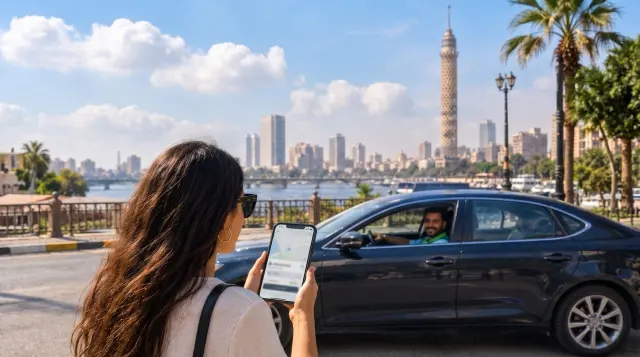
For travellers, the pitch is simple: very few places let you catch world-class DJs one night and stand before humanity's oldest surviving wonders the next morning. Expect some Cairo eccentricity in the mix — getting a taxi near the site is cheerful, improvised chaos — but also warm welcomes from local staff keen to show visitors a version of Egypt beyond Nile cruises and Red Sea resorts.
Not every visitor will plan a trip around a festival. But if Egypt's events scene grows as organisers hope, Cairo is about to offer something genuinely different: a weekend where the country's future feels as compelling as its past.