
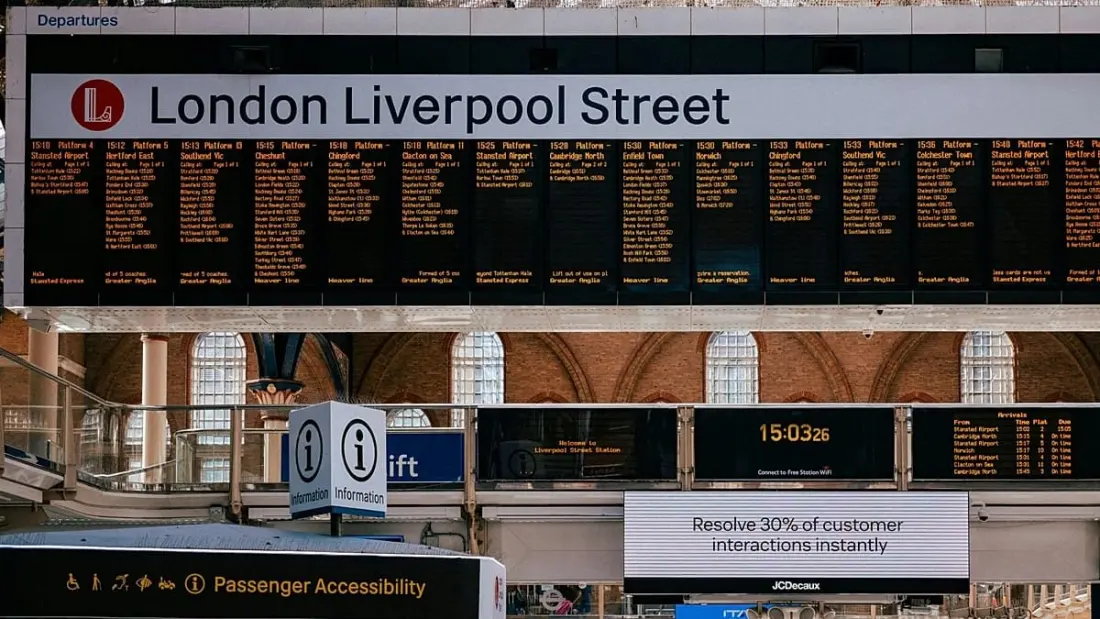
Few travel moments are more frustrating than arriving at a British station to find your train has been scrapped — and then realising the next one is run by a different company, so your ticket technically isn't valid on it. From Sunday 20 September, that changes.
The UK is expanding cross-operator ticket acceptance, meaning a cancelled service no longer strands you with a useless ticket. When your train is called off, you can hop on a participating operator's train instead. The ticket is valid on any train departing within two hours either side of the cancelled service, as long as it travels by a direct or reasonable alternative route.
The practical side is refreshingly simple: no new ticket, no refund claim, no queue at the ticket office. You just show your original ticket to the on-board inspector and it gets accepted.
This isn't entirely new — all publicly-owned operators already accepted each other's tickets. What's different from 20 September is that four big private operators are joining the scheme: Avanti West Coast, Chiltern Railways, CrossCountry and Great Western Railway. East Midlands Railway is expected to follow later, which will cover a significant chunk of the long-distance network.
The passenger watchdog Transport Focus, whose chief executive Alex Robertson has long pushed for the change, welcomed it — but flagged the catch that matters most on the day: passengers need clear, quick information about their options when disruption hits. A scheme only works if the person standing on a crowded platform actually knows they can board that other company's train.
Why should travellers care? Because train travel is often the backbone of a UK trip, whether you're doing London to Edinburgh on the East or West Coast routes, riding Great Western out to Bath or Cornwall, or crossing the country on CrossCountry. Until now, a single cancellation could leave you waiting an hour or paying twice. Two hours of flexibility either side of your original departure — across competing operators — turns a worst-case scenario into a minor detour.
It's also a quiet win for flexible touring. If you're building an itinerary around rail passes or point-to-point tickets, the risk of a cancelled connection eating half a day has just dropped considerably.
One thing to keep in mind: the scheme applies to cancellations, not general delay or a change of heart about your travel time, and it only covers participating operators. If you're travelling on a route served by a company not yet in the scheme, the old rules still apply. East Midlands Railway's arrival later should close the biggest remaining gap.
For anyone heading to the UK in the coming months, the tip is simple: when disruption strikes, check which operator runs the next train rather than assuming your ticket is worthless. With a bit of luck, it'll get you there.