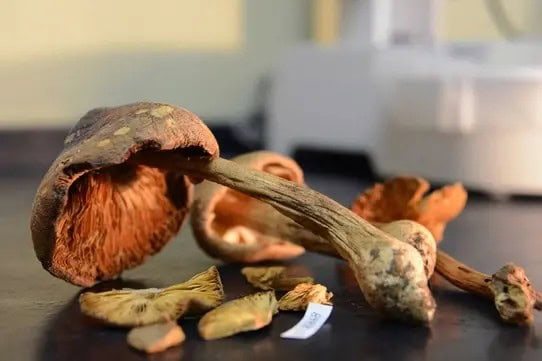
Costa Rica's wildlife fame rests on sloths, toucans and sea turtles. A new study argues the country's biggest biodiversity story might be the thing under your boots: fungi. Research from the University of Costa Rica estimates the country could host more than 40,000 fungal species — yet fewer than 7,000 have ever been formally documented.
The team, led by Melissa Mardones, Julieta Carranza-Velázquez and Carlos Rojas, sifted through 78,333 collection records spanning roughly 170 years, drawing on specimens held at the University of Costa Rica, the National Herbarium and archives abroad. Publishing in the journal Plants, People, Planet, they lifted the known count from 5,676 to 6,789 species — a jump of nearly 20% just from re-examining existing material. Their modelling, which weighed fungus numbers against known plants and arthropods plus modern DNA studies, produced estimates running from about 6,900 up to 40,373 species. The top figure isn't a catalogued list; it's a measure of how much may remain uncollected.
The gaps are striking. Nearly 80% of all records were identified only to genus, and of the species properly pinned down, almost 90% appear in the collections five times or fewer. Some well-trodden areas — the southern Talamanca mountains, the Osa Peninsula, central Guanacaste — are relatively well studied, while the Nicoya Peninsula, the Central Pacific and Pacific-side forests of the Guanacaste mountains barely register. Popular tourist regions, in other words, may be full of species science has never named.
Timing matters too. Collections logged a median of 98 specimens per calendar day in the dry season versus 181 in the rainy season, when moisture pushes fungi into their visible mushrooming phase — useful intel if you're hiking Costa Rican cloud forests and wondering why the forest floor suddenly looks decorated.
Why should a traveller care? Because the study reframes what a Costa Rica trip can be. Fungi are the quiet infrastructure of the forests you came to see: they recycle nutrients, feed trees, hold soils together and underpin entire ecosystems. Guided walks focused on mushrooms, night hikes and macro-photography tours are a growing niche in places like Monteverde and the Osa, and this research suggests even amateur observations could be genuinely useful in under-sampled zones. It also adds weight to conservation arguments — fungi are barely covered by the IUCN Red List compared with mammals or birds — so supporting lodges and reserves that fund research has real value.
There's a historical wrinkle: field work surged between 1990 and 2015 under the former National Biodiversity Institute (INBio), then dropped sharply. Researchers say finishing the inventory will take sustained funding, better identification of stored specimens and a national living culture collection. For now, the takeaway is simple: the country's most famous asset may be far richer than anyone knew, and a good chunk of it is glowing quietly on a log near a trail you could walk this year.