While Halloween gets the global spotlight on October 31, Costa Rica throws its own party: National Traditional Masquerade Day, when oversized papier-mâché heads, brass-heavy marching bands and folklore characters fill streets across the country.
This year's main event happened in downtown San José, where three groups of masked performers and cimarrona musicians set off at 11 a.m. from Plaza de la Democracia, Parque Morazán and the Simón Bolívar Urban Nature Park, converging around noon at the National Center for Culture (CENAC) across from Parque España. The Ministry of Culture and Youth staged the celebration as free public entertainment, part of a wider weekend programme.
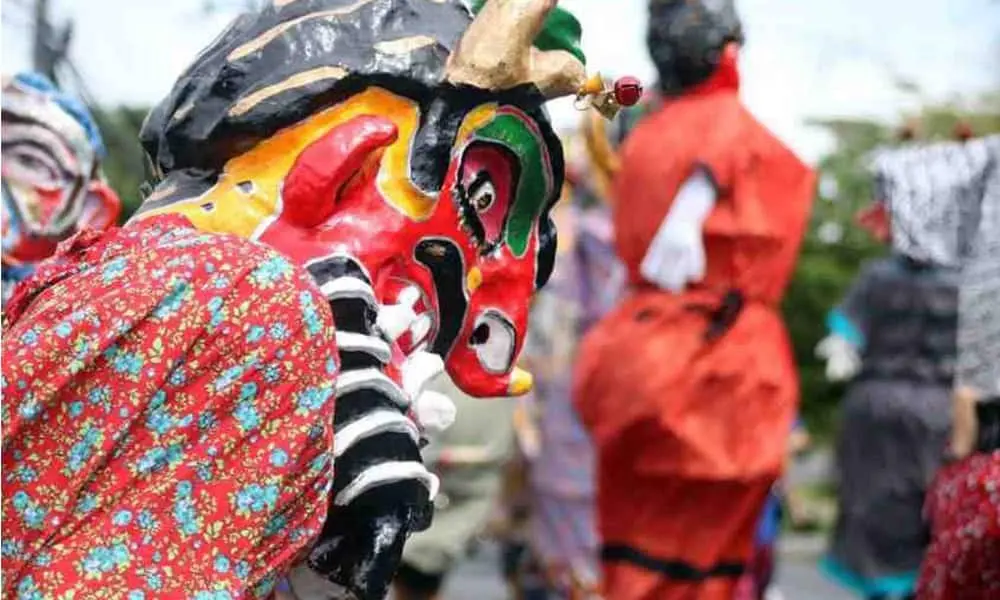
The mascaradas are nothing like trick-or-treating. The giant masks depict figures from Costa Rican legend — La Segua, La Llorona, Death, the Devil and La Giganta among them — worn by performers who dance, chase and playfully terrorise spectators while cimarrona bands blast trumpets, trombones and drums. Some heads tower over the crowd, sculpted from papier-mâché or fiberglass by artisans who often pass the craft down through generations.
The tradition traces back to colonial-era festivities in Cartago, where Spanish celebrations blended with Indigenous customs. Towns like Barva, Aserrí, Escazú and Cartago became the craft's strongholds. The modern national day started in Aserrí on October 31, 1996, as a counter to growing Halloween popularity, and the government made it official by decree the following year. In 2022, the Legislative Assembly went further, declaring traditional masquerades a national symbol under Law 10239.
The celebrations spread well beyond the capital. Cartago hosted a free masquerade and cimarrona festival at Plaza Mayor on Friday morning, while Limón's Civic Center for Peace ran mask painting, storytelling and a parade in the late afternoon. In Liberia, Guanacaste, the public library held an evening of Costa Rican legends, and Escazú Village put on a family-friendly Saturday programme with mask-making workshops and costume competitions from 3 p.m. to 7 p.m. San Ramón's José Figueres Ferrer Cultural and Historical Center keeps an artisan mask exhibition open through November 6.
One event carries a ticket price: the National Band of Guanacaste's Saturday concert at the National Theater in San José, with general admission at ₡4,000 and ₡2,500 for students and seniors.
For travellers, this is a rare window into a Costa Rica beyond volcanoes and wildlife. Timing a trip for late October means catching a living tradition in small-town plazas, where the sound of an approaching cimarrona still sends kids running — half in fear, half in delight. Acting Culture Minister Sally Molina Villalobos framed the weekend as recognition of the artisans as much as the spectacle, and that's the real draw: you're watching a craft, not just a parade.