
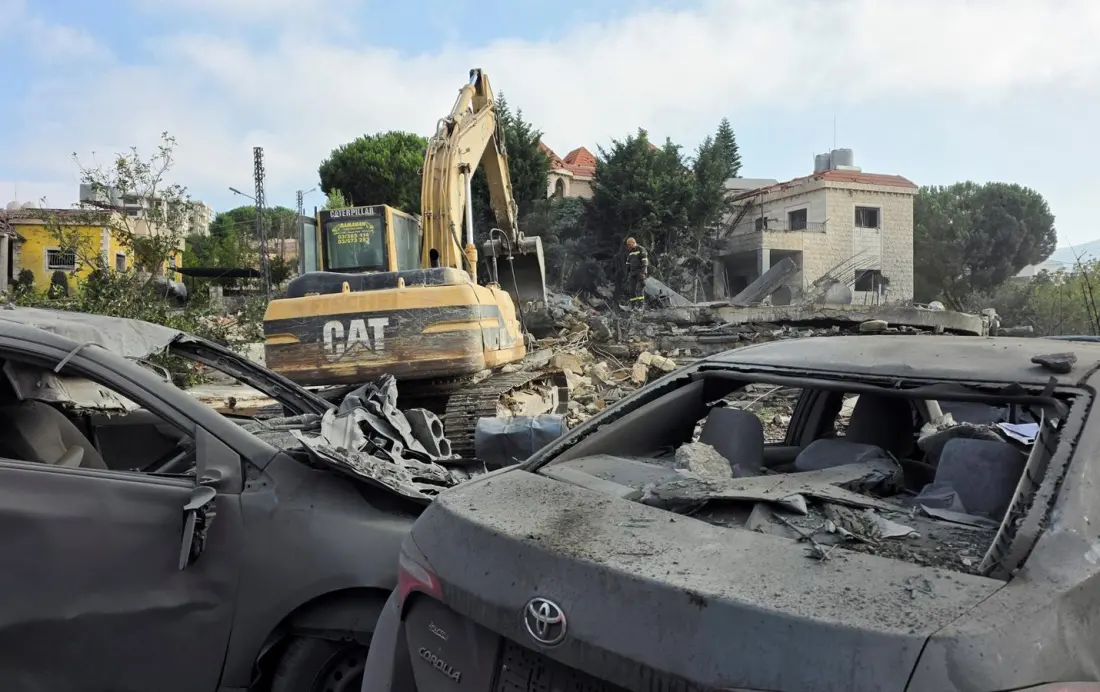
Israeli strikes on the southern Lebanese town of Kfar Rumman killed at least 13 people on Monday, among them six children, according to Lebanon's health ministry. It was one of the deadliest days of bombing in recent weeks and a stark sign that the June ceasefire between Israel and Hezbollah is failing to hold.
Locals said one strike flattened a residential building just as children were preparing for school. Rescue workers spent the morning pulling bodies from the rubble; among the victims was the family of an eight-year-old boy, Mustafa Farhat, who lost his mother and grandparents and was himself hospitalised. A separate drone strike on a civilian vehicle killed one medic and wounded two others. Notably, neither attack came with an online evacuation warning from the Israeli military, which said it was targeting people transferring weapons and was reviewing reports that civilians were harmed.
The strikes are part of a wider escalation around the Ali al-Taher ridge in southeastern Lebanon, a cluster of hills where Hezbollah is believed to have built an underground complex. Israel says it has cleared fighters from the ridge and is now hitting towns to its north and west where residents had returned after the ceasefire. On Sunday alone, at least 11 people were killed in strikes on three nearby towns, and the Ghandour hospital in Nabatieh al-Fawqa was destroyed. Lebanese security officials expect the escalation to continue in the coming weeks.
The broader numbers are grim: Lebanon's health ministry says more than 4,300 people have been killed since fighting erupted in March, including more than 250 children, nearly 400 women and over 130 medics. Israeli troops continue to occupy and raze villages in a self-declared security zone in the south.
For travellers, the takeaway is simple: Lebanon is not a viable holiday destination right now. Several governments, including the UK, US and Canada, advise against all travel to the country, and many specifically warn against the south. Airlines have periodically suspended routes to Beirut-Rafic Hariri International Airport during flare-ups, and the situation can change with little notice. Anyone with upcoming plans should check their foreign office's latest guidance, review their insurance cover carefully — most standard policies exclude destinations under 'do not travel' advisories — and contact operators about refunds or rebooking. Neighbouring Israel's south and border areas also carry warnings, so anyone holding trips to the region should monitor developments closely. This is a story to watch, not one to book around.
Reporting: Japan Today / Reuters.