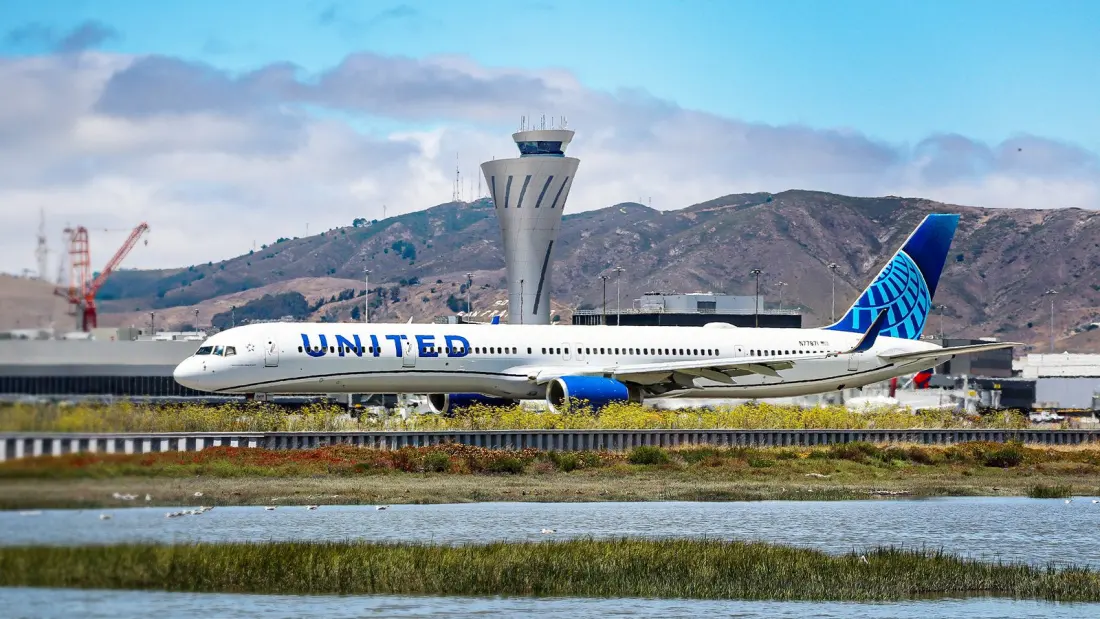
At 178 feet and seven inches long, the Boeing 757-300 is the longest single-aisle twinjet ever built — and that length created a problem you might not expect: keeping the tail off the runway. Boeing stretched the standard 757-200 by 23 feet and four inches, adding a 13-foot plug ahead of the wing and a 10-foot one behind it. The further the tail sits behind the main landing gear pivot point, the faster it drops toward the tarmac when the nose lifts on takeoff. Something had to give.
Boeing's answer was layered. The first defence is a retractable, crushable tailskid under the tail, powered by the left hydraulic system and deployed automatically with the landing gear. If it does contact the runway, a sacrificial cartridge absorbs the impact instead of the airframe, and a red pop-out indicator tells maintenance crews to check it. Crucially, the 757-300 uses a crushable cartridge, whereas something like the 767-300 relies on a compressible oleo strut.
The cockpit adds an information layer. A TAILSKID light and EICAS advisory flag when the skid's position doesn't match the gear lever, while a separate sensor in the aft body posts a caution-level TAIL STRIKE message if the fuselage itself touches down hard enough to threaten the pressure hull.
The most subtle fix hides in the flight controls. The -300's higher rotation speeds prompted an Elevator Feel Limit that caps control-column forces during rotation and for seven seconds after liftoff — exactly the window when an over-enthusiastic rotation could put the tail on the runway. Boeing data cited by the Australian Transport Safety Bureau lists excessive rotation rate and early rotation among the most common causes of takeoff tail strikes. On landing, a pitch-attitude sensor holds the three outboard spoilers on each wing down if the aircraft flares too nose-high, nudging the nose over before contact.
Why does all this matter to flyers? Because the 757-300 has spent its career on genuinely demanding routes. All ten of United's longest narrowbody routes are flown by the type, including San Francisco to Washington Dulles at around 2,085 nautical miles — long sectors mean heavy fuel loads, high rotation speeds and full cabins of up to 279 passengers, precisely the conditions its protections were designed for. With operating costs that can hit roughly $1,700 per hour plus parts, a tail strike is an expensive headache, which makes a sacrificial cartridge look like cheap insurance.
The fleet is now shrinking fast. Only 55 were ever built, launch customer Condor retired its last example in November 2025, and the type's fate now rests mainly with Delta (16 aircraft) and United (roughly 18 to 21). The earliest deliveries from 1999 are well past their 27th birthday. If you want to fly one of aviation's most elegant stretched airliners, the window is closing.