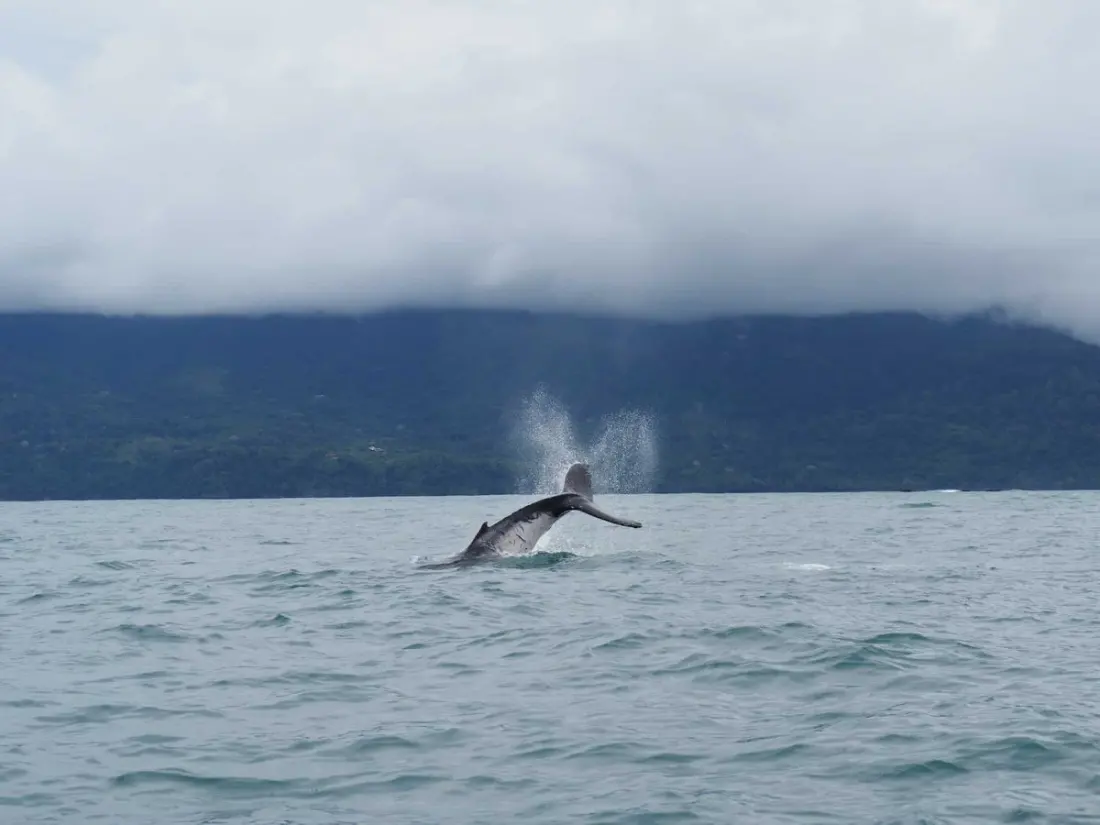
Costa Rica's Pacific whale-watching season is about to begin, but this year the usual December influx of humpbacks comes with an asterisk. A strong El Niño is pushing sea temperatures up, and researchers, guides and marine biologists across the region expect fewer whales or later arrivals than normal.
Costa Rica is unusual in hosting two separate humpback populations. Whales that feed off the northwestern US arrive from December to March to breed and nurse calves, while a southern group from Antarctic and Chilean waters shows up between July and mid-November. The southern season that just wrapped offered a warning sign: guides in the Golfo Dulce reported noticeably fewer sightings in August, with one morning when only a single boat out of 30-40 spotted a whale. An experienced captain in the gulf noted the animals are lingering farther offshore rather than inside the calm bay, and guides have also seen coral bleaching.
These accounts are anecdotal — no hard numbers on a decline have been published yet — but the science backs the plausibility. A McGill University-led study tracking 42 humpbacks tagged off Costa Rica, Panama and Ecuador found that whales time their migration using a mix of real-time conditions and long-term memory of their Antarctic feeding grounds. In warmer, lower-chlorophyll years, they tended to leave earlier. And with NOAA putting the odds of a strong-to-very-strong El Niño through January-March 2027 at better than 79%, the northern population may face similar pressure. A University of Hawaii study from the 2014-16 marine heat wave found whales that lost access to food slowed down to conserve energy — a survival tactic that nonetheless disrupted early pregnancies. Conservationists in Mexico's Bahía de Banderas are predicting the same pattern for their season starting in early December.
None of this means Costa Rica's whales are gone. The southern population's slower, quieter season is the strongest data point so far, and the northern season — the one starting now — will tell the real story in the coming weeks. If you have flexibility, booking a tour for later in the December-to-March window rather than early December may improve your odds.
Where to look: the southern Pacific coast remains the heartland, including Dominical, Uvita, Bahía Drake, Isla del Caño and the Golfo Dulce. Central Pacific options include Manuel Antonio, Quepos, Jacó and parts of the Gulf of Nicoya, while the north offers Golfo de Papagayo, Tamarindo, El Coco and Sámara.
One thing worth knowing before you go: Costa Rica regulates whale watching seriously. Boats must hold a permit and stay at least 200 meters from the whales, so pick a licensed operator and be sceptical of anyone promising close approaches. Even in a thin year, seeing a humpback mother and calf in tropical water is a standout travel moment — you may just need a bit more patience than usual.
Story first reported by The Tico Times.